
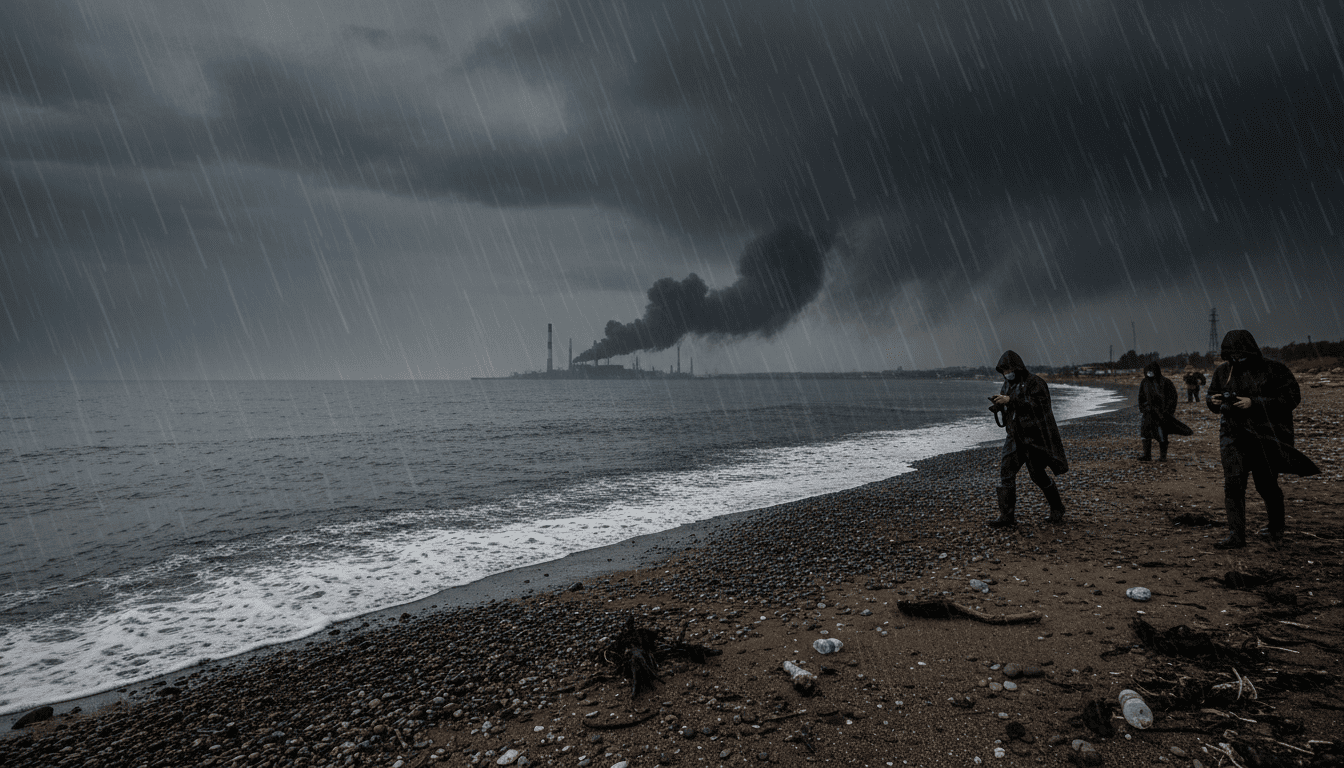
Tuapse black rain after refinery strikes: oil coats coast and wildlife, town evacuated
Tuapse black rain fell after three drone strikes on a major refinery, coating beaches and animals in oil as volunteers and emergency teams scrambled to contain airborne toxins and coastal slicks.
Immediate impact on Tuapse
The Black Sea town of Tuapse has been engulfed by oil-slicked rain and thick plumes of smoke after a sequence of three drone strikes on a major refinery that began on April 16. The first explosion triggered a two-day blaze, and a second strike on April 20 produced a wider, longer-running fire that sent toxic smoke across the town. A further attack days later left conditions so hazardous that local officials ordered an evacuation of parts of the town.
Local volunteers described streets, vehicles and farm animals layered in a viscous, black residue that washed down during episodes of so-called black rain. Cleanup workers reported a persistent oily odour and tiny suspended droplets that made outdoor work hazardous without protective equipment.
Air quality and toxic exposure
Air monitoring conducted in the days after the largest fire found elevated concentrations of hazardous compounds, with benzene, xylene and soot levels reportedly several times above established safety thresholds. Residents were advised to stay indoors, seal windows and wear protective masks when venturing outside. Volunteers working at the scene said they relied on chemical protective gear, eyewashes and oral absorbents to manage exposure while attempting to clear contaminated areas.
Health officials warned that even short-term inhalation of petroleum aerosols and combustion byproducts can irritate eyes and airways, while prolonged exposure increases risks to vulnerable groups. Emergency guidance emphasized the need for immediate decontamination for anyone experiencing burning eyes or respiratory distress.
Coastal contamination and wildlife casualties
At least eight storage tanks at the targeted refinery were destroyed, releasing large quantities of petroleum that flowed into the Tuapse River and then spread into the Black Sea along the coast. Beaches and rocky shorelines became coated in oil, prompting the deployment of containment booms and dozens of vessels to limit the spread at sea.
Volunteers and animal-welfare groups reported dozens of oil-coated birds, dogs and cats brought to makeshift cleaning stations. Rescuers described birds rendered flightless by fouled feathers and animals at risk of ingesting toxins while preening. Cleanup teams used freshwater washes and specialized detergents where possible, but said access to contaminated stony coves remained difficult and resource-intensive.
Cleanup operations and volunteer response
Local volunteers drove long distances to join the emergency response, coordinating with municipal crews to remove contaminated pebbles, collect tarry residue in barrels and plastic bags, and erect physical barriers on affected beaches. Excavators have been used to scour rocky zones where oil trapped between stones cannot be removed by hand.
Despite these efforts, volunteers cautioned that much of the coastline remained visibly oil-stained and that mechanical equipment could not reach every affected inlet. Some residents and environmental campaigners criticized authorities for superficially covering contaminated beaches with fresh pebbles rather than removing polluted sediments, a tactic they say risks burying rather than eliminating the pollution.
Long-term environmental risks
Environmentalists warned that oil products settling into seabed sediments can disrupt marine food webs for years. Experts said contaminants reduce oxygen levels, kill bottom-dwelling organisms and accumulate in the tissues of fish, shellfish and birds, potentially causing cascading biodiversity losses. One regional conservation official estimated that ecosystem recovery could take five to 10 years or longer, drawing parallels with other recent Black Sea pollution incidents.
Concerns extend beyond immediate wildlife impacts to potential human health and economic consequences, including damage to fisheries and tourism in a region reliant on coastal recreation. The accumulation of toxins in the food chain also raises alarms for long-term exposure risks to consumers of local seafood.
Military context and possible escalation
Analysts say refineries are attractive military targets in an attritional campaign because they are large, stationary and challenging to defend. Observers noted that the strikes on Tuapse resemble earlier operations aimed at degrading energy and logistics infrastructure to constrain fuel supplies and erode defensive capacity. The repeated attacks on port and oil facilities suggest a sustained strategy that could intensify if domestic drone production continues to expand.
Political and military commentators warned that, with no immediate diplomatic resolution to the broader conflict, such campaigns may persist and cause recurring environmental harm. The Tuapse incident follows a string of wartime ecological disasters in the region, including tanker sinkings and dam destruction, which have already left a legacy of contaminated waterways and devastated habitats.
Cleanup volunteers and local activists are calling for greater state coordination, protective equipment and independent environmental assessments to document the extent of contamination. Some campaigners have also connected the disaster to systemic issues in the fossil fuel sector, arguing that regulatory failures magnify the environmental toll when infrastructure is damaged.
For now, emergency teams continue to prioritize rescuing animals, clearing shorelines and monitoring air and water quality while residents contend with the immediate health and economic fallout of the strikes. The full scale of environmental damage will depend on the volume of oil released, tidal and weather conditions, and the capacity of authorities and volunteers to sustain a prolonged cleanup operation.
