
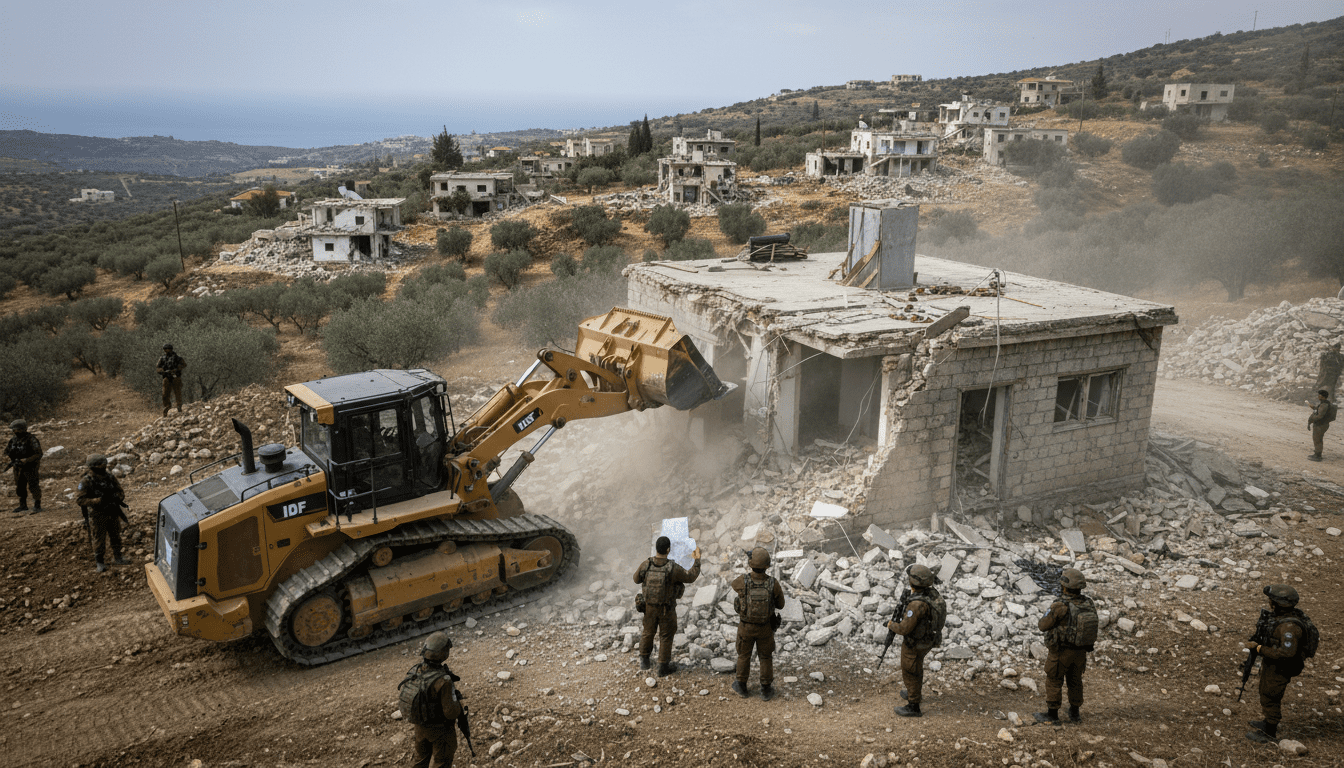
Israeli forces intensify systematic demolitions in southern Lebanon
Israeli forces have shifted to systematic demolitions in southern Lebanon, razing thousands of homes and displacing 1 million amid clashes with Hezbollah.
Israeli military units operating inside southern Lebanon have refocused operations toward the systematic destruction of buildings, according to officers speaking to Haaretz and multiple Lebanese institutions. The shift emphasizes large-scale demolitions over direct combat, with troops assigned specific zones and commanders tracking the number of structures removed each day. The campaign has produced extensive damage across towns and villages, and Lebanese agencies report a mounting humanitarian toll.
Orders and daily targets
Soldiers and mid-ranking commanders described a campaign organized around daily demolition goals rather than conventional battlefield objectives. Units are given designated sectors to clear, and commanders are required to record structures destroyed, according to accounts shared with Israeli media. Some officers framed the orders as an operational priority: to remove standing infrastructure in those assigned areas as a primary task.
Disagreement over stated objectives
Within the military there are conflicting descriptions of the operation’s aims. Several officers quoted by Haaretz rejected public statements that the effort targets only “terrorist infrastructure,” saying that homes and civilian buildings are being removed regardless of any military value. Other personnel insist the focus remains on underground networks, weapons caches and surveillance and communications systems, and that actions are taken according to immediate operational needs.
Scale of destruction and civilian impact
Lebanon’s National Council for Scientific Research estimates roughly 40,000 housing units have been partially or completely destroyed since the beginning of March, with some days seeing more than 1,000 homes damaged or flattened. The Lebanese health ministry reports at least 2,290 people killed and 7,544 wounded in the same period, including humanitarian workers and medical personnel. The upheaval has displaced approximately 1.2 million people across the country, creating a widespread shelter and aid crisis.
Contractors, controlled explosions and battlefield risks
Multiple soldiers told Israeli outlets that private contractors are carrying out many of the demolitions and are compensated based on the scale of destruction. Footage circulated online and through media outlets shows entire villages prepared and then rigged for controlled detonations. Troops assigned to secure these operations report heightened exposure to hostile drone activity and other threats, creating tense conditions as demolition teams and security units operate in close proximity.
Continuing strikes and contested truce
A US-brokered truce announced in mid-April has not halted all exchanges, and Israeli strikes on Lebanon have continued alongside renewed clashes with Hezbollah. Israeli forces remain positioned as far as around 10 kilometers inside Lebanese territory in some areas, and reports persist of strikes affecting civilian neighborhoods. The intermittent pauses and resumption of operations have complicated relief efforts and left many residents unable to return to damaged towns.
International legal and humanitarian actors have repeatedly raised concerns about operations that result in large-scale civilian damage, but access and verification remain challenging in active conflict zones. Lebanese authorities and local relief organizations warn that the pace of demolitions and ongoing hostilities are compounding needs for shelter, medical care and basic services.
The destruction of housing, the displacement of communities and the divergent military accounts underscore a conflict increasingly focused on reshaping territorial control and civilian landscapes. Humanitarian agencies, government bodies and international observers are now confronting the task of documenting damage and mobilizing aid while violence and demolitions continue to alter the region’s civilian fabric.
