
IMF Warns of Rising Economic Cost of War as Global Inflation and Supply Risks Grow
Global finance watchdog flags higher prices, strained supply chains and fiscal pressures from conflicts in IMF World Economic Outlook April 2026.
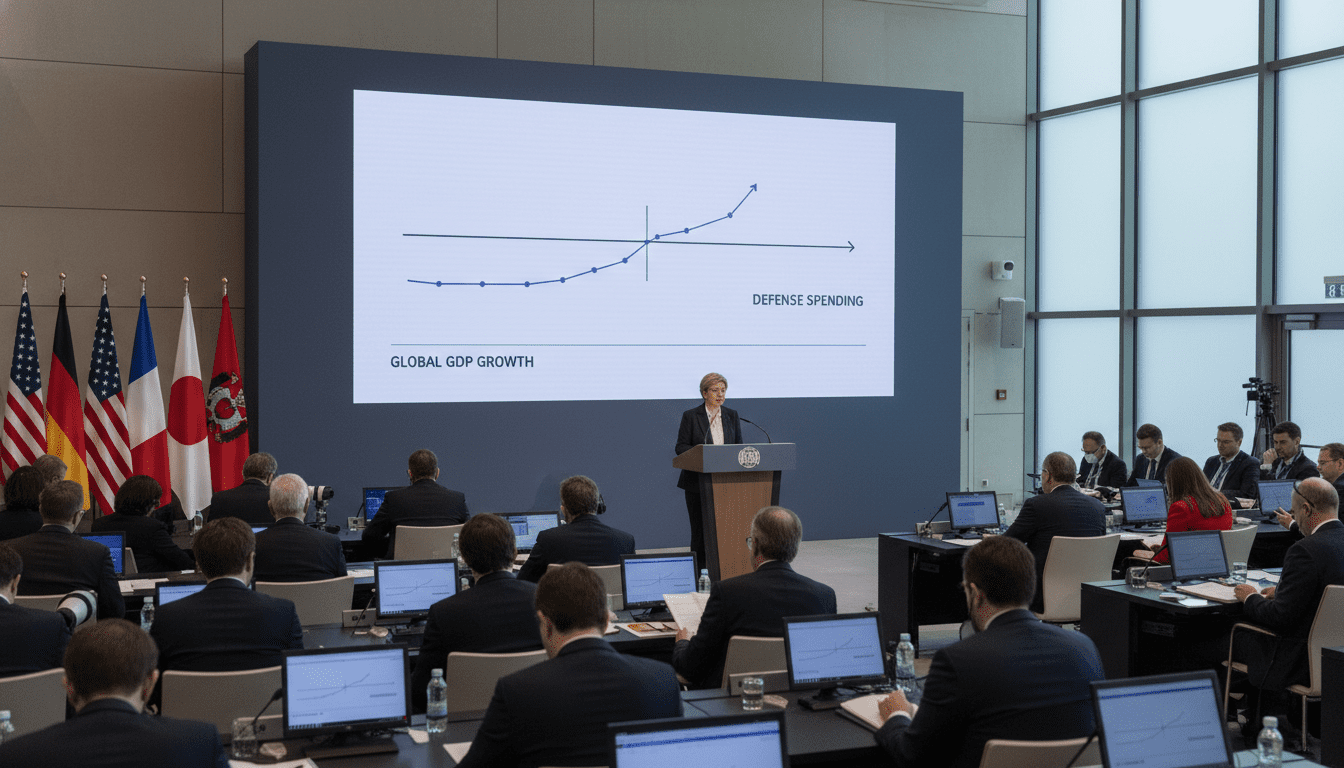
The International Monetary Fund’s April 2026 World Economic Outlook highlights the widening economic cost of war as conflicts in Ukraine and the Middle East push up commodity prices, disrupt supply chains and reverberate through global financial systems. The IMF analysis warns that rising energy and raw material costs are forcing central banks to weigh the risk of persistent inflation against slowing growth. Policymakers face a narrowing set of choices as defense spending rises and countries grapple with limited fiscal space.
IMF presents data on how conflicts hit global markets
The IMF’s report draws on historical and contemporary data to show how wars can raise global commodity prices and reduce availability of key inputs for industry. Recent spikes in energy and raw materials reflect both direct disruptions to production and anticipatory shifts by buyers seeking to diversify suppliers. Those market reactions amplify the economic cost of war beyond the immediate combat zones, the fund says.
Central banks confront inflation versus growth dilemma
Rising commodity prices have reignited questions about whether recent price increases are temporary or signal a new, persistent inflationary trend. Central banks now face a trade-off: tighten policy to prevent entrenched inflation or keep rates lower to support fragile growth. The IMF cautions that if higher prices become entrenched, policymakers will need higher policy rates, potentially slowing recovery in economies already weighed down by conflict-linked shocks.
Defense spending increases, but growth effects are modest
The IMF finds that global defense budgets have been rising, with roughly half of countries increasing military spending over the past five years and large defense firms doubling sales in real terms over two decades. However, the fund’s historical analysis shows that expanded defense outlays typically raise gross domestic product nearly one-for-one rather than generating a larger multiplier-driven boom. Governments should therefore temper expectations that rearmament will deliver a strong growth dividend.
Domestic procurement versus foreign purchases creates trade-offs
Where countries buy arms matters economically, the IMF and contributing economists note. Purchasing domestically can support local jobs and industrial capacity, while importing advanced systems transfers demand and economic benefits abroad. Policymakers must weigh security requirements against efficiency, balancing the strategic advantages of domestic production with the cost and performance benefits of specialized foreign suppliers.
Financing rearmament exposes fiscal limits in many states
The IMF warns that funding larger defense budgets through deficits can provide a short-term demand boost but risks undermining medium-term fiscal sustainability, especially for countries with limited borrowing capacity. In Europe, the report points to constrained fiscal space in several large economies, making reliance on debt financing problematic. The fund argues that financing decisions should ideally come from within regular budgets, which would force explicit trade-offs between defense, social spending and taxation.
Post-conflict recovery depends on debt relief and investment climate
Drawing on historical cases, the IMF emphasizes that recovery after a conflict is often slow and contingent on macroeconomic and institutional choices made in its aftermath. Countries that secure debt restructuring, reliable international assistance and policies that reduce uncertainty tend to see faster rebounds. The fund highlights that rebuilding capital stock and restoring investor confidence are crucial to reversing the long-term economic cost of war.
The IMF analysis also underscores potential long-term productivity gains where defense-related research and development spill into civilian industries, a pattern most clearly observed in the United States. Those gains, however, are neither automatic nor guaranteed and depend on strong institutional frameworks that support innovation and private-sector growth.
Measures to coordinate procurement across countries could yield economies of scale, the report suggests, but would require deeper standardization of equipment and less fragmentation in demand. Without such coordination, smaller, idiosyncratic orders can increase costs and weaken the competitiveness of regional defense industries.
Countries that finance rearmament through elevated borrowing should consider clear plans for medium-term consolidation, the IMF recommends, to prevent an erosion of fiscal credibility. Where fiscal room is limited, governments face hard choices between higher taxes, reduced social spending, or slower buildup of military capacity.
The global implications of sustained conflict are not only economic but also humanitarian, the IMF notes, because protracted insecurity deepens poverty and heightens long-term development challenges. International cooperation on debt, aid and reconstruction financing remains essential to limit the broader economic cost of war and to support transitions from conflict to stability.
If policymakers aim to limit the broader fallout, the IMF concludes, they will need a mix of targeted fiscal strategies, careful monetary policy calibration and stronger multilateral coordination on trade and procurement. Those steps can help contain inflationary pressures, preserve fiscal sustainability and ease the burden of reconstruction in countries affected by conflict.
