
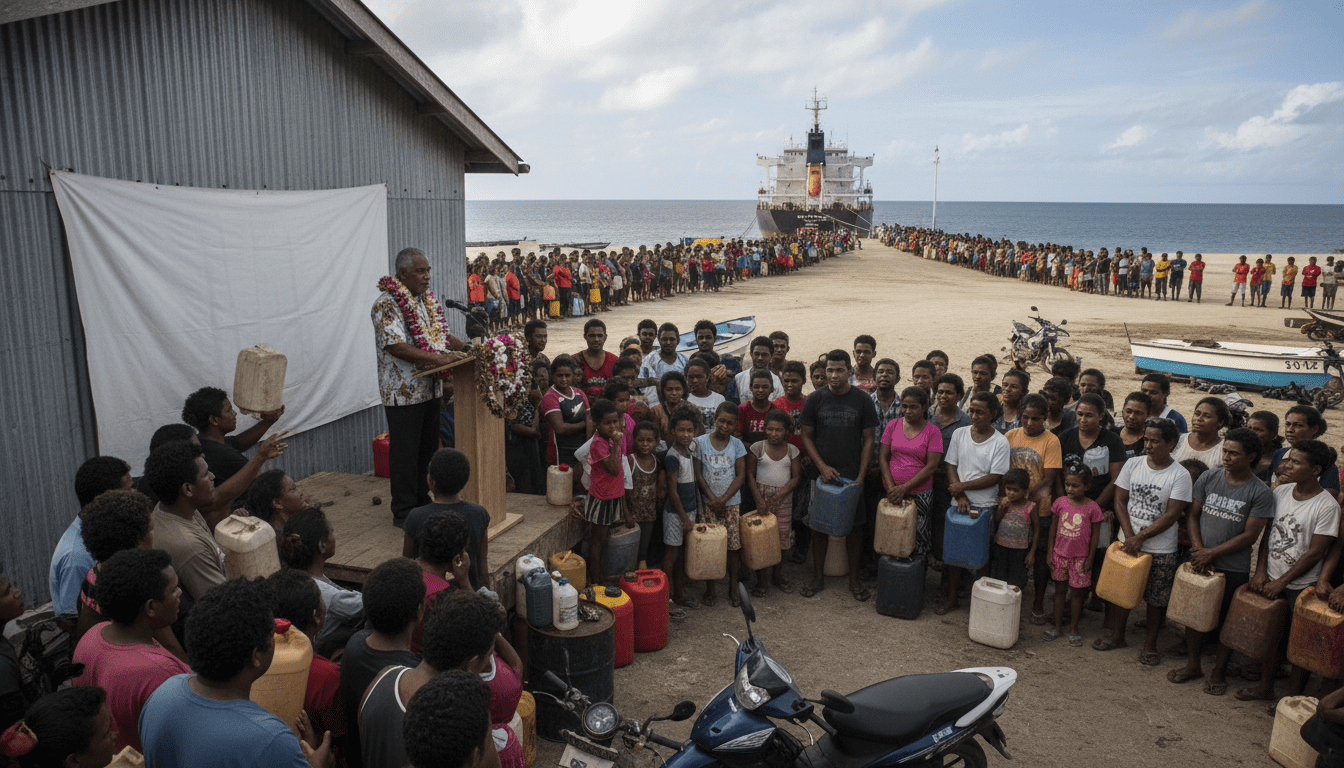
Tuvalu Declares Fuel Emergency on Funafuti Amid Global Oil Price Surge
Tuvalu fuel emergency declared as authorities warn of two-week rationing on the capital island due to supply disruptions and rising global oil prices.
Tuvalu has declared a two-week fuel emergency for its main island, Funafuti, after officials warned that the reliability of essential services could be compromised by disruptions to the country’s fuel supply. President Tofiga Vaevalu Falani announced the measure, saying the restriction applies only to Funafuti but is necessary because higher global oil prices and strained supply chains have put the island’s energy and transport systems at risk. The declaration marks an acute moment for the Pacific nation of roughly 10,000 people, where two-thirds of the population live on the capital atoll and depend heavily on imported fuel.
Falani orders emergency measures for Funafuti
The emergency proclamation spans two weeks and empowers authorities to ration diesel, petrol and electricity to preserve basic services, the president’s office said. Officials emphasized the localized scope of the measures, noting that other islands in the Tuvalu group are not immediately affected. Government statements highlighted the priority to secure water pumping, medical services and critical transport links while alternative supply arrangements are sought.
Oil price shock and regional dependence
The government tied the emergency to a sharp rise in international oil prices following armed conflict in the Middle East, which has tightened supplies and driven up costs across Asia and the Pacific. Economies in the region rely disproportionately on fuel imports from the Middle East, leaving small island states like Tuvalu particularly exposed to market volatility. For Tuvalu — with limited storage capacity and few alternatives to fossil imports — even short-term price spikes can trigger bottlenecks and threaten daily operations.
Funafuti’s concentrated population and infrastructure risk
Funafuti, home to roughly two-thirds of Tuvalu’s population, concentrates the nation’s administrative functions, hospitals and main port facilities. That demographic pressure amplifies the impact when fuel flows falter, affecting public transport, electricity generation and municipal services almost immediately. Local leaders have warned that without rapid mitigation, residents could face restricted water pumping and disrupted waste collection in the coming days.
Immediate steps to reduce consumption
Authorities said they will implement targeted rationing of fuel allocations to public utilities and private retailers and may impose scheduled power outages to conserve diesel for essential services. Public-sector travel will be curtailed and non-essential electricity use discouraged, with officials urging households to reduce consumption where possible. The government also called for international assistance to bridge the shortfall while negotiating emergency fuel deliveries from regional suppliers.
Long-term energy transition and reduced diesel reliance
The government has pointed to progress in diversifying Tuvalu’s energy mix as a buffer against future shocks, noting that diesel’s share in power generation has fallen substantially in recent years as renewable installations expanded. Investment in solar and battery storage has provided greater resilience, but officials acknowledge that the island remains vulnerable when market-wide fuel disruptions hit. Analysts say accelerating renewable deployment and expanding local storage capacity are critical to reducing exposure to volatile global oil markets.
Climate pressures and migration options
Tuvalu is simultaneously confronting long-term existential threats from sea-level rise that compound immediate energy and economic vulnerabilities. In 2025, Australia offered climate-related relocation pathways for Tuvaluan residents, a policy move reflecting growing regional concern about the nation’s future habitability. Government leaders in Funafuti say the current fuel emergency underlines how short-term crises and long-term climate pressures intersect for low-lying island states.
Regional partners in the Pacific and larger aid donors have been alerted to the emergency and discussions are underway about expedited fuel shipments and technical assistance to maintain water and health services. Diplomats and aid officials are also assessing whether this disruption will accelerate funding commitments for renewable projects and infrastructure that can reduce future dependency on imports.
The Tuvalu fuel emergency highlights the fragility of small island supply chains in a period of geopolitical instability and high energy prices. For residents of Funafuti, the next two weeks will test emergency planning and the resilience gains made through renewable investments, while policymakers weigh rapid relief against longer-term strategies to insulate the country from future shocks.
International aid offers and accelerated renewable projects could ease vulnerabilities, but officials warn that only a combination of short-term assistance and sustained investment in local energy autonomy will prevent recurring crises. The government has called for calm and cooperation as it seeks immediate shipments to stabilize supplies and prepares contingency plans for critical services.
