
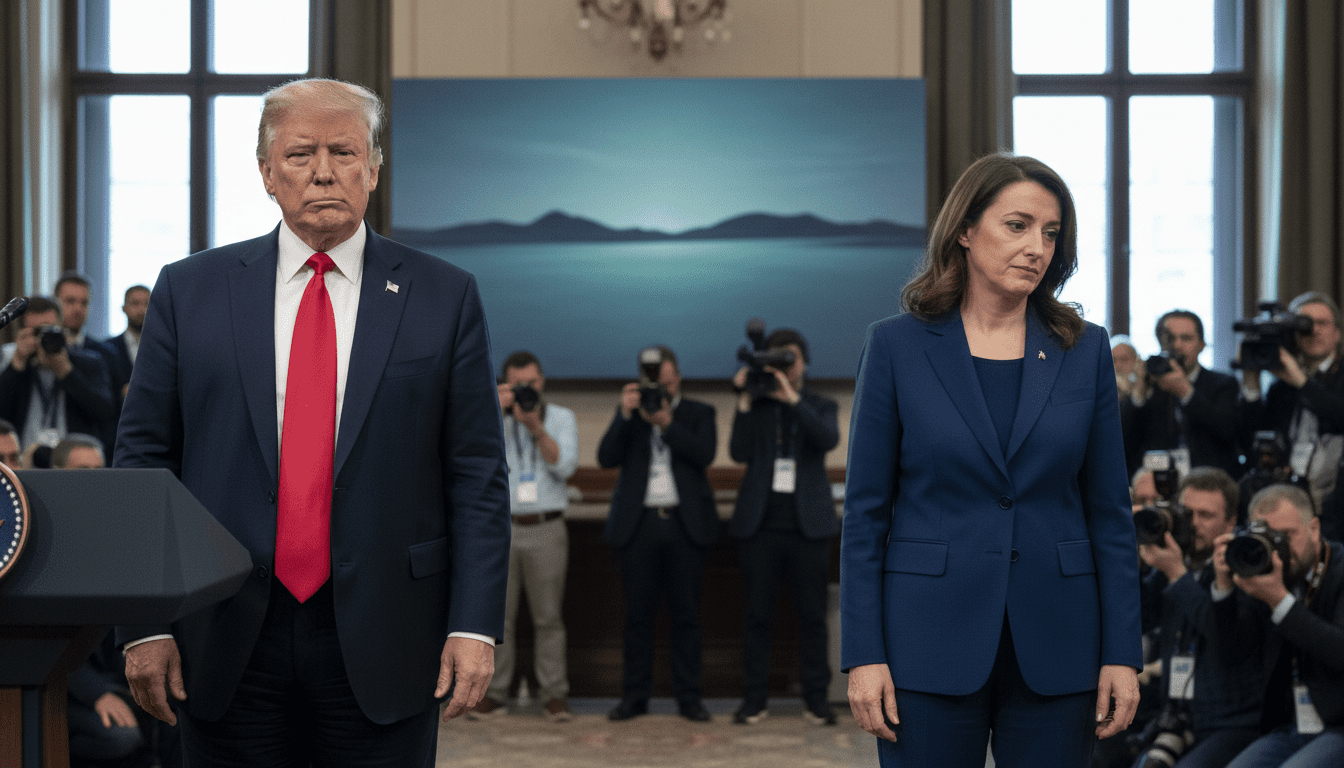
Trump distances himself from Meloni amid row over Pope remarks and Middle East stance
Trump distances himself from Meloni after her rebuke of his Pope remarks and her stance on the Israel–Iran conflict, widening a diplomatic rift.
Trump says he and Meloni ‘haven’t spoken in a long time’
President Donald Trump told an Italian newspaper he and Prime Minister Giorgia Meloni “haven’t spoken in a long time,” a public distancing that signals a sharp rupture between two former political allies. The comment, delivered in an interview with Corriere della Sera, capped a string of exchanges that saw personal attacks escalate after disagreements over the war with Iran and comments about the Pope. Trump framed his remarks as a reassessment of Meloni’s judgment and policy priorities, saying he had been surprised by her recent positions.
Dispute traced to Sicily base refusal and Israel pact freeze
The rift first widened when Meloni denied U.S. forces access to a military base in Sicily for operations linked to the conflict with Iran, a move that was seen in Washington as a clear rebuke. Tensions deepened after Rome announced it was freezing a military cooperation agreement with Israel to signal distance from the escalating Middle East war. Italian officials framed those decisions as efforts to safeguard national sovereignty and avoid entanglement, while U.S. officials privately expressed frustration that allied coordination had become strained.
Pope remarks prompt Meloni’s rebuke
The dispute turned personal after Trump launched a public attack on Pope Leo XIV, calling him weak on crime and foreign policy in comments that drew immediate criticism in Rome. Meloni described the President’s denunciation of the Pope as unacceptable, prompting Trump to respond by accusing Meloni of being indifferent to the prospect of an Iranian nuclear weapon. The exchange has drawn attention to how a clash over tone and respect for institutions can quickly spill into broader policy disagreements between close partners.
Trump accuses Meloni over Iran and NATO support
In his interview, Trump said Meloni did not support robust measures to prevent Iran from acquiring a nuclear arsenal and questioned her willingness to assist NATO efforts, comments that underscore deepening disagreements on security. He characterized Meloni as moving away from the alignment he once celebrated, implying a reversal of the political camaraderie he previously expressed. The President’s remarks highlighted an uncommon public fracture with a leader of a European right-wing government that had been seen as ideologically sympathetic to his prior administrations.
Political fallout in Rome and Washington
Italian political circles reacted with a mix of restraint and rebuttal, as parties across the spectrum sought to manage the diplomatic damage without escalating rhetoric. Meloni’s office insisted Italy will continue to pursue its national interests and to engage with allies on a case-by-case basis, signaling that decisions on military cooperation and energy would remain sovereign choices. In Washington, analysts said the dispute may complicate transatlantic coordination at a time when unity is often billed as vital to deter regional escalation.
Potential impact on transatlantic security and energy ties
Observers say the dispute risks affecting NATO cohesion if allied capitals perceive Italy as stepping back from collective responses in the face of regional crises. Energy dependence was also central to the debate after Trump suggested Italy’s oil imports and economic ties to the region influenced Meloni’s approach, a dynamic that could force deeper policy discussions in European capitals. Any sustained cooling between Rome and Washington could require behind-the-scenes diplomacy to restore working-level cooperation on intelligence sharing, basing arrangements and contingency planning.
Growing personal and geopolitical dimensions of the dispute
What began as a policy disagreement has taken on an increasingly personal tone, with both leaders trading sharp assessments of the other’s judgment and motives. That personalization makes a negotiated rapprochement more politically costly for each side, because domestic audiences in both countries reward displays of toughness over conciliation. Foreign-policy experts say smoothing the relationship will likely depend on pragmatic resets rather than dramatic public reconciliations.
The public split between President Trump and Prime Minister Meloni reflects both immediate policy disputes and deeper questions about alliance behavior in a volatile region, and it poses a test for transatlantic diplomacy as officials seek to balance national priorities with collective security obligations.
