
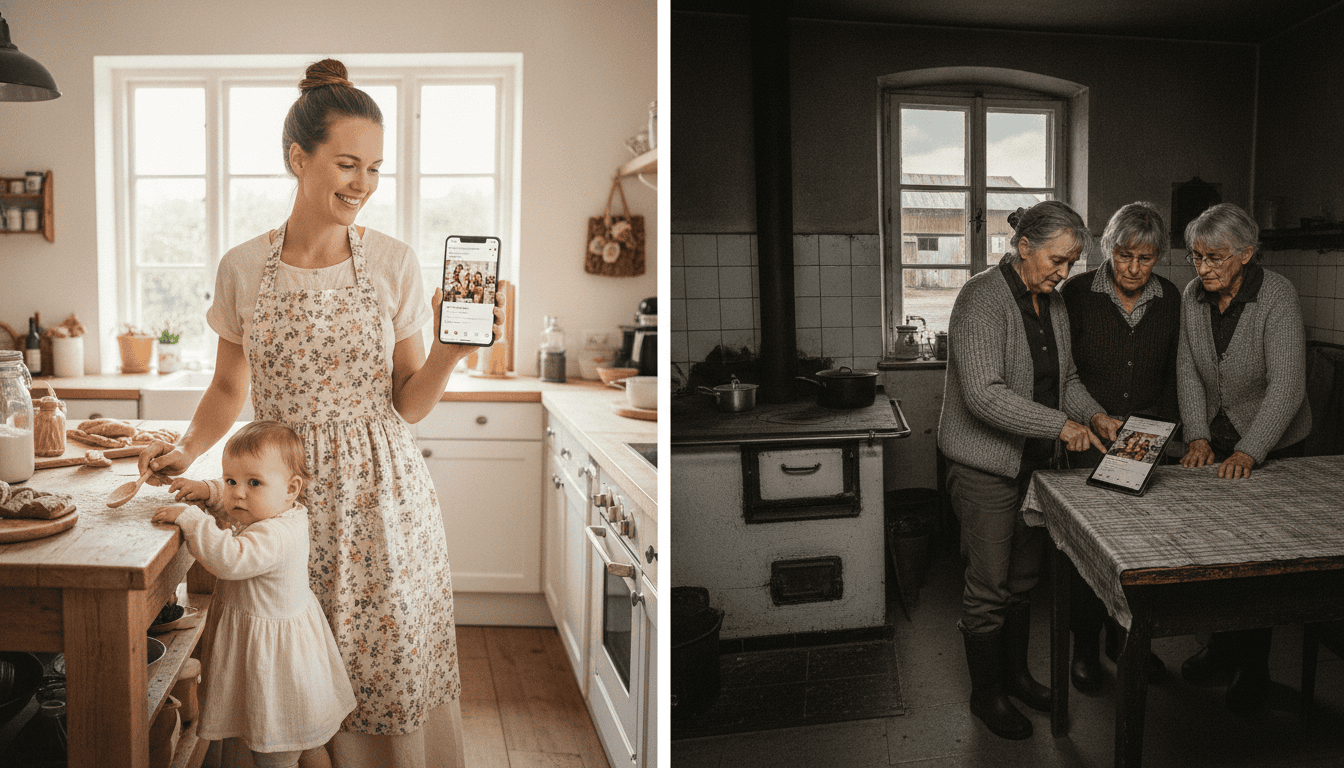
Tradwife Trend Returns: Influencers Repackage Retro Domesticity and Ignite Debate
The tradwife trend is resurging on social media, where influencers blend 1950s-style domestic aesthetics with modern entrepreneurship and conservative messaging. Platforms are pushing this content into feeds for new mothers and urban audiences, prompting pushback from working rural women and associations.
Social media revival of a retro ideal
Influencers have remixed nostalgic domestic imagery—aprons, homemade preserves and pastoral backdrops—into a polished online genre that romanticizes full-time homemaking. Accounts such as the high‑profile Utah creator known as Ballerinafarm attract global audiences by staging a carefully lit, pastoral lifestyle that reads as both aspirational and commercially viable.
That visual language ranges from curated 19th‑century pastoralism to mid‑century glamour, and it operates through short videos and photo reels designed to be consumed as comforting ritual. Observers say the effect is less about cooking tips than about selling a coherent alternative to modern gender expectations.
Algorithms and new mothers
Many millennial mothers report encountering tradwife content soon after childbirth, often pushed by recommendation systems that amplify similar material. New parents searching for practical tips say the feeds they find can quickly veer from parenting advice into prescriptive narratives about gender roles and domestic duty.
Journalists and researchers note the phenomenon intensified after the pandemic, when caregiving burdens and workplace inflexibility left many parents exhausted and receptive to simpler narratives. That emotional vulnerability, critics argue, makes the audience for tradwife messaging especially susceptible to ideological framing.
Real farm work behind the imagery
Women who actually run farms describe a very different daily reality than what appears in social media reels. Farmers interviewed in Germany recount pre‑dawn milking, heavy machinery and safety rules that leave little room for sartorial romanticism or staged leisure.
Those rural women say they value seasonal produce and household skills, but they reject the idea that such practices are inherently apolitical or suitable as a mass lifestyle prescription. For them, running a farm is a labor‑intensive livelihood that depends on shared responsibilities, including supportive parental leave and equitable household roles.
Commercialization of domestic aesthetics
What looks like homely nostalgia is often the product of a sophisticated creator economy: merchandise, branded food products and service lines accompany many popular tradwife accounts. Creators monetize the aesthetic by selling clothing, kitchenware and lifestyle subscriptions while cultivating loyal followings.
That business model complicates claims of authenticity, critics say, because the polished reels frequently mask teams of employees, staged shoots and profit motives. The result is a hybrid industry that packages nostalgia as a consumable—and profitable—identity.
Political associations and public concern
Observers warn the tradwife revival carries political implications beyond lifestyle choices, with some accounts echoing conservative talking points about gender and family. In Germany, leaders of rural women’s associations have expressed alarm at the trend’s resonance in areas where right‑wing parties are already active.
Connections are sometimes indirect—likes, reposts or sympathetic commentary—but the messaging can dovetail with political movements that promote traditional gender hierarchies. Association leaders describe the growth of these narratives on the countryside as a tangible risk to gains in gender equality and to the political balance in rural communities.
Local organizing and policy responses
In response, grassroots rural networks are mobilizing around practical support and political advocacy rather than aesthetics. Local women’s groups have organized financial workshops and are planning meetings with state legislators to address structural barriers such as employer resistance to fathers taking parental leave.
Those initiatives emphasize policy fixes—accessible childcare, fair parental‑leave practices and economic support for family businesses—over lifestyle prescriptions. Farmwomen and association leaders say strengthening institutions and workplace norms is essential to ensure choices about work and family are genuinely voluntary.
The tradwife trend presents a clash between curated online nostalgia and the realities of modern caregiving and rural work. While some users find comfort in the imagery, rural women and advocacy groups warn the movement can obscure labor, commercial interests and political undertones. Policymakers and community organizations are increasingly arguing that the antidote lies in concrete supports—childcare access, fair parental‑leave enforcement and economic measures—that preserve real choice rather than romanticize retreat from it.
