
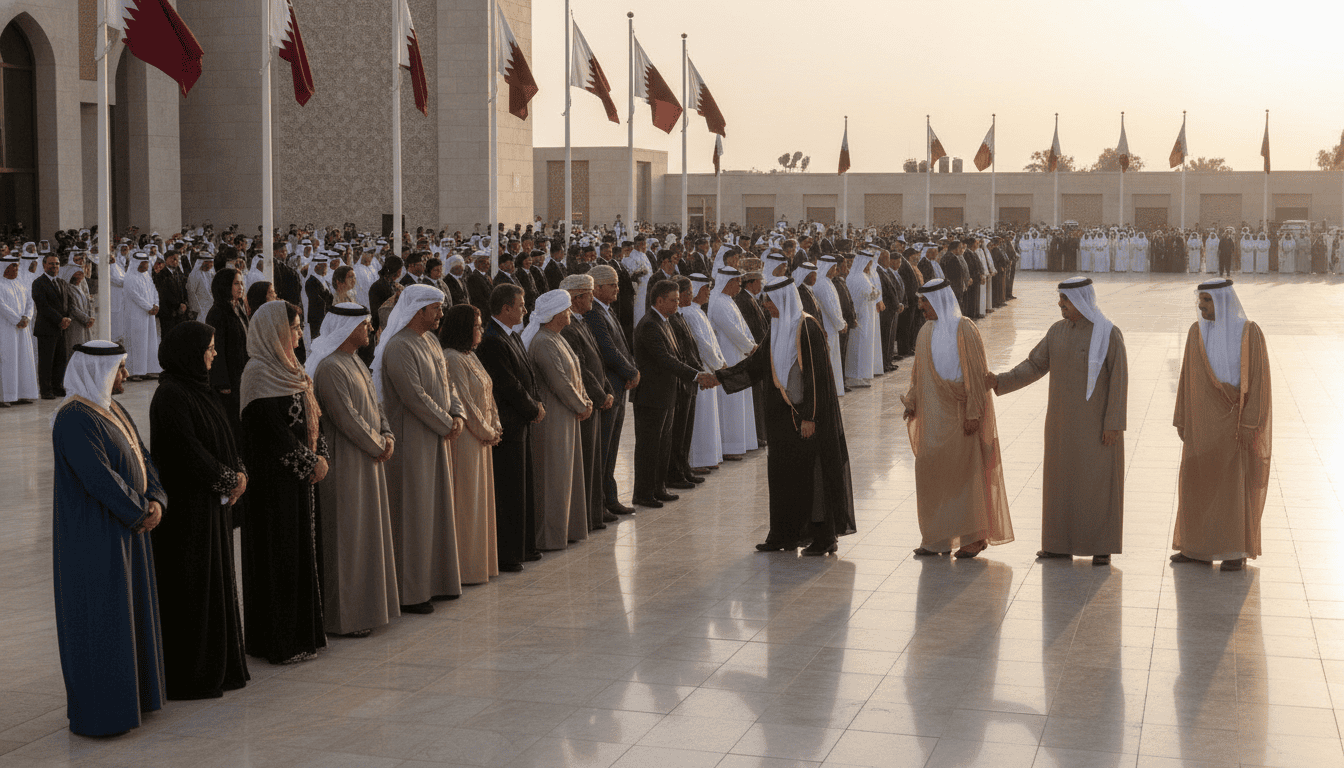
Sheikh Hamad bin Khalifa Al Thani Laid to Rest as Thousands Attend Funeral in Doha
Thousands gathered in Doha on July 12, 2026 to mourn Sheikh Hamad bin Khalifa Al Thani, the former Emir whose 18-year rule transformed Qatar into a global diplomatic, economic and media force.
Mass turnout in Doha
Thousands of mourners filled public squares and avenues in Doha as state and public tributes unfolded on July 12, 2026. The crowd included ordinary citizens, expatriate residents and representatives of civic groups who came to pay respects to Sheikh Hamad bin Khalifa Al Thani.
Qatari flags and portraits of the former emir were visible across the capital, and lines formed at official condolence centers established by government ministries. Security measures were in place around ceremonial sites to manage the large public presence and ensure orderly proceedings.
State and foreign delegations
Senior representatives from neighboring Gulf states and other governments attended formal funeral ceremonies in Doha, reflecting Sheikh Hamad’s diplomatic reach. Delegations included heads of state, foreign ministers and senior envoys who paid respects on behalf of their countries.
Official condolences were delivered at the state protocol events, and bilateral discussions reportedly took place on the margins of the ceremonies. The international turnout underscored the late emir’s role in shaping Qatar’s external relations during and after his reign.
Ceremony and religious rites
Funeral prayers followed Islamic janazah traditions observed in keeping with Qatari protocol and the family’s wishes. Religious leaders led communal prayers, and attendees observed moments of silence before the burial rites were completed at a designated cemetery.
Officials coordinated the sequence of ceremonies to accommodate both state formalities and private family observances. The carefully managed program allowed dignitaries and citizens alike to participate in the farewell while preserving spaces for family mourning.
Hamad’s transformation of Qatar
Sheikh Hamad bin Khalifa Al Thani’s 18 years as emir—during which he transferred power to his son in 2013—are credited with steering Qatar through rapid modernization and internationalization. His policies expanded the country’s energy revenues, diversified investment strategies and promoted Qatar as a platform for international engagement.
A central element of that transformation was the establishment and international expansion of media outlets and cultural institutions that raised Qatar’s global profile. Those initiatives, combined with high-profile diplomatic mediation efforts, helped position Doha as a venue for dialogue on regional and international issues.
Economic and media legacy
Under Sheikh Hamad’s leadership, state wealth was deployed into sovereign investments, infrastructure projects and global ventures that reshaped Qatar’s economic footprint. Strategic acquisitions and partnerships in finance, real estate and technology are part of an economic legacy that continues to influence the Gulf and beyond.
Media initiatives launched during his tenure created a distinct Qatari voice on the world stage and played a role in shaping regional discourse. The presence of internationally oriented broadcasters and cultural programs is widely seen as part of a deliberate effort to expand Qatar’s soft power.
Regional reactions and condolences
Governments across the Middle East, Europe and beyond issued formal condolences and lauded Sheikh Hamad’s contributions to diplomacy and development. Statements from foreign ministries and international organizations highlighted his role in mediation and in opening channels of communication among rival actors.
Analysts noted that the breadth of responses reflected both personal ties and strategic relationships cultivated over decades. For many regional capitals, the funeral offered an occasion to acknowledge long-standing partnerships and to signal continuity in engagement with Doha.
Succession and continuity in governance
Since abdicating in 2013 in favor of his son, Sheikh Tamim bin Hamad Al Thani has led Qatar, and state institutions have overseen the transition and preservation of national policy priorities. Officials emphasized continuity of governance and the constitutional mechanisms that have shaped Qatar’s political evolution in recent years.
Domestic leaders used the funeral period to underline national unity and the steadiness of state institutions. Messaging from the palace and government offices sought to reassure citizens and partners that Qatar would continue to pursue its established domestic and foreign policy objectives.
The passing of Sheikh Hamad bin Khalifa Al Thani drew a wide swath of public and official attention, reflecting his central role in modern Qatari history and the broader Gulf narrative. As Qatar marks this period of national mourning, officials and citizens alike have signaled a commitment to preserving the institutions and international relationships forged during his tenure.
