
Strait of Hormuz Escalation: IRGC Attacks Cyprus‑Flagged Ship, U.S. Strikes 140 Targets in Iran
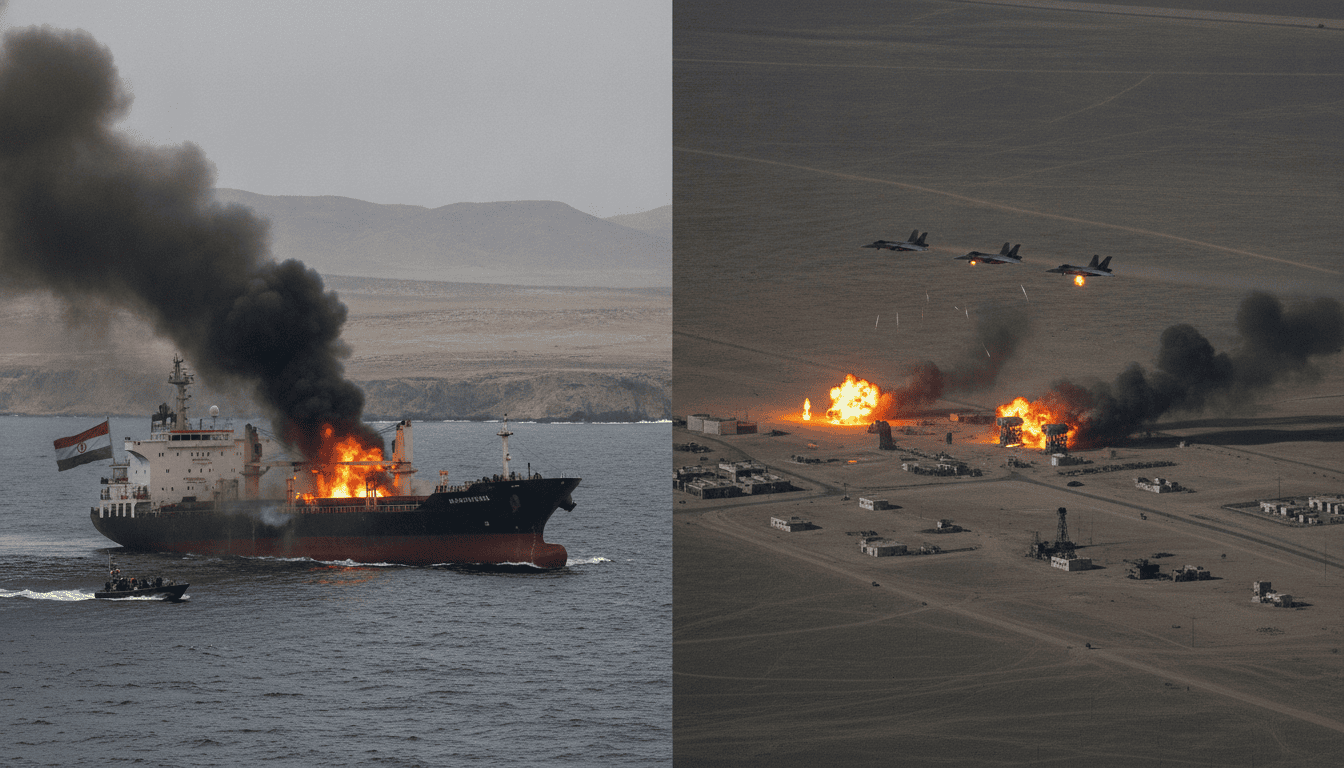
Tensions in the Strait of Hormuz have spiked after the Iranian Revolutionary Guard Corps attacked a Cyprus‑flagged containership and U.S. forces responded with strikes on 140 targets inside Iran. The Strait of Hormuz incident marks a stark escalation in a sequence of tit‑for‑tat attacks that regional and Western officials say risks wider confrontation. While neither side has declared war, the rapid exchange of strikes has deepened diplomatic and military alarm across the region.
Iranian Revolutionary Guard Attacks in Strait of Hormuz
Iran’s Islamic Revolutionary Guard Corps carried out an assault on a container vessel sailing under a Cypriot flag in the Strait of Hormuz, officials and shipping sources reported. The strike on Saturday prompted immediate international concern because the narrow waterway is a critical artery for global energy shipments. Shipping companies and regional navies have since heightened vigilance as commercial traffic faces growing dangers.
U.S. Military Conducts Strikes on 140 Iranian Targets
In direct response, U.S. forces reported strikes on 140 targets across Iran linked to the group that attacked the vessel, military officials said. U.S. authorities described the operations as precision attacks intended to degrade the ability of militia units to carry out future assaults on commercial shipping and personnel. The scale of the response—hundreds of targets assessed and struck—represents one of the most significant direct military actions between the United States and Iran in recent years.
No Side Declares War, But Risks Intensify
Despite the intensity of recent operations, neither Tehran nor Washington has officially announced a declaration of war, and both sides appear to be calibrating steps to avoid full‑scale conflict. Still, analysts warn that continued reciprocal strikes raise the probability of unintended escalation, including strikes that could draw in regional partners and proxy forces. Diplomats are now under pressure to reopen crisis channels to prevent miscalculation that could broaden the confrontation.
U.S. Political Aftershock: Senator Lindsey Graham Dies at 71
In Washington, the sudden death of Senator Lindsey Graham at age 71 has introduced another layer of political upheaval. Once a fierce critic of Donald Trump who later became a key ally, Graham’s passing removes a prominent voice on national security and judiciary matters from the Senate. Party officials and colleagues described his death as a significant loss for Republican leadership and for ongoing policy debates in Washington.
Berlin CDU Names Stefan Evers as Lead Candidate
In German domestic politics, Berlin’s CDU has moved to replace Kai Wegner with Stefan Evers as its lead candidate for the upcoming city elections, party officials announced. Wegner withdrew his candidacy under mounting pressure roughly two months before the vote, citing personal and political considerations. Evers, currently Berlin’s finance senator, is known within the party for a reputation for fiscal discipline and is seen as a steady hand during a turbulent pre‑election period.
Volkswagen’s Savings Drive and Worker Backlash
At Volkswagen, CEO Oliver Blume faces mounting internal opposition as the company pursues an aggressive cost‑cutting plan reportedly aimed at saving around €11 billion in overhead. Company sources say roughly half of the targeted savings would come from personnel measures, prompting employee representatives to organize extraordinary works meetings and protests. Management has been cautious in public statements, but the dispute underscores rising tensions between executive cost targets and labor concerns in Europe’s largest automaker.
World Cup Drama: England and Argentina Advance to Semifinals
On the global sporting stage, the 2026 FIFA World Cup delivered dramatic quarterfinal outcomes, with England edging Norway 2–1 after extra time and Argentina defeating Switzerland to reach the semifinals. England’s win produced fresh friction between players and coaching staff even as the team celebrated progress, while Argentina advanced amid contentious officiating decisions that prompted public complaints from the Swiss camp. The tournament’s knockout rounds continue to generate high emotions and global attention.
The surge of events—from a heightened military confrontation in the Strait of Hormuz to sudden political and corporate shifts in the United States and Europe—has left governments and markets reassessing risk and strategy. As diplomatic channels work to contain the military exchanges and political actors adjust to abrupt changes at home, the coming days will be crucial in determining whether the current cycle of retaliation can be halted or will widen further.
