
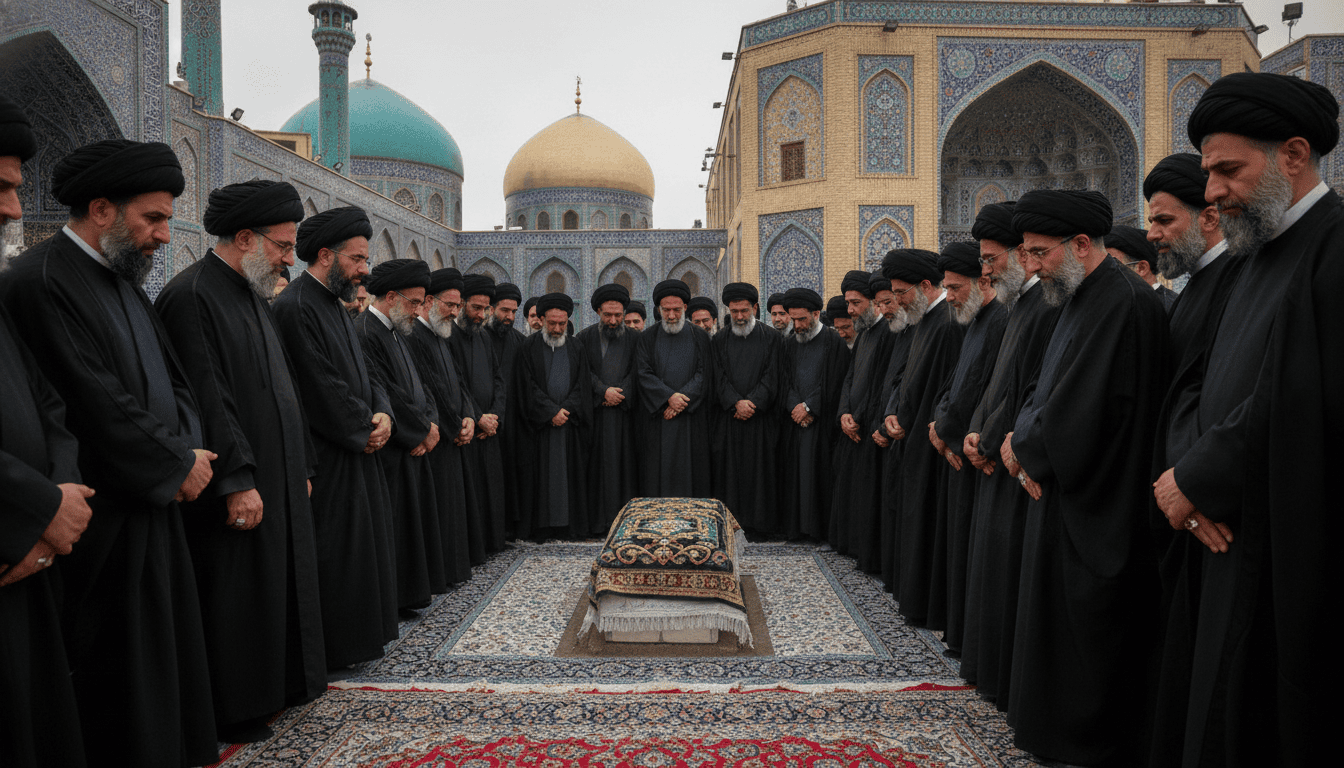
Khamenei buried in Mashhad after week-long funeral processions
Iran’s former supreme leader Ali Khamenei was buried on July 9 at the Imam Reza shrine in Mashhad, concluding a week of state-organized funeral processions that followed his death on February 28. The burial, held away from public view at the holiest Shiite site in Iran, caps months of national mourning and intermittent fighting that began after the strikes that killed him. The event also underscored lingering uncertainties about the new leadership after Khamenei’s son, Mojtaba Khamenei, was proclaimed successor but has largely remained out of public view. (aljazeera.com)
Mass funeral processions across Iran
State television and independent outlets reported massive demonstrations and processions in Tehran and other major cities over several days, with authorities saying millions attended official mourning events. Streets and public transport were suspended in parts of the capital as mourners passed flag-draped coffins and chanted slogans denouncing perceived external foes. The scale of the ceremonies reflected the regime’s effort to present a unified national response while the country remains gripped by wartime mobilization. (apnews.com)
Burial at the Imam Reza shrine in Mashhad
Officials arranged a private interment at the Imam Reza shrine in Mashhad, the northeastern city that is Khamenei’s birthplace and Iran’s principal pilgrimage site for Shiite Muslims. The shrine’s religious significance gave the state a symbolically powerful setting to conclude the public mourning and to reinforce clerical legitimacy amid political turbulence. Observers say the choice of Mashhad and the tightly controlled burial underscored the regime’s intent to manage both ritual and political optics. (investing.com)
February 28 strikes and the outbreak of war
Khamenei and several family members were reported killed on February 28 in coordinated air strikes attributed to the United States and Israel, a blow that precipitated open war between Iran and the two countries in early March. The initial strikes and subsequent weeks of retaliatory attacks and limited ceasefires reshaped the regional security picture and provoked international alarm. While a truce and framework agreement have at times reduced large-scale exchanges, analysts report that sporadic strikes and tit-for-tat incidents continued in the months that followed. (aljazeera.com)
Succession and Mojtaba Khamenei’s absence
A clerical assembly declared Mojtaba Khamenei, one of the late leader’s sons, the new supreme leader in early March, but he has not made a sustained public appearance since the February strikes. State and international reports indicate Mojtaba was wounded in the same attack and his limited visibility at public ceremonies has fed speculation about his health and the extent of his actual authority. The absence of a widely seen successor has created a governance ambiguity that regional actors and domestic critics are closely watching. (theguardian.com)
Domestic reaction and political divisions
Public response to the funeral and the broader transition has been mixed: state media emphasized reverence and calls for revenge, while domestic opposition and parts of the population have shown indifference or outright hostility. Critics point to years of political repression and recent protest movements that challenged the regime’s legitimacy, with some demonstrators previously chanting anti-regime slogans during waves of unrest. Analysts say these divisions may intensify as the government seeks to consolidate authority under a successor whose public standing is untested. (amp.dw.com)
Regional and international implications
Khamenei’s death and burial occur against a backdrop of heightened regional tensions and shifting alliances, with the initial strikes and the subsequent weekslong conflict prompting diplomatic efforts to contain broader escalation. Capitals in the Middle East and beyond are recalibrating security postures and contingency planning in response to both Iran’s internal transition and its military posture. The long-term impact on Iran’s foreign policy, its relations with proxy networks, and the balance of power in the Gulf will depend on how quickly a new, stable line of authority is consolidated. (axios.com)
The burial in Mashhad closes a chapter of public mourning but opens questions about leadership, stability and policy direction in Tehran as Iran navigates wartime pressures and deep domestic fault lines.
