
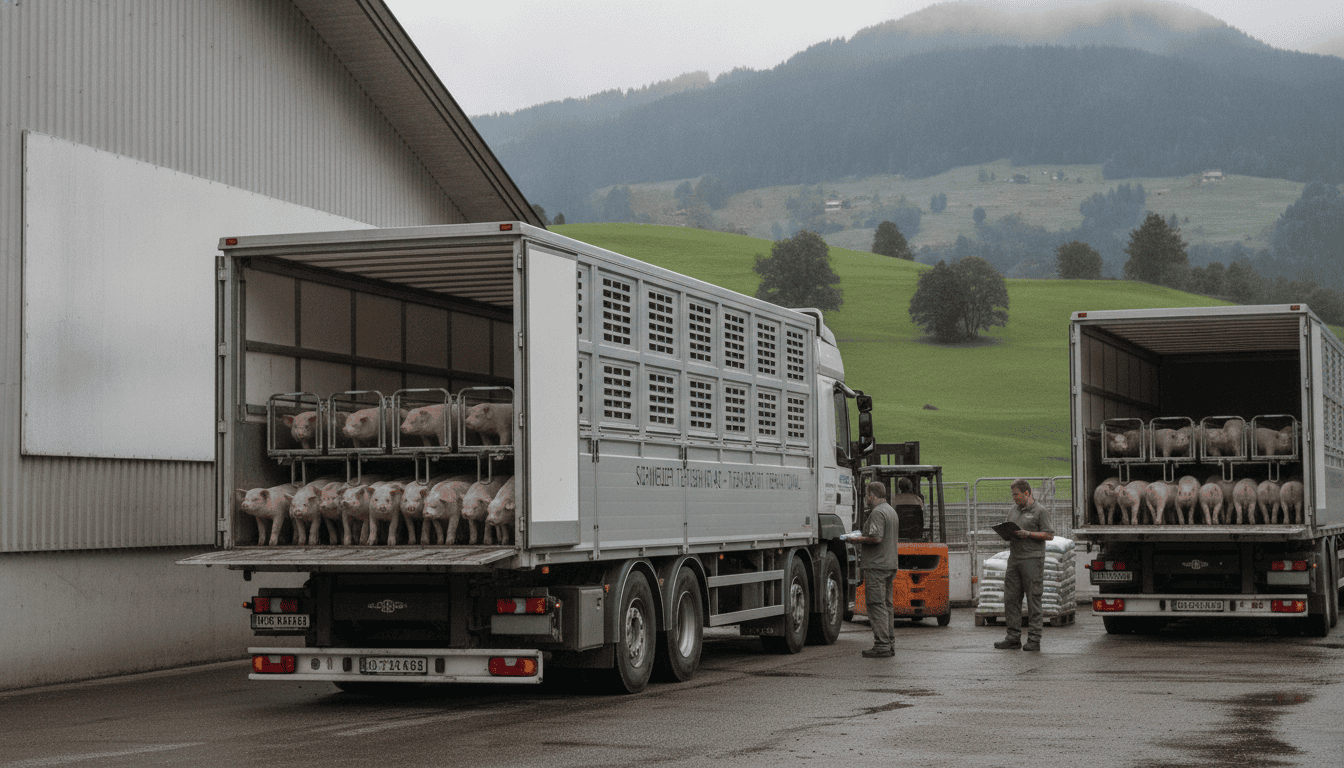
Swiss pig overproduction forces weekly exports of 900 piglets to Germany
Swiss pig overproduction forces farmers to send roughly 900 piglets a week to German slaughterhouses, straining stables and reigniting debates over animal welfare and agricultural policy.
Overproduction drives cross-border shipments
Swiss pig overproduction has led producers to increasingly transport young animals across the border to Germany for slaughter, industry insiders say. Farmers estimate that around 900 piglets per week are being moved, a volume that reflects both falling domestic demand and constrained processing capacity inside Switzerland.
The flow to German abattoirs has become a practical response to local bottlenecks; slaughterhouses and cold storage in Switzerland cannot absorb the current supply without pushing prices below sustainable levels. Transporting animals for slaughter adds logistical complexity and raises new scrutiny from regulators and welfare groups.
Farmers point to shrinking domestic consumption
Producers and veterinarians attribute the glut to changing Swiss consumer habits, with lower per-capita pork consumption reducing demand for locally produced pork. Many farms maintained herd sizes based on previous market conditions and are now left with fixed costs and animals that cannot be sold domestically at profitable prices.
On a typical farm, the daily rhythm remains unchanged — sows nurse litters and piglets jostle for teats — but the economics have shifted. Farmers say their margins have narrowed and some are forced into the untenable choice of exporting animals for slaughter or taking losses.
Price collapse and crowded housing compound stress
The overabundance of pigs has depressed farm-gate prices, creating a financial squeeze for swine producers who already face high land and feed costs in Switzerland. Lower prices incentivize keeping animals longer to reach weight targets, which in turn exacerbates space shortages in barns and pens.
Despite Swiss animal welfare regulations that set minimum space and husbandry standards, producers report practical challenges when stocking density rises. Crowded conditions increase disease risk and complicate compliance with welfare rules, prompting concern among officials and animal-health experts.
Suisseporcs and the industry’s emergency measures
The national producers’ organization, Suisseporcs, has acknowledged the structural imbalance and proposed measures aimed at reducing supply and stabilizing prices. Proposals under discussion include voluntary herd reductions, temporary production curbs and financial support for affected farms.
Industry representatives emphasize that any reduction in supply must be coordinated and compensate farmers to avoid bankruptcies and animal welfare problems stemming from rushed herd culls. The organization’s proposals aim to balance market correction with humane treatment and economic viability.
Animal welfare advocates demand systemic change
Tierschutz groups and veterinarians say the crisis exposes deeper issues in how pig production is organized, and they call for a reorientation toward smaller herds and higher-welfare systems. Advocates argue that shifting production models, combined with consumer choices favoring less but better-sourced meat, would reduce pressure on farms.
Campaigners are also pressing for stricter oversight of cross-border transport and clearer rules to ensure animals moved for slaughter are handled humanely during transit. They warn that relying on exports to manage oversupply simply transfers the problem rather than resolving the underlying mismatch between production and consumption.
Policy options and market signals ahead
Policymakers face a narrow set of policy levers: incentivize herd reductions, support structural change in the sector, or tolerate continued exports to nearby abattoirs. Each option carries trade-offs for rural economies, food security and Switzerland’s high animal-welfare standards.
Economic signals could help re-balance production if prices rise enough to deter overbreeding, but that adjustment risks causing financial distress for smaller farms. Longer-term strategies under discussion include targeted subsidies for transition to higher-welfare systems, improved market intelligence for producers, and campaigns to align domestic demand with sustainable supply.
The current situation leaves many Swiss pig producers navigating immediate cash-flow pressures while regulators, industry bodies and animal-rights groups debate how to reduce pig numbers without causing undue harm to animals or farm livelihoods.
