
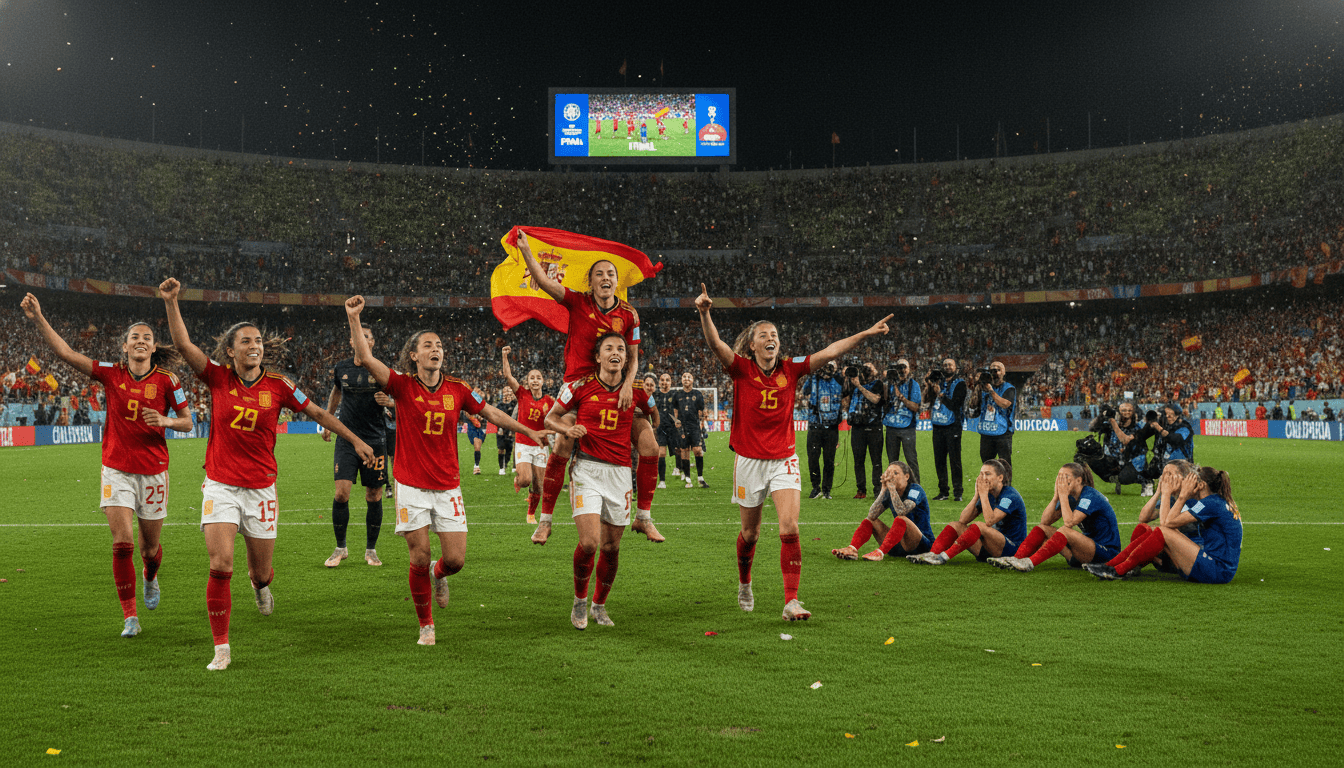
Spain reach World Cup final after 2-0 win over France
Spain reach World Cup final after a 2-0 semifinal win over France as Oyarzabal’s penalty and Porro’s strike send La Roja to their first final since 2010.
Spain reach World Cup final after a disciplined 2-0 victory over France in Arlington, advancing to their first World Cup final since 2010. Mikel Oyarzabal converted a 22nd-minute penalty and Pedro Porro added a second-half goal as Spain controlled large stretches of the match. The victory ended France’s run and left Spain to await the winner of Argentina vs England for a place in the title match.
Spain clinch place in a final for the first time in 16 years
Spain’s progression to the final marks their first appearance since lifting the trophy in 2010. The European champions combined compact defensive work with measured possession to frustrate a high-profile French attack. The result restores Spain to the tournament’s last match after a campaign built around tactical discipline and tight organization.
Spain’s defensive record through the tournament was again decisive, with the team surrendering only one goal before this match. That solidity allowed coach Luis de la Fuente to set up a game plan focused on control rather than spectacle. The 70,176 spectators in the Arlington stadium saw a composed side that limited France’s opportunities and capitalized on the chances it created.
Oyarzabal penalty and Porro finish settle the semifinal
The opening goal came when Marc Cucurella’s cross led to a miscue by France’s Lucas Digne, who inadvertently struck the onrushing Lamine Yamal. Referee Iván Barton pointed to the spot and Mikel Oyarzabal calmly slotted the penalty in the 22nd minute. That blow was the first time France had trailed in the knockout rounds of this tournament and it shifted momentum in Spain’s favor.
Spain doubled the lead early in the second half when Pedro Porro combined with Dani Olmo and found the far corner in the 58th minute. The second goal stemmed from a quick exchange that bypassed France’s midfield pressure and forced Les Bleus to chase the game. A late Lamine Yamal effort was ruled out for offside, ensuring the 2-0 scoreline held to the final whistle.
Tactical control stifled France’s star-studded attack
Spain’s approach prioritized ball retention and collective defending, denying France space between the lines for Kylian Mbappé and his teammates. France, normally fluid in transition, committed uncharacteristic errors and struggled to link midfield creativity with the final third. Ousmane Dembélé produced a notable cross early on, but Spain’s defenders converged effectively whenever danger threatened.
The Spanish back line and midfield pressed in coordinated phases, forcing France into lower-percentage passes and rushed decisions. That pattern left Real Madrid striker Mbappé largely isolated when possessions were won back, and he found himself quickly double- and triple-marked on several occasions. Spain’s ability to manufacture and maintain pressure without exposing defensive gaps proved decisive.
Injuries and a muted French response on Bastille Day
France’s afternoon unravelled further when centre-back William Saliba left the pitch injured before halftime, replaced by Maxence Lacroix. The loss of Saliba reduced France’s defensive stability and limited Deschamps’s tactical options during the comeback attempt. The match also fell on France’s national day, amplifying the disappointment for a side that had aimed to reach a third consecutive final.
Despite Kylian Mbappé’s tournament haul—he had entered the match among the competition’s top scorers—France could not produce the decisive moments needed to overturn the deficit. Michael Olise, among others, failed to spark consistent breakthroughs, and the side’s usual attacking cohesion was absent. Post-match reports linked a period of transition at the national level with the result, though the federation has not confirmed any immediate personnel decisions.
Implications for Spain and the path to the final
Spain’s win preserves the narrative of defensive strength and collective execution as the backbone of their World Cup run. The team will now face either Argentina or England in the final, depending on the outcome of the other semifinal. That match-up presents contrasting challenges: Argentina’s experience and attacking balance, or England’s pace and structure under Thomas Tuchel.
Beyond the immediate opponent, Spain’s tactical model will be put to the test against an elite opponent in the final. The team’s capacity to sustain control under intense pressure and to convert limited chances into goals will determine whether they can claim a second World Cup title. For fans and analysts alike, questions about squad rotation, set-piece strategies and match management will dominate preparations in the days ahead.
Spain’s disciplined performance in Arlington underlines a tournament story of balance: effective defending coupled with timely attacking interventions. The next match will be the sternest examination yet of whether La Roja can translate this form into football’s ultimate prize.
Spain now prepares for the final with momentum and a clear blueprint, while France must regroup and assess a disappointing end to a campaign that promised much. The World Cup final will test both the durability of Spain’s defensive system and its ability to produce the moments that win championships.
