
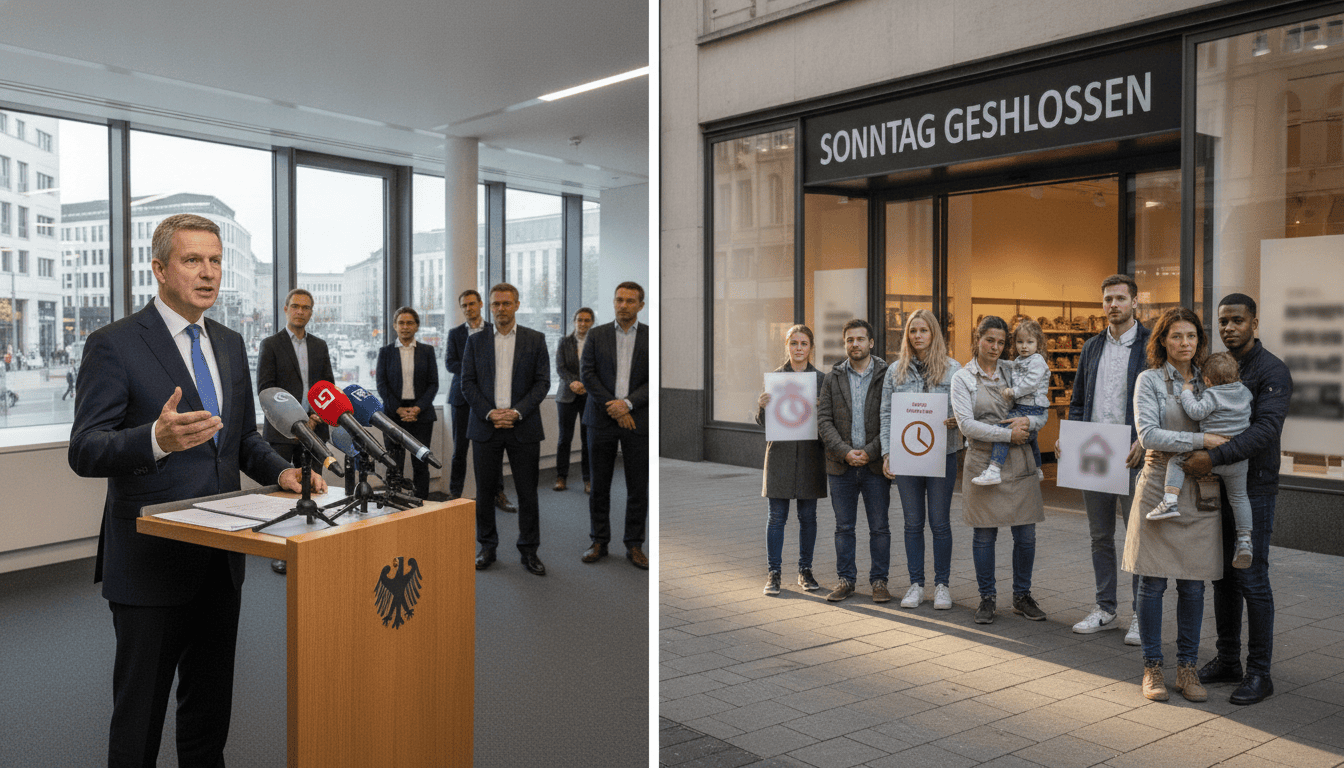
DIHK Pushes for Sunday Shop Openings as Political Backing Grows; Employee Concerns Rise
DIHK pushes for broader Sunday shop openings in Germany — supporters cite family convenience; unions warn of worker strain, childcare and legal complications.
The head of the German Chambers of Industry and Commerce (DIHK), Peter Adrian, has renewed calls to relax rules so that Sunday shop openings would become more widespread. Adrian and other business leaders argue that allowing shops to open on Sundays would let families shop together and revive quiet city centres. Political supporters have applauded the proposal, but labour groups and employee representatives say the benefits are uncertain and the costs for retail staff could be significant.
DIHK Proposal Draws Political and Business Support
The DIHK framed the proposal as a modernization of rigid shop-closing rules and presented Sunday shop openings as a practical step to meet contemporary consumer needs. Several politicians and business associations responded positively, citing potential gains for local economies and consumer convenience. Proponents say that measured liberalisation could make urban retail areas busier without imposing wholesale changes on all businesses.
Retailers Emphasize Family Convenience and Footfall
Retail groups have emphasised that Sunday openings could ease scheduling pressure on families who struggle to find weekday time for shopping. They also argue that more open Sundays would attract visitors to inner cities, supporting cafes, services and cultural venues that currently see limited weekend trade. For many chains, a small increase in weekend hours is presented as a way to spread demand and potentially boost overall sales.
Unions and Employees Warn of Sunday Workburden
Trade unions and employee advocates counter that the immediate beneficiaries of Sunday shop openings would not be families but employers and larger retail chains. Workers would face more irregular schedules, and many already work weekends; expanding Sunday hours risks increasing unpaid stress and complicating childcare arrangements. Union spokespeople stress that the social cost of eroding a common rest day must be weighed against uncertain commercial gains.
Childcare and Family Impact Under Scrutiny
Critics note a paradox: the policy pitched as family-friendly could undermine the families of retail staff who would shoulder extra shifts. Questions persist about who would cover childcare when employees are scheduled to work on Sundays and whether compensation and scheduling protections would be adequate. Policy makers and labour representatives say any reform must consider mandatory rest periods, accessible childcare solutions and binding compensation rules.
Economic Effects on Small Shops Versus Chains
Analysts caution that economic outcomes may vary sharply between small independent shops and large retail groups. Larger chains can absorb additional labour costs and adjust logistics more easily, while small retailers might struggle with staffing or choose not to open at all, potentially widening market concentration. Municipalities exploring pilot schemes could find an uneven effect on town-centre diversity and local tax revenues.
Legal and Regional Complications Remain
Germany’s shop-closing framework is shaped by federal and state-level rules, public holidays and municipal regulations, creating a complex legal landscape for any change to Sunday shop openings. Implementing wider openings would require coordinated legislative or regulatory action and likely face legal challenges and local resistance. Officials have signalled the need for carefully designed exemptions, enforcement mechanisms and possibly state-specific approaches.
Proposed Compromises and Safeguards
Some stakeholders have floated compromise models that would permit a limited number of additional, freely chosen Sundays per year with strict safeguards for employee rights. Proposals include higher pay premiums for Sunday work, guaranteed alternative days off, and collective bargaining provisions to protect staffing levels and schedules. Pilot projects and negotiated agreements at municipal or sectoral level are being suggested as ways to test effects before any nationwide roll-out.
While supporters highlight convenience and potential urban renewal, opponents underline the social and logistical downsides for retail employees and their families. If policy makers pursue change, they will need to reconcile competing interests through concrete safeguards and legally enforceable protections.
The debate over Sunday shop openings is likely to continue as parties weigh economic opportunity against social costs, and as municipalities consider local pilots and negotiated solutions.
