
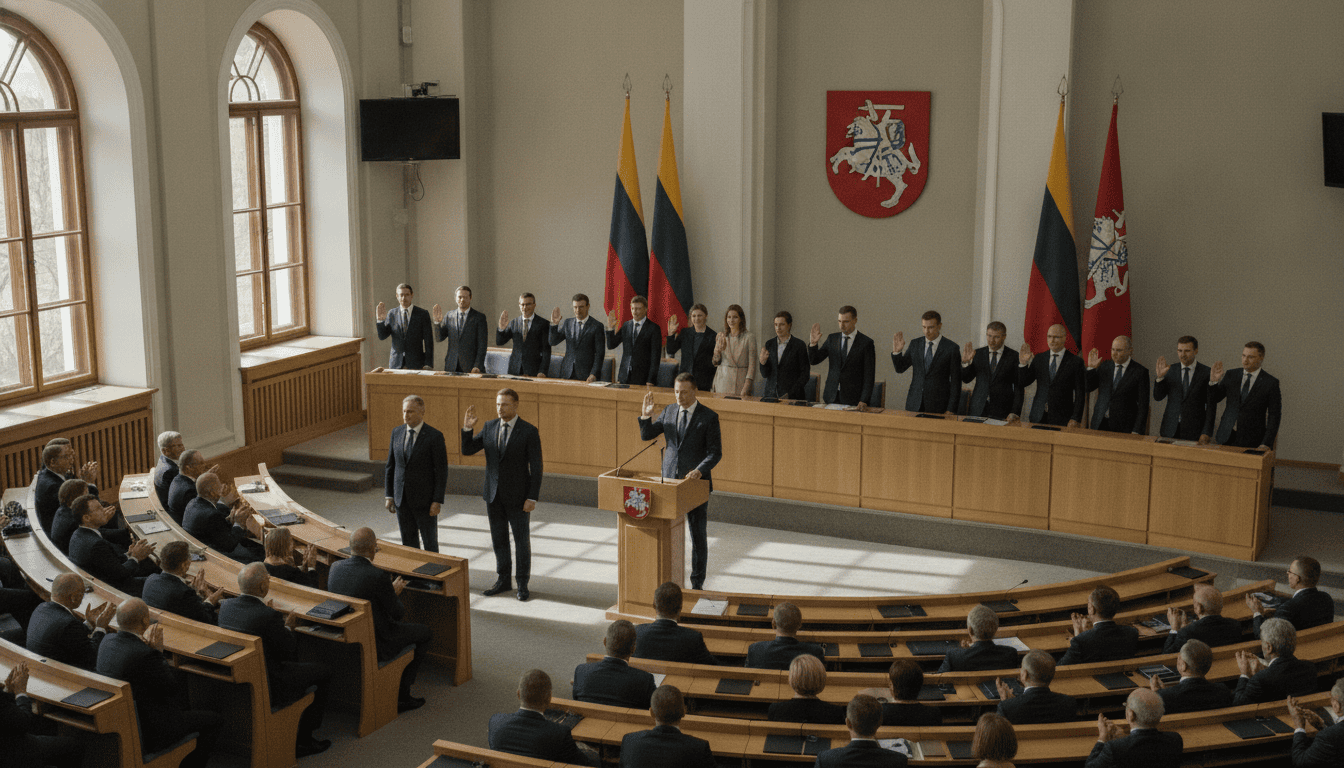
New government in Lithuania sworn in after coalition shift
Lithuania’s new government in Lithuania, led by Social Democrat Mindaugas Sinkevičius, was sworn in on July 14, 2026, after parliament approved the cabinet and policy program. The vote clears the way for the administration to begin implementing its agenda following a coalition realignment that opened the path to power. Lawmakers endorsed the prime minister’s team and program, enabling the new government to assume full responsibility for domestic and foreign policy.
Parliamentary approval and swearing-in
The Seimas formally endorsed the cabinet and program on July 14, 2026, concluding a week of debates and negotiations that followed the coalition change. Members of parliament voted to grant confidence to Prime Minister Mindaugas Sinkevičius and his ministers, allowing the administration to be sworn in and start official duties. The ceremony and parliamentary confirmation mark the procedural completion of the transfer of executive authority.
Coalition change that made government possible
A recent reshuffle of coalition partners in the Seimas created the parliamentary majority needed to support the new cabinet. That realignment, negotiated in the weeks preceding the vote, removed procedural obstacles and provided Sinkevičius with the backing to present a cohesive policy platform. Political leaders emphasized that the coalition shift was aimed at restoring governability and advancing a program they argued is responsive to current social and economic priorities.
Sinkevičius frames policy priorities
Prime Minister Mindaugas Sinkevičius presented a program focused on strengthening social protections, fostering sustainable economic growth and maintaining Lithuania’s commitments in the European Union. In his opening remarks to parliament, he pledged to pursue practical measures that address cost-of-living pressures while preserving fiscal stability. The government’s stated priorities also include sustaining Lithuania’s security posture and engaging constructively with EU partners on shared challenges.
Domestic and regional implications
Domestically, the new government’s arrival is likely to recalibrate policy debates in Vilnius and affect legislative timelines for key reforms. The coalition’s composition will shape which bills advance rapidly and which require further negotiation in committee. Regionally, neighbours and EU institutions will monitor how the administration balances social policy aims with broader commitments on defence, energy and integration within the European framework.
Reactions from political and civic actors
Supporters of the new cabinet hailed the parliamentary vote as a step toward political stability and policy continuity after months of uncertainty. Opposition politicians warned that the coalition’s shift may not translate into swift improvements in living standards without concrete legislative action. Civil society groups and business associations have called for early clarity on measures to support households and strengthen the investment climate.
Transition steps and immediate agenda
With ministers taking their oaths and assuming office, the government will move quickly to staff ministries and outline short-term initiatives. Officials are expected to publish detailed action plans for the first 100 days, including timelines for priority legislation and administrative measures. Parliamentary committees will begin scrutinizing the program, and the executive will need to secure cooperation from coalition partners to implement the most sensitive elements of its platform.
The parliamentary confirmation on July 14, 2026, gives the Sinkevičius administration a formal mandate to govern, but the effectiveness of the new government will depend on its ability to translate broad program promises into deliverable policies amid competing political pressures.
