
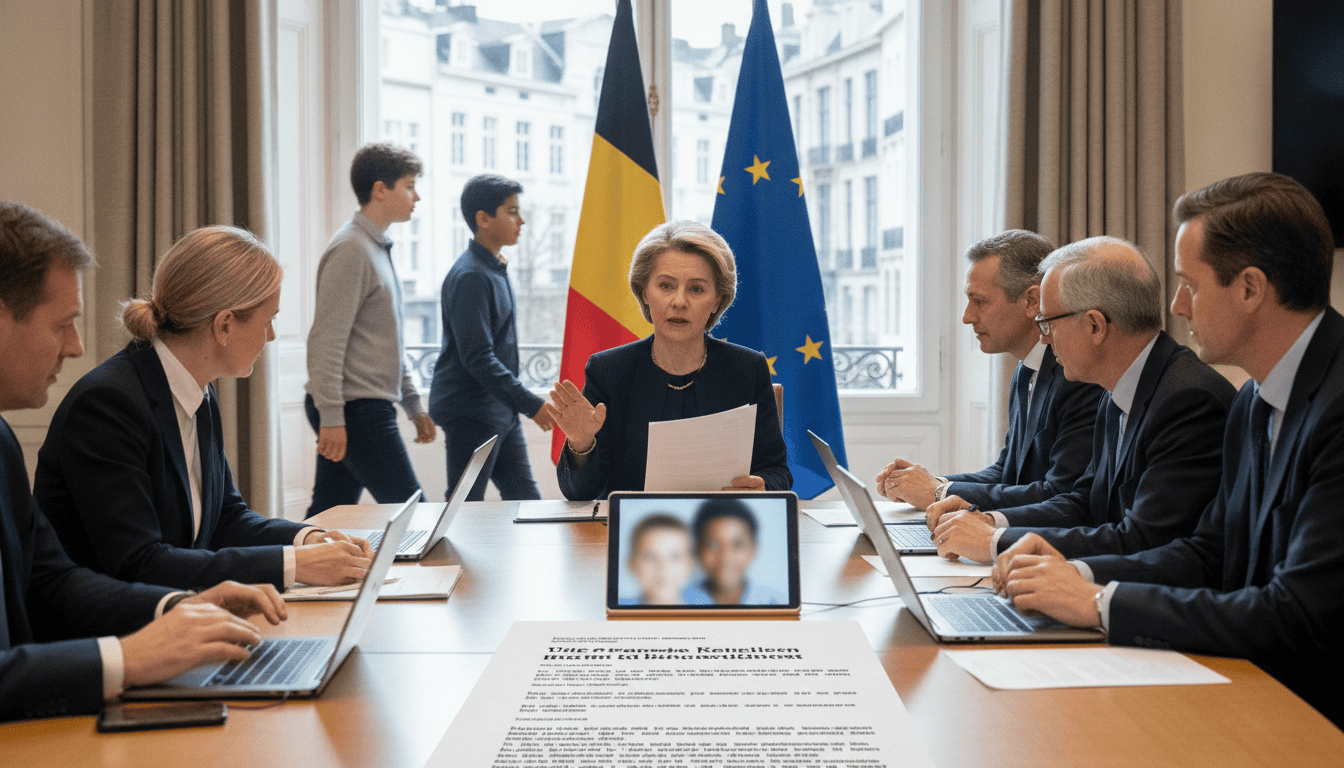
EU panel and German report back age-based limits for social media for children
EU experts and a German commission endorse age-based rules for social media for children; Brussels may set minimum age around 13 to curb algorithmic harms.
The EU expert panel’s recommendations on social media for children closely mirror findings of a German commission that published its report in April, arguing that very young children should be shielded from smartphone platforms. European Commission President Ursula von der Leyen has signaled support for age-tiered regulation, and officials in Brussels are discussing a likely minimum access age around 13. The convergence of expert advice and national analysis has revived political momentum for concrete rules governing minors’ access to social media.
EU experts recommend age-tiered restrictions
The advisory group convened at EU level urged member states to treat social media access as an age-graded issue, not a one-size-fits-all policy. Its guidance stresses that toddlers should be kept off social platforms entirely and that exposure should increase only under controlled, age-appropriate conditions.
The panel pointed to developmental research showing early and unregulated access can increase risks to mental health, sleep and attention for younger children. Recommendations also emphasize that protections should be built into platform design rather than left solely to parental controls.
German commission passes responsibility to parents and schools
Germany’s commission, whose report appeared in April, stopped short of proposing an outright ban and instead framed the question as one for parents and schools to resolve. The German body returned the policy decision to guardians and educators, arguing they must manage children’s access while government action is deliberated.
In practice many parents and schools have already adopted restrictive rules, reflecting frustration with the scale and pace of digital adoption. The German report acknowledged these grassroots responses while urging clearer national guidance to support families and teachers.
Schools and families facing control loss over digital access
Researchers working for policymakers documented a widespread sense of loss of control in homes and classrooms as social platforms became central to youth culture. Parents reported initially resisting but eventually conceding to persistent peer pressure and the design tactics of platforms that encourage frequent use.
Teachers have similarly struggled to balance the educational use of digital tools with the disruptive effects of social apps during school hours. The research warns that absent stronger safeguards, schools and families will continue to shoulder the costs of regulation gaps.
Brussels signals likely minimum age near 13
Brussels officials appear inclined toward a clear minimum age threshold as part of broader regulatory reforms, with 13 emerging as the plausible baseline in current discussions. That age would align with norms adopted in several jurisdictions and reflect a compromise between protecting young children and preserving adolescent autonomy.
Commission spokespeople have framed the threshold as one element among several, including verification measures, parental consent mechanisms and limits on algorithmic targeting. Lawmakers must still reconcile technical enforcement questions with legal protections for minors across member states.
Algorithmic design and enforcement challenges
Experts warn that simply setting an age limit will not resolve the fundamental problem posed by addictive recommendation algorithms that drive engagement. Platforms often optimize for time spent and interaction, outcomes that can be harmful for developing users even when nominal safeguards exist.
Regulators therefore face two tasks: mandate age-appropriate product design and create credible enforcement that platforms cannot easily evade. This will require clearer definitions of harmful algorithmic practices and investment in verification technologies that respect privacy and legal standards.
The debate has also highlighted tensions between individual freedom and collective responsibility, with critics cautioning against excessive state paternalism while advocates argue stronger rules are necessary to protect vulnerable users.
The policy push in Brussels follows growing public unease over the role of social media in childhood development, and it places pressure on member states to prepare complementary measures in education and family support. As legislative drafts take shape, the discussion will likely focus on balancing enforceability, privacy safeguards and the practical role of parents and schools in implementing any new rules.
Public authorities, education leaders and platform operators now face a narrowing window to design workable safeguards that limit harms while allowing older adolescents reasonable digital participation. The coming months will determine whether the EU can translate converging expert opinion and national reports into enforceable protections for children on social media.
