
Germany’s SPD Rebukes Foreign Minister Wadephul Over EU Talks on Illegal Israeli Settlements
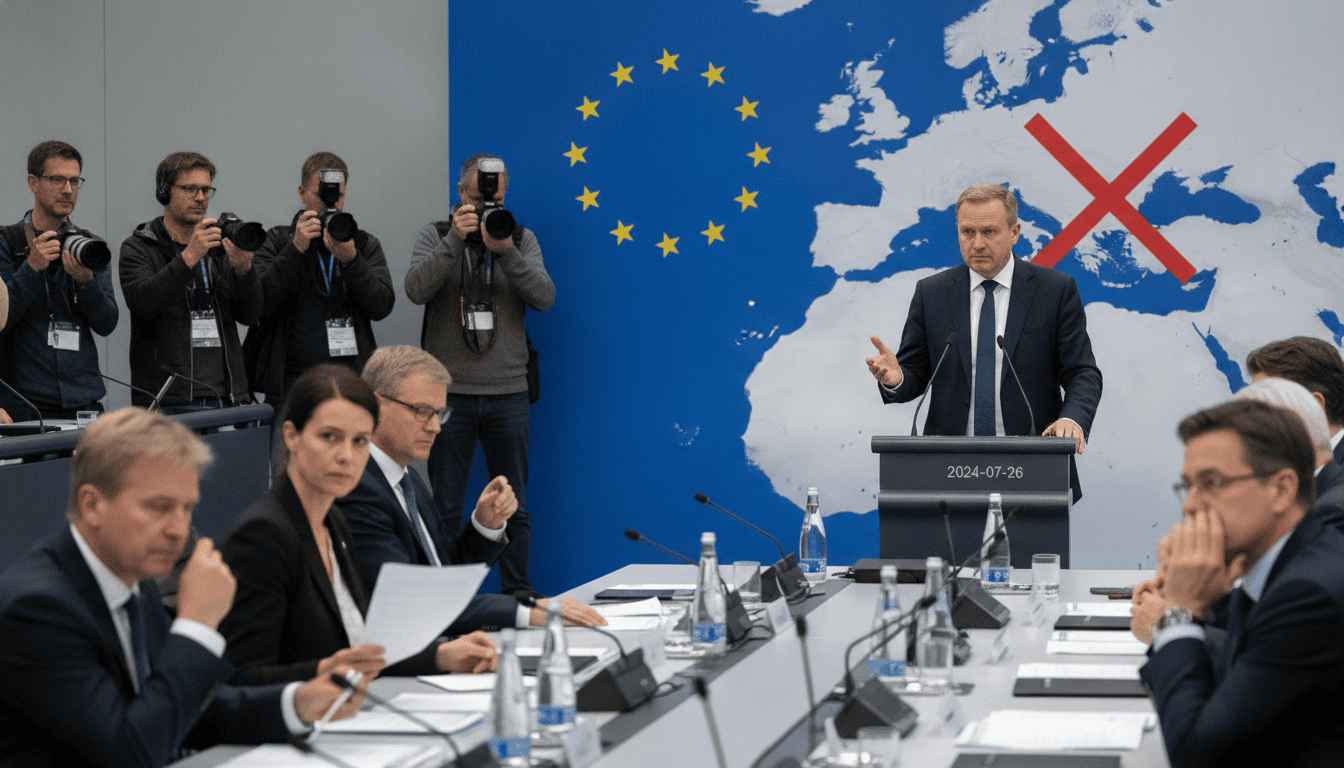
German SPD lawmakers publicly criticized Foreign Minister Johann Wadephul (CDU) after EU foreign ministers met in Brussels on Monday, July 13, 2026, to consider measures related to illegal Israeli settlements in the West Bank. The SPD said Germany’s posture during those EU deliberations — which rejected presented options for EU-wide import restrictions or bans — amounted to a de facto veto in the face of what it described as clear breaches of international law. The debate has exposed strains within the governing coalition and widened divisions among EU member states over how to respond to settlement activity.
SPD Criticizes Wadephul’s EU Stance
Adis Ahmetović, the SPD parliamentary group’s foreign policy spokesman, told Spiegel that Germany could not make vetoing action its default response when faced with what he termed “obvious violations of international law.” His comments directly challenged the public line taken by Foreign Minister Johann Wadephul during the Brussels discussions.
Ralf Stegner, another SPD foreign policy figure, said Wadephul “does not represent the position of the entire coalition,” underscoring internal disagreement in Berlin over the government’s approach. SPD officials emphasized that criticizing alleged breaches of international law should not be conflated with being anti‑Israel or antisemitic.
What EU Ministers Discussed in Brussels on July 13, 2026
On July 13, 2026, EU foreign ministers met in Brussels to review options for responding to settlement expansion in the West Bank, including potential trade and import measures. Delegations aired a range of proposals, from targeted sanctions to more sweeping import restrictions or bans on goods originating in settlements.
According to participants, several member states pushed for assertive steps aimed at increasing political pressure on the Israeli government, while others, including Germany and additional capitals, made clear they would not endorse the specific options put forward at that session. Ministers left the meeting without a unified position, signaling that further consultations will be necessary.
Coalition Tensions and Political Fallout in Berlin
The public airing of differences has sharpened political tensions within Germany’s coalition government, where the CDU-led foreign minister’s stance is now under scrutiny from the SPD. Party leaders in Berlin are weighing the diplomatic implications of joining or blocking tougher EU measures, while also managing domestic political sensitivities.
SPD lawmakers framed their critique as an appeal to uphold international legal norms, arguing that reluctance to pursue available tools undermines Germany’s credibility on human rights and international law. The dispute is likely to prompt further consultations among coalition partners before Berlin sets a final position in upcoming EU deliberations.
Options on the Table: Trade Measures and Import Restrictions
Among the measures discussed in Brussels were options to impose EU-wide import restrictions or bans on products originating in settlements. Proponents say such measures are intended to avoid normalizing economic activity that stems from territory widely regarded as occupied under international law.
Opponents in the meeting cited legal and practical challenges, including how to define and verify the origin of goods, the measure’s potential effectiveness, and the diplomatic fallout of sweeping trade restrictions. Those practical complications were central to why Germany and other states signaled opposition to the precise options tabled at the July 13 session.
Divergence Among EU Member States
The debate in Brussels exposed deep divisions across the bloc, with some member states urging a firm response to settlement activity and others advocating caution to preserve diplomatic channels. These differences reflect broader divergences in how EU capitals balance legal principles, security concerns, alliance relationships, and domestic political pressures.
Analysts say the split complicates the EU’s ability to present a coherent foreign policy on Israel and the occupied Palestinian territories, and that finding a compromise could require narrower, targeted measures rather than a broad, bloc-wide ban. Negotiators will face the task of reconciling varied national priorities with calls for decisive action from several governments.
International Law Framing and Political Messaging
SPD officials framed their critique in legal terms, arguing that alleged breaches of international law require a robust response rather than a reflexive veto. They stressed that holding a government accountable for actions judged unlawful is distinct from criticizing a state’s right to exist or from antisemitism.
German leaders now confront the dual challenge of articulating a consistent legal and moral stance while managing strategic relations with Israel and navigating intra-EU politics. How Berlin balances those considerations will shape its diplomatic messaging in coming weeks as the EU explores possible next steps.
The outcome of the Brussels deliberations is likely to hinge on further negotiations among EU capitals and within Germany’s coalition, with both legal questions and political calculations shaping any future measures. Observers say the stakes include not only the immediate policy response to settlement activity, but also broader perceptions of the EU’s ability to act collectively on complex foreign policy issues.
