
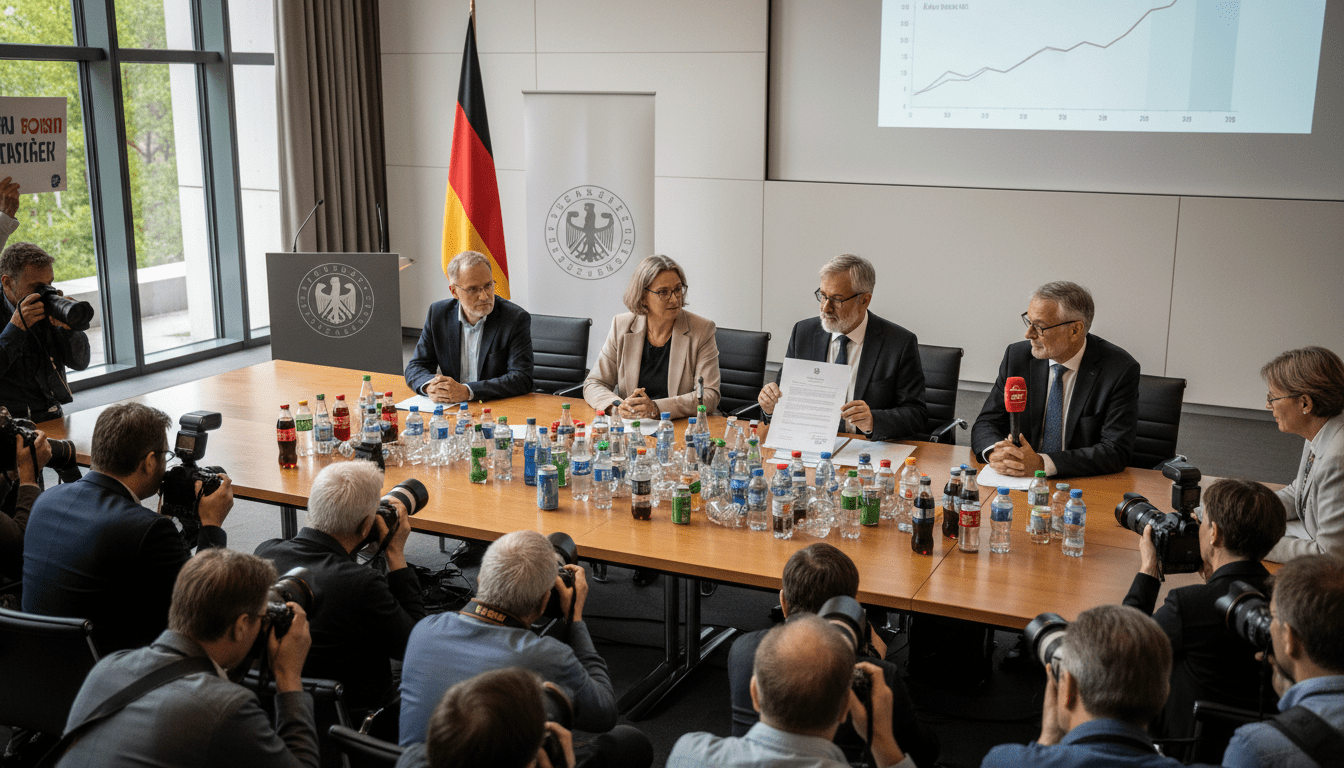
Thousands of doctors urge Germany to introduce sugar tax on sweetened drinks
About 4,000 doctors and 1,000+ nutrition and diabetes advisers urge Germany to impose a sugar tax on sweetened drinks to curb disease and fund prevention.
The call for a sugar tax on sweetened beverages was issued by a broad coalition of medical professionals and health organizations, who say the levy would reduce diet-related illnesses and provide funds for prevention. Foodwatch Germany led the appeal, which was signed by roughly 4,000 physicians, more than 1,000 nutrition and diabetes counselors and pharmacists. Supporters say the tax should vary with sugar content and be indexed to inflation to preserve its impact over time.
Thousands of health professionals sign the appeal
The petition gathered substantial medical backing, reflecting growing concern about sugar-related health harms across Germany. Foodwatch reported the number of signatories and emphasized the wide professional mix behind the demand, from doctors to pharmacy and nutrition specialists.
Advocates framed the appeal as a public-health measure rather than a punitive tax on consumers, arguing the design would target manufacturers and high-sugar products. They contend that a tiered levy keyed to sugar concentration would incentivize reformulation and shift consumption toward healthier choices.
Medical leaders and unions add weight
Prominent figures in the medical community joined the initiative, lending institutional credibility to the proposal. Klaus Reinhardt, president of the German Medical Association (Bundesärztekammer), and Susanne Johna, chair of the Marburger Bund doctors’ union, are listed among the signatories.
Their participation signals cross-cutting support within medical governance and frontline practitioner networks for fiscal measures to improve population health. Reinhardt called on Finance Minister Lars Klingbeil to present a concrete proposal, highlighting the protection of children as a central rationale.
Expert commission suggests per‑litre levy of 26–32 cents
A government-appointed expert commission recently put a sugar tax on the policy table, proposing a per-litre levy of between 26 and 32 euro cents on sugar-sweetened beverages. The commission recommended that the rate be adjusted annually for inflation to maintain its real value.
Under the proposed structure, beverages would be taxed according to sugar content, creating stronger price signals for high-sugar products. Supporters cite international examples where similar levies have contributed to reduced consumption of sugary drinks and prompted product reformulation.
Political responses reveal divisions within government parties
Federal Health Minister Nina Warken indicated openness to the commission’s ideas but acknowledged differing views within her party. Observers note that responsibility for detailed fiscal design rests with the Finance Ministry, a point emphasized by signatories calling for concrete action.
The government’s broader savings package is expected to reach the federal cabinet on Wednesday, April 29, 2026, a key moment for whether proposals tied to healthcare financing and prevention advance. Proponents hope the cabinet discussion will prompt a formal submission from the Finance Ministry and a parliamentary timetable.
Supporters highlight dual health and fiscal benefits
Advocates frame the sugar tax as a measure that pays off twice: lowering health-care costs tied to diet-related disease while generating revenue earmarked for prevention and public health programs. Foodwatch’s Luise Molling said the tax would not only reduce diet-related illness but also free funds for improved health prevention.
Economic estimates from public-health analysts tend to show that revenues can be significant while consumer price effects concentrate on discretionary sugary beverages rather than staples. Backers argue that dedicated spending on prevention would amplify the policy’s public-health returns over the medium term.
Industry resistance and implementation challenges expected
Beverage industry groups and trade associations historically oppose excise-style levies, warning of job impacts and higher retail prices for consumers. Critics also argue that taxes may be regressive unless accompanied by subsidies or targeted support for low-income households.
Design details will determine both effectiveness and political feasibility, including the tax base, thresholds, exemptions, and whether revenues are ring-fenced for health promotion. Policymakers will need to balance public-health objectives with administrative simplicity and legal considerations at the EU level.
The coming weeks will test whether the momentum from medical bodies and the expert commission translates into concrete policymaking. With a cabinet discussion scheduled for April 29, 2026, advocates are pressing the Finance Ministry to produce a clear legislative draft that applies a tiered sugar tax to sweetened drinks and allocates revenue to prevention.
