
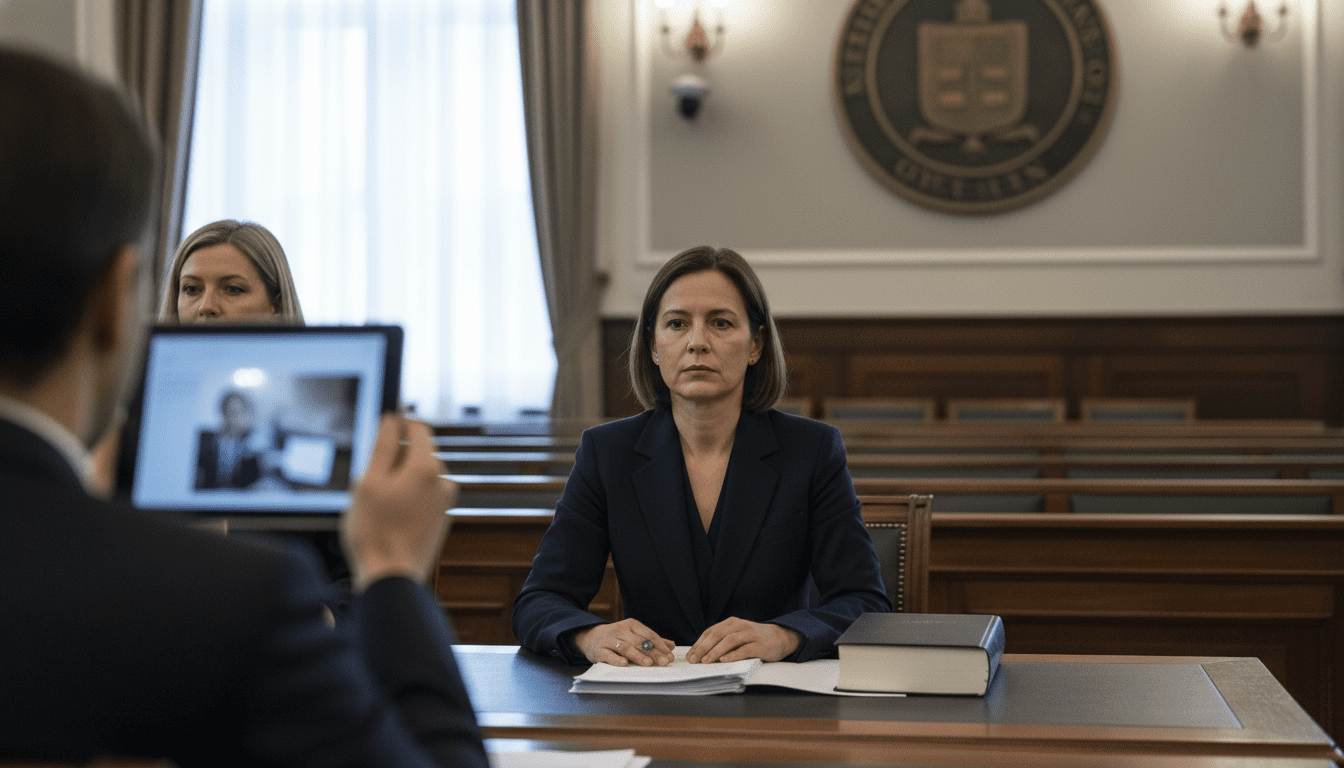
US sanctions on ICC judges: Judge Beti Hohler says she learned of measures at Armenia conference
Judge Beti Hohler learned of US sanctions on ICC judges while attending a conference in Armenia; she was among the first four judges targeted over warrants involving Netanyahu and Yoav Galant.
Opening disclosure at an international conference
Judge Beti Hohler told journalists she learned last June that Donald Trump had imposed US sanctions on ICC judges while she was attending a conference in Armenia.
She said the news arrived amid circulating reports that U.S. authorities were considering measures against members of the International Criminal Court.
Hohler stated she and other judges were singled out because of their roles in decisions related to arrest-warrant applications.
The measures, she said, appeared aimed at the chamber that handled applications tied to Israeli officials, including Benjamin Netanyahu and Yoav Galant.
Sanctions linked to warrant decisions on Netanyahu and Galant
The sanctions targeted judges who participated in proceedings connected to arrest-warrant requests for Mr. Netanyahu and his former defense minister, Mr. Galant.
That connection, disclosed by Hohler, frames the measures as directly linked to specific high-profile ICC actions rather than broader personnel policies.
Observers say tying punitive measures to particular judicial decisions raises questions about the line between foreign policy and judicial independence.
Hohler’s account underscores how external political pressure can quickly become entangled with the court’s casework.
Initial and subsequent waves of targeted judges
Hohler was among the first four judges to be sanctioned, she confirmed, and she said a further four colleagues were hit by later measures.
The staggered pattern suggests a widening campaign rather than a one-off response, according to her description.
The sequential imposition of measures may signal an evolving U.S. strategy toward the ICC, focused on officials who engaged with sensitive cases.
Hohler’s testimony provides a rare inside view of how individual court members became the subject of international punitive steps.
Practical effects on judges’ work and mobility
Hohler described the moment of learning about the sanctions as unforgettable, noting the immediate personal and professional disruptions they caused.
Sanctions of this kind typically include travel restrictions and financial measures that can complicate judges’ ability to attend conferences or access resources.
Such constraints can affect the day-to-day functioning of judicial panels, from scheduling hearings to consulting with legal staff.
Even if formal court business continues, the practical limitations on mobility and financial transactions alter how judges participate in international legal networks.
Legal scholars warn about implications for court independence
Legal experts say public targeting of individual judges risks undermining the perceived impartiality of the International Criminal Court.
When sanctions are tied to specific rulings or docket items, critics argue, it creates a chilling effect that may influence judicial decision-making.
Supporters of the measures counter that states have the right to respond to international legal actions they deem politically or legally problematic.
The debate highlights a deeper clash over jurisdiction, sovereignty, and how accountability is pursued across borders.
Diplomatic fallout and potential next steps
Hohler’s account is likely to prompt renewed diplomatic scrutiny from states and international organisations watching the ICC’s role in high-profile conflicts.
Diplomats and legal officials will now weigh how to address both the sanctions themselves and the broader implications for cooperation with the court.
Any effort to roll back or defend the measures will depend on political calculations in capitals and the willingness of third-party states to mediate.
For judges under sanction, the immediate priority remains preserving the integrity of their judicial functions while managing the personal consequences of the measures.
Judge Hohler’s description of learning about the sanctions at a conference in Armenia sheds light on a confrontational moment between a powerful state actor and members of the International Criminal Court, and it raises enduring questions about how geopolitical pressures intersect with international justice.
