
U.S. Deal for Brazil Rare Earths Secures Critical Supply Chain for Defense and Clean Energy
U.S. acquisition of Brazil rare earths producer Serra Verde aims to secure critical magnets for defense and clean-energy supply chains amid China’s dominance.
U.S.-Brazil agreement to buy Serra Verde
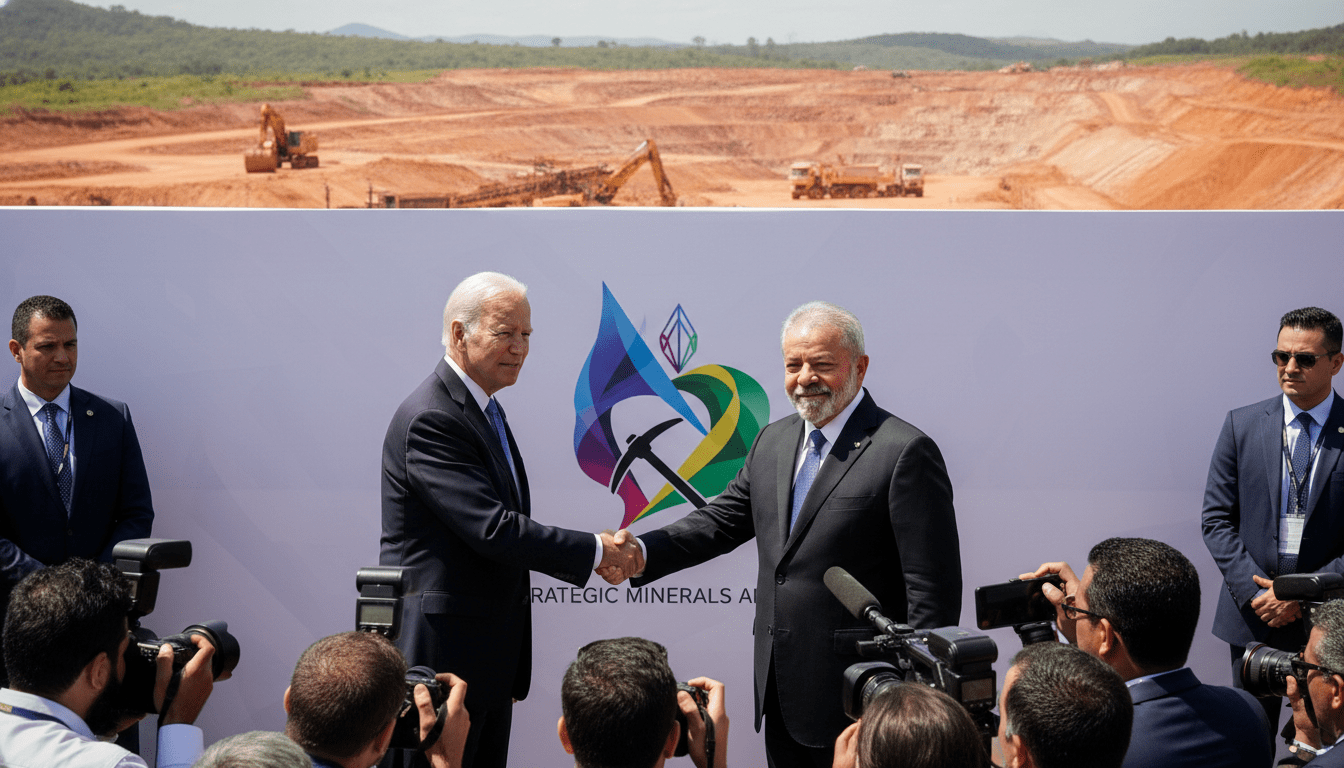
The United States has moved to acquire Serra Verde, a Brazilian mining and processing company that controls the Pela Ema deposit, to secure Brazil rare earths critical for high-temperature permanent magnets. The deal, backed by U.S. financing and purchase guarantees, is intended to diversify supply chains for industries from defense to offshore wind. Officials framed the transaction as a strategic correction to decades of concentrated production in East Asia.
Why Pela Ema matters for magnet production
Pela Ema contains unusually high concentrations of heavy rare earths such as dysprosium and terbium, which are essential for magnets that must retain strength at high temperatures. Those magnets are used in electric vehicle motors, wind turbines and multiple defense systems, making the deposit geopolitically valuable. Commercial-scale production of these specific elements is rare outside China, elevating Pela Ema’s significance for global manufacturers.
China’s past dominance and policy-driven edge
China’s near-monopoly over rare earths reflects more than geology; it also mirrors a long-running industrial policy that incentivized extraction and processing at scale. That integrated value chain—from mining to refining—kept prices low and discouraged foreign investment in alternative deposits. As a result, supply security for critical elements became tightly linked to one country’s industrial strategy.
Pentagon alarm and shifting U.S. priorities
U.S. defense authorities raised concerns that dependence on Asian supply chains left key military systems vulnerable. Shortages of heavy rare earths can disrupt production of missiles, radars and armored vehicles, prompting policymakers to consider supply diversification a national-security imperative. That urgency helped shift U.S. policy from punitive trade measures to targeted investment in alternative sources.
Political reversals that enabled the transaction
Diplomatic tensions previously complicated cooperation between Washington and Brasília, but strategic considerations reshaped the relationship. After a period of sanctions and tariffs, U.S. officials eased measures and offered economic incentives to facilitate talks about the mine and downstream processing. Those political shifts, combined with development financing, created the conditions for the transaction to proceed.
Logistical and industrial challenges ahead
Securing ownership is only the first step; building an independent Western supply chain faces material obstacles. Much of the mine’s current equipment, processing chemicals and maintenance services come from Chinese suppliers, creating potential bottlenecks if ties with China change. Establishing refinery capacity, worker training and environmentally compliant processing will require sustained capital and technical assistance.
Economic trade-offs and global market impacts
The $2.8 billion transaction package ties U.S. financial support to long-term offtake agreements and development financing that Brazil needs to scale production. For Brasília, selling a stake offers revenue and pathways to diversify export partners while reducing reliance on any single buyer. On global markets, an operating Pela Ema under Western-backed management could ease supply anxieties and prompt adjustments in pricing and investment strategies across the magnet and high-tech sectors.
The transaction underscores a broader reorientation of industrial policy where nations are willing to combine diplomacy, development finance and commercial incentives to secure critical minerals. Successfully transforming Brazil rare earths into reliable, diversified supplies will require months of regulatory approvals, infrastructure upgrades and coordination with private industry. If those pieces fall into place, the deal could mark a significant shift in the geopolitics of rare earths and the resilience of defense and clean-energy supply chains.
