
Chinese automakers seize spotlight as BYD, Geely and Xiaomi escalate global push
Chinese automakers dominated China’s auto show, unveiling 180+ models as BYD, Geely and Xiaomi push aggressive export plans and recruit European talent.
Chinese automakers used this year’s major auto exhibition to announce an array of new models, bold export targets and high‑profile hires, signaling a deliberate shift from domestic consolidation to global competition. The industry presented more than 180 new vehicles, staged theatrical product demonstrations and courted overseas media and influencers as part of a coordinated push to expand sales beyond China. The spectacle underscored how quickly China’s carmakers have moved from imitators to agenda‑setters on the global automotive stage.
Scale of new‑model rollout at the show
Manufacturers displayed a volume of launches rarely seen at a single trade event, with multiple brands unveiling complete lineups of new electric and hybrid models. The breadth of introductions reflected intensive investment in design, software and battery technology aimed at accelerating international sales. Several companies accompanied their displays with targeted hospitality for foreign dealers, bloggers and potential partners to build momentum ahead of export campaigns.
Observers at the event noted an asymmetry in access: while companies flew in western influencers and a cadre of invited specialists, many traditional foreign newspaper journalists faced restricted accreditation. That access strategy highlighted how some Chinese groups prioritize controlled commercial outreach while limiting unmediated press coverage.
Xiaomi’s recruitment drive and Munich development hub
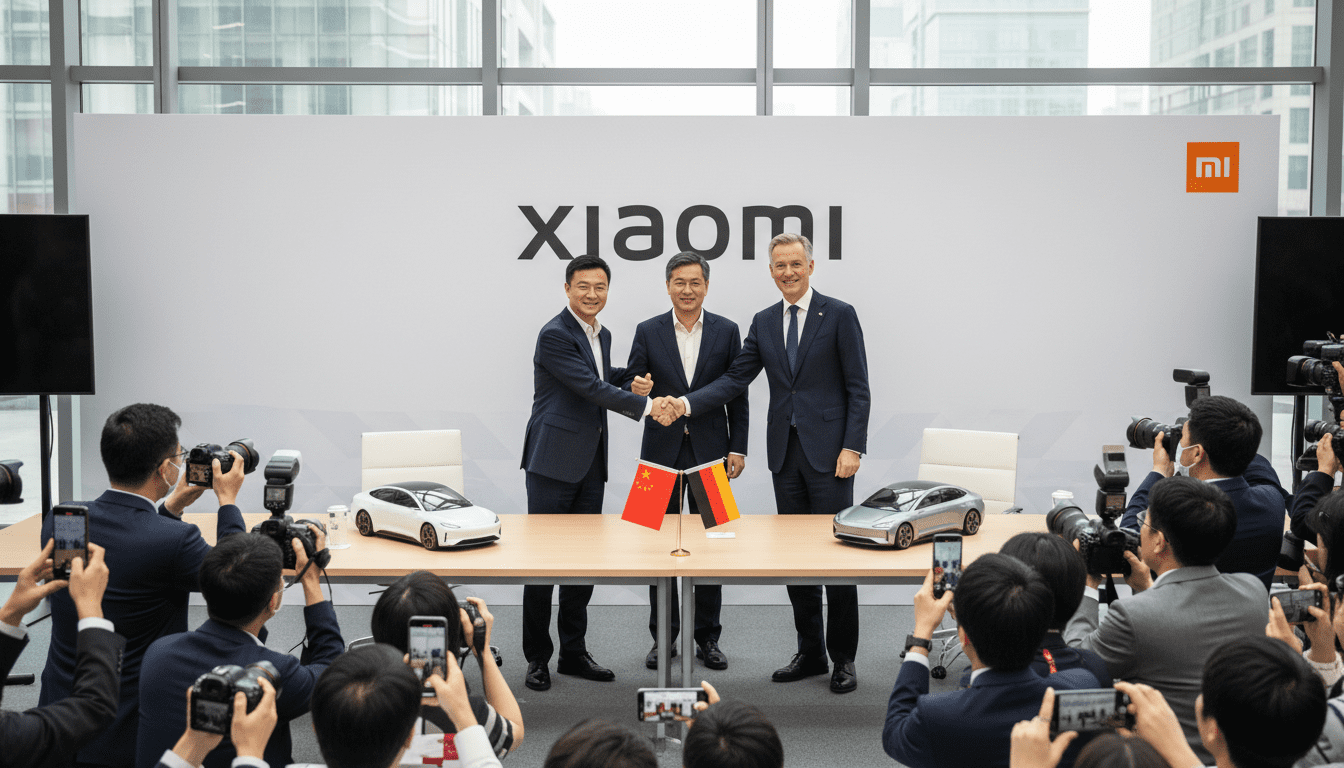
Xiaomi announced a new development center in Munich and disclosed that it has hired a significant number of established European car designers and engineers. Company leadership said the hires include former executives and designers from BMW, Audi and several luxury marques, part of a deliberate effort to blend European experience with Xiaomi’s fast consumer‑electronics approach. The move marks Xiaomi’s transition from an entrant in the EV market to a player building out engineering and design capabilities abroad.
Executives at the show portrayed the recruitment as a competitive necessity: to meet European safety and design expectations, and to accelerate integration of automotive software and user experience. Xiaomi’s founder has cultivated a high public profile that helped the company attract attention at the exhibition and to position itself as a credible challenger in premium segments.
BYD’s cold‑weather battery demonstration
BYD established a dedicated large‑scale presence at the fair and staged a dramatic demonstration of its battery technology in a subzero test chamber. The company showcased battery performance at around minus 30 degrees Celsius and claimed the cells could be charged to usable levels within a few minutes under those conditions. The demonstration was intended to address durability and range concerns for markets with extreme cold climates and to differentiate BYD’s cells in a crowded EV battery landscape.
Despite its technology push, BYD has faced a slowdown in domestic sales since last year and has shifted greater emphasis to exports. The company is now directing resources to battery refinement and international aftersales support to sustain growth as nearly half of its shipments move overseas.
Geely and Chery set ambitious export targets
Geely used gala events and investor briefings to set clear export ambitions, with senior executives outlining plans to ship more than one million vehicles abroad within the next year and targets that could rise toward 1.5 million. The strategy includes scaling manufacturing capacity, expanding dealer networks and tailoring models to regulatory requirements in target markets. Those aims reflect a broader corporate decision to mitigate domestic margin pressures by seeking volume abroad.
State‑affiliated and private producers such as Chery are also intensifying their international footprint. Chery reported export volumes that place it among the largest Chinese exporters, with recent annual shipments exceeding one million units, and is positioning itself as a long‑standing global supplier especially to emerging markets.
Export surge reshaping global volumes and margins
Industry data presented at and around the show pointed to an export surge: projections for the current year anticipate several million passenger and light commercial vehicles leaving China for overseas markets. Analysts note that Chinese exports now form a substantial block of global supply, pressuring margins in competitive segments and prompting incumbent automakers in Japan, Korea and Europe to reassess pricing and product plans. Within China, intense competition among dozens of manufacturers has driven sector margins down, a dynamic pushing more firms to prioritize foreign markets.
The scale of Chinese shipments compared with traditional production centers is drawing attention: exports from China now rival production volumes in several major markets, shifting bargaining power to manufacturers that combine low costs with rapid product cycles.
German incumbents respond with product and leadership changes
German groups presented themselves as adjusting to the new competitive landscape, with Volkswagen rolling out a “Rise up” theme and emphasizing hybrid offerings and collaborative technology sourcing. Volkswagen’s leadership framed the strategy as a combination of renewed product focus and selective adoption of local technology, a response that some Chinese analysts described as pragmatic. BMW and other German premium makers were portrayed as better positioned than some peers, though all face the challenge of matching Chinese price and feature combinations in targeted segments.
At the same time, German executives were less visible as spectacle at the exhibition, in contrast to high‑profile Chinese founders who drew large crowds. Industry consultants urged stronger local leadership and more embedded relationships in China to maintain relevance and speed execution.
Augustin Friedel of the Porsche‑affiliated consultancy MHP recommended deeper localization of management and faster integration of local engineering talent. Several Chinese participants at the show reiterated the same advice, saying foreign groups should accelerate their hiring of Chinese managers to bridge cultural and market gaps.
Chinese automakers have entered a new phase of outward expansion, combining rapid product rollouts, targeted talent recruitment and technology demonstrations to support export momentum. The combination of aggressive pricing, improved engineering and coordinated global outreach presents a clear challenge to established automakers, who must balance technology partnerships, local leadership and product differentiation if they are to defend share in an increasingly China‑shaped global market.
