
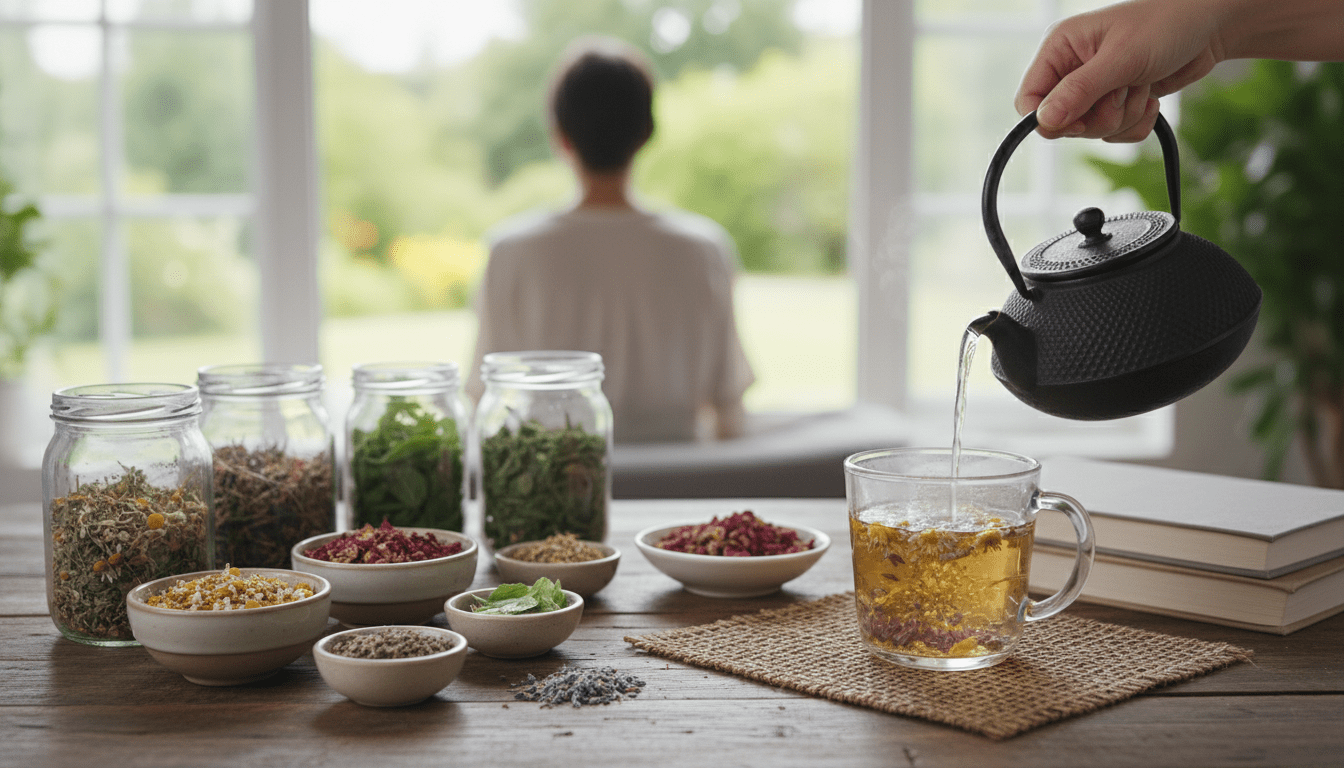
Stress-Relieving Teas: Eight Herbal and Adaptogenic Brews That Calm Mind and Body
Explore stress-relieving teas—chamomile, lavender, lemon balm, green tea, valerian, passionflower, ashwagandha and holy basil—with brewing and safety tips.
Chamomile and Lavender Lead for Nighttime Calm
Chamomile and lavender are among the most widely recommended stress-relieving teas for evening use. Chamomile contains the antioxidant apigenin, which binds to brain receptors and may promote restfulness while lowering anxiety, heart rate and blood pressure. Lavender’s floral compounds have been shown in research to influence the nervous system and can produce a calming effect that helps reduce tension. Both are naturally caffeine-free, making them suitable choices when winding down before sleep.
Lemon Balm, Valerian and Passionflower Target GABA Pathways
Several herbs work by supporting the brain’s GABA system, a key regulator of stress and relaxation. Lemon balm (Melissa officinalis) may increase GABA activity and has been associated with improved mood and sleep in clinical studies. Valerian root and passionflower have long histories as sedatives and are thought to increase GABA availability or interact with GABA receptors, which can shorten time to sleep and ease anxiety symptoms. People seeking stronger sedation often turn to these herbs, but effects can vary between individuals.
Green Tea Offers Alert Calm Through L-theanine
Green tea provides a different profile: it combines a modest amount of caffeine with the amino acid L-theanine for a calm but focused state. L-theanine promotes relaxation without drowsiness and can blunt some of caffeine’s jittery effects, making green tea a popular daytime option for stress relief when mental clarity is needed. Note that a typical 12-ounce cup contains about 37 milligrams of caffeine, so sensitive individuals should choose decaffeinated options or avoid late-afternoon consumption.
Ashwagandha and Holy Basil Act as Adaptogens to Lower Cortisol
Ashwagandha and holy basil (tulsi) are classified as adaptogens and are used to help the body respond to stress. Multiple studies report that ashwagandha can reduce perceived stress and lower cortisol levels, though some people may experience mild side effects such as stomach upset, nausea or drowsiness. An eight-week study of holy basil indicated reductions in perceived stress and some improvements in sleep quality, supporting its use as a daytime or evening, caffeine-free alternative. Both herbs are commonly consumed as teas or supplements, and effects typically build over days to weeks rather than immediately.
How to Brew for Maximum Relaxation
Proper brewing technique enhances flavor and the release of calming compounds in stress-relieving teas. Most herbal and green teas extract best between 70–90°C (158–194°F) with steep times from 2 to 10 minutes depending on the plant; cooler water and shorter steeps tend to produce smoother, less bitter cups. Developing a simple, mindful brewing ritual—paying attention to aroma, temperature and the first sip—can amplify the tea’s stress-reduction benefits by encouraging present-moment focus. Small adjustments in temperature and steeping time allow drinkers to tailor the strength and soothing quality of each cup.
Safety, Interactions and Practical Precautions
Herbal teas are generally well tolerated, but they are not risk-free and can interact with medications or medical conditions. Valerian, passionflower and other sedative herbs may increase drowsiness when combined with prescription sedatives, while ashwagandha can cause gastrointestinal upset in some users and may interact with thyroid or sedative medications. Green tea’s caffeine content can affect sleep and interact with stimulants or certain heart medications, so people who are pregnant, breastfeeding, taking regular medications, or living with chronic illness should consult a clinician before adding concentrated herbal teas or supplements. Start with small amounts to assess tolerance and discontinue use if you notice adverse effects.
Choosing the Right Tea for Your Routine
Match your choice of stress-relieving teas to the time of day and your intended effect: caffeine-free chamomile, lavender, lemon balm or holy basil for evening relaxation; green tea for daytime calm and focus; valerian, passionflower or higher-dose adaptogens when stronger sedation or longer-term stress reduction is the goal. Consider taste, sensitivity to caffeine, potential drug interactions and whether you need immediate relaxation or a tonic for chronic stress. When in doubt, try single-ingredient infusions first to gauge how your body responds before combining herbs or switching to concentrated extracts.
Herbal tea can be a simple, low-cost tool in a broader stress-management plan, but it works best alongside sleep hygiene, exercise and mindful practices. If stress, anxiety or sleep problems persist despite dietary and lifestyle measures, seek guidance from a healthcare professional to explore evidence-based therapies and personalized care.
