
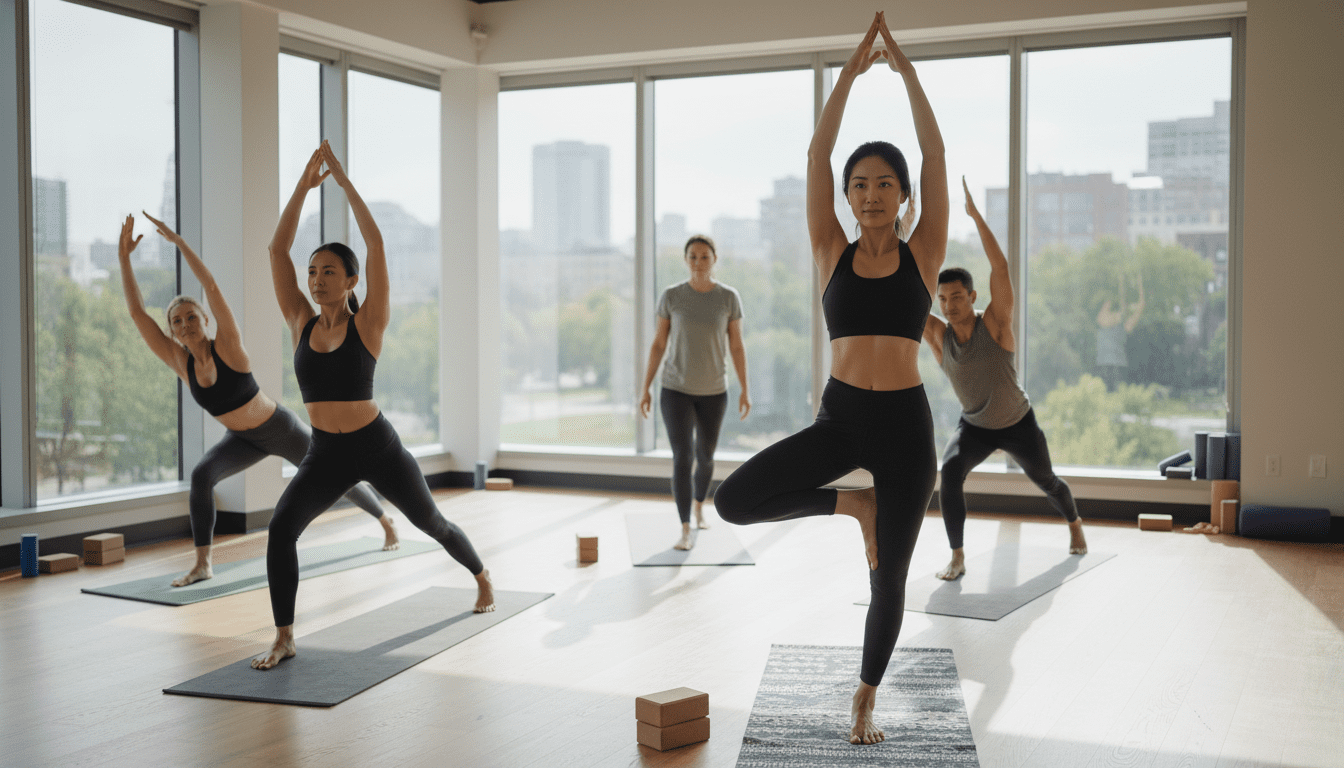
Best yoga poses for beginners: a practical guide to starting safely and building strength
A concise guide highlights the best yoga poses for beginners, offering clear instructions, benefits, and safety tips to help new practitioners start a routine. The list of poses includes downward dog, mountain pose, warrior variations, triangle, tree pose, plank, cat-cow, cobra and child’s pose, all explained with simple alignment cues. The guide recommends short holds, breath-focused practice and accessible modifications to support balance, flexibility and core strength for novices.
Downward Dog Listed as a Foundational Pose
This foundational posture is recommended for its full-body stretch and accessibility for beginners. Pressing into the palms and lifting the hips creates a lengthening effect through the hamstrings and thoracic spine while gently decompressing the shoulders.
Beginners are advised to bend the knees initially and focus on lifting the sit bones, gradually pressing heels toward the mat as flexibility improves. Small movements such as “pedaling” the feet can ease tension and increase range of motion without forcing the stretch.
Mountain Pose Recommended for Grounding and Breath
Mountain pose is presented as a simple yet powerful centering pose to begin and transition between flows. Standing tall with active feet and long breaths helps stabilize posture and reconnects attention to the breath and alignment.
Short holds, deliberate grounding of the feet, and an emphasis on long inhales and controlled exhales make the pose a useful reset during practice. For beginners, holding the position for several breaths cultivates balance and prepares the body for more demanding poses.
Warrior Series Emphasized for Strength and Stability
Warrior I and II are highlighted for building lower-body strength and improving stability through controlled lunges. The variations differ in arm and torso orientation, with Warrior I encouraging an overhead reach and forward-facing hips, and Warrior II focusing on lateral strength with arms extended.
Instruction recommends keeping hips squared in Warrior I and aligning the front knee over the ankle to protect joints. Breath awareness and a neutral or slightly extended spine help maintain balance and reduce the risk of strain during the holds.
Triangle and Other Standing Poses for Flexibility and Balance
Triangle pose is singled out for hip openness and balance, and the guide suggests using a block when full flexibility is not yet available. A wide base, thoughtful rotation of the torso, and steady breath support stability while working the legs and hips.
Combining triangle with standing balance work such as tree pose helps beginners develop coordination and proprioception gradually. Practicing with props and lowering expectations for how far the hand reaches reduces injury risk and speeds functional progress.
Core and Upper-Body Conditioning: High Plank and Tree Pose
High plank is recommended as a beginner-friendly way to build core and shoulder strength that underpins many yoga postures. Proper hand placement under the shoulders, a neutral neck and active legs create a strong line from head to heels without collapsing the midsection.
Tree pose complements plank by refining single-leg balance and ankle stability; beginners are encouraged to place the foot on the shin or inner calf rather than the knee. Alternating brief plank holds with balance work creates a practical circuit for improving strength and steadiness.
Spinal Mobility and Recovery: Cat-Cow, Cobra and Child’s Pose
Cat-cow is promoted for gentle spinal articulation that encourages segmental movement through the vertebrae. Moving slowly between arching and rounding the spine while coordinating breath enhances mobility and reduces stiffness in the back.
Cobra provides safe thoracic extension when practiced conservatively, with an emphasis on engaging the upper back rather than overextending the lower spine. Child’s pose is recommended as a restorative posture to use between more strenuous poses, allowing the breath to return to baseline and supporting recovery.
Practical Safety Tips and Routine Building for New Practitioners
The guide underscores gradual progression, recommending that beginners hold poses for short intervals—about 10 seconds to start—and increase duration as comfort and control improve. Props such as blocks, straps and cushions are advised to make poses accessible and to protect joints while learning alignment.
Attention to breath, avoidance of forced ranges of motion, and listening to bodily signals are presented as central safety practices. New practitioners are encouraged to practice consistently, mix standing and seated work, and consult a qualified instructor or healthcare professional if they have existing injuries or medical concerns.
Beginners who adopt this structured approach to the best yoga poses for beginners can expect incremental gains in flexibility, balance and strength while minimizing the chance of injury. Regular, mindful practice with appropriate modifications helps translate these basic postures into a sustainable and beneficial fitness habit.
