
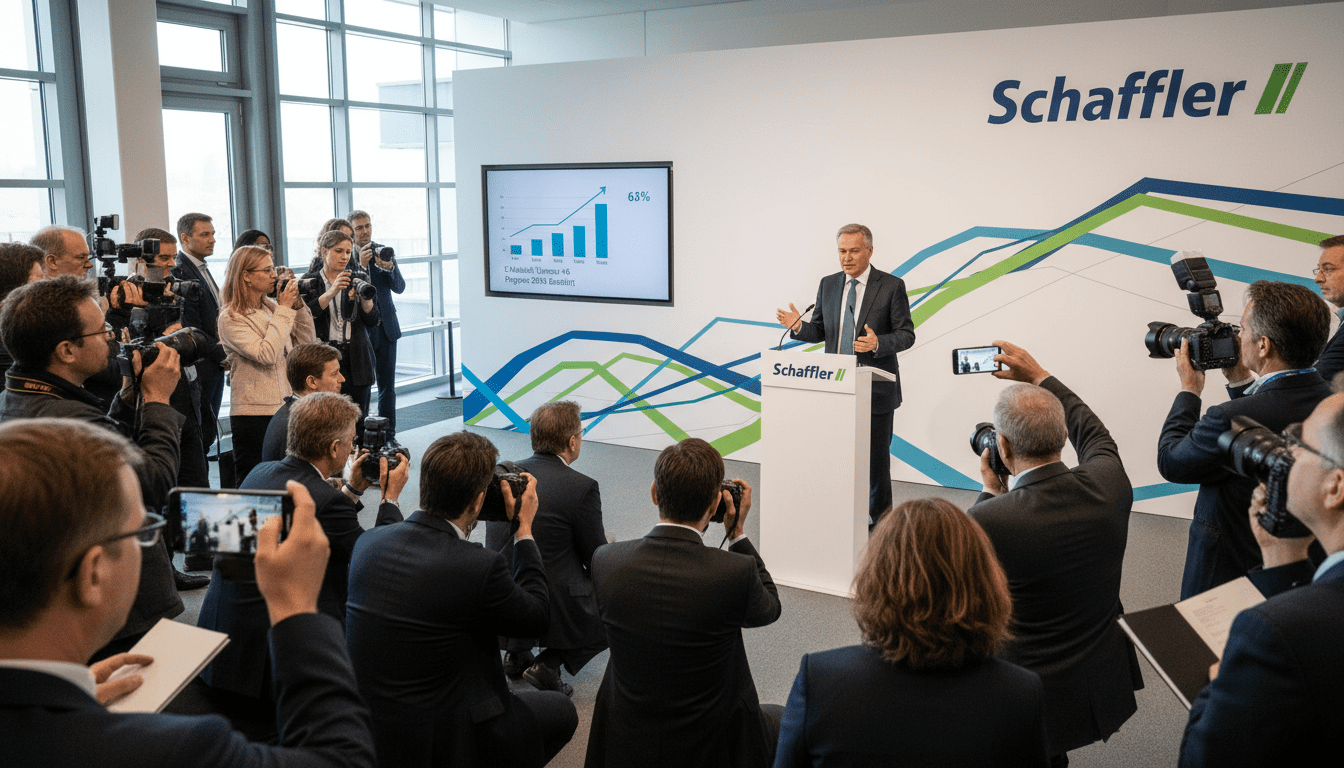
Schaeffler keeps 2026 forecast as e-mobility sales lift Q1 results
Schaeffler keeps 2026 forecast after e-mobility sales drove Q1 improvements; revenue €5.76bn, net profit €60m and shares rose amid stronger EV demand globally.
Schaeffler reported a stronger start to 2026 as its e-mobility business offset weakness in traditional units, leaving the supplier with a modest net profit and a doubled-down full-year revenue forecast. The German auto supplier said currency-adjusted revenue rose 1% to €5.76 billion in the first quarter, though that figure remains 2.7% below the year-earlier period on a reported basis. Chief executive Klaus Rosenfeld highlighted that the electrification segment was the only division to post growth, helping the company navigate a difficult geopolitical and economic backdrop. The stock reacted positively, climbing around 6.6% on the day as investors welcomed the resilience.
E-mobility division posts measurable gains
The e-mobility segment delivered a 6% increase in sales in the first quarter, outperforming broader market trends and becoming the principal growth engine for the group. Management attributed the uplift in part to heightened global demand for electric vehicles, a trend the company says has been accentuated by recent geopolitical tensions. That unit’s outperformance mattered because revenue in legacy areas softened, making the e-mobility results pivotal to overall profitability for the period. Rosenfeld signaled that the company expects the electrification business to remain a key contributor as automakers accelerate EV rollouts.
Legacy divisions face modest declines
Schaeffler’s traditional product lines, including drivetrain and chassis components as well as bearings and industrial applications, recorded slight contractions in the quarter. These established units continued to feel the impact of cyclical weakness in combustion-engine vehicle production and uneven industrial demand. Management described the declines as limited but sufficient to keep headline year-on-year revenue down despite the e-mobility advance. The mix shift toward electrification has therefore become a structural feature of the group’s sales profile.
Currency effects and quarterly profitability explained
On a currency-adjusted basis Schaeffler’s overall revenue rose by 1%, while reported figures showed a 2.7% fall from the prior year, illustrating the influence of exchange rates on its financials. The company closed the quarter with a net profit of €60 million, a result that reflected both the improved sales mix and cost discipline across its global operations. Analysts noted that margins remained under pressure in some industrial segments, but that operating leverage from e-mobility partially offset these headwinds. The group’s balance sheet and cash flow metrics were presented as stable, supporting management’s confidence.
Management reaffirms full-year guidance
Despite the volatile geopolitical environment, including disruptions cited in the Middle East, Schaeffler left its 2026 revenue guidance unchanged, forecasting between €22.5 billion and €24.5 billion. That range represents a currency-adjusted band of roughly ±4% relative to the prior year and signals management’s expectation that the e-mobility tailwind will persist through the remainder of the year. Investment bank Jefferies characterized the company as well positioned to manage near-term uncertainty, citing resilient demand in electrification and disciplined cost control. Rosenfeld emphasized that the outlook factors in current risks but does not require an adjustment at this stage.
Market reaction and investor sentiment
Investors responded to the quarterly update by bidding up Schaeffler shares by about 6.6%, reflecting relief that the company delivered profit and maintained guidance despite mixed sector dynamics. Market commentary focused on the proof point that e-mobility can compensate for softness in legacy activities and that Schaeffler’s exposure to EV platforms gives it a strategic advantage. Some analysts nevertheless noted that sustained margin improvement will depend on continued volume gains in electrified vehicles and the timing of a recovery in industrial markets. Short-term sentiment is likely to remain sensitive to macro and geopolitical developments.
Schaeffler’s quarter illustrates how a supplier can balance structural transition and cyclical pressures: stronger e-mobility sales have materially improved near-term performance, but the company’s path to higher, more stable profitability still depends on broader market recovery and the pace of electrification across major regions. The management team’s decision to keep the full-year forecast unchanged underscores confidence in the business mix while acknowledging ongoing external risks.
