
Israeli Court Extends Detention of Gaza-bound Activists from Global Sumud Flotilla
Israeli court on May 5, 2026, extended the detention of two Gaza-bound activists until May 10, 2026, after their April 30 interception; rights lawyers vow to appeal internationally.
Court grants six-day extension in Ashkelon
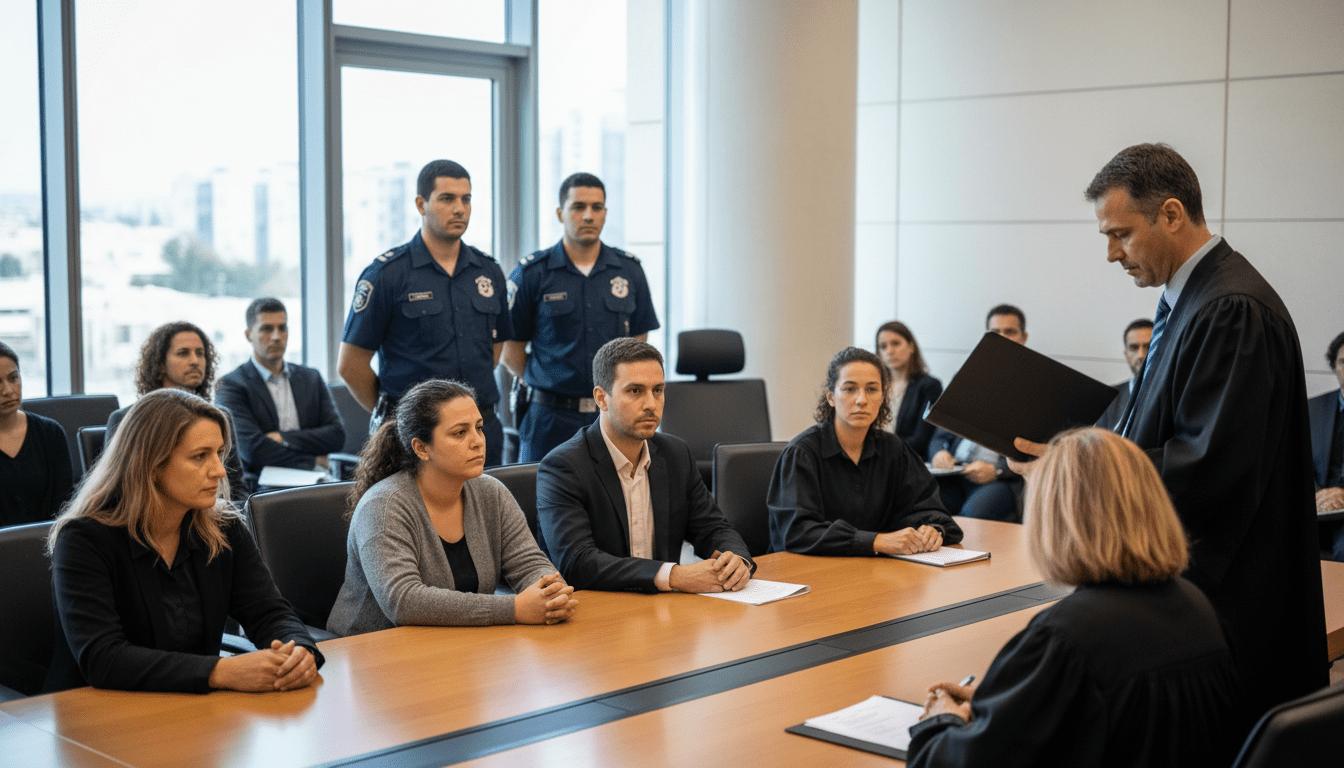
The Ashkelon Magistrates’ Court on Tuesday approved the state’s request to detain two activists until Sunday, May 10, 2026. The extension affects Saif Abu Keshek, a Spanish national, and Brazilian activist Thiago Avila, both taken into Israeli custody after an attack on the Global Sumud Flotilla.
Adalah, the rights group representing the men, said the court allowed the full six-day extension based on evidence that the defendants and their counsel were not permitted to review. The organisation described the ruling as a judicial endorsement of what it called serious procedural irregularities.
Details of the April 30 interception at sea
Organisers said the flotilla, comprising roughly 180 activists bound for Gaza, was intercepted by Israeli forces in international waters off Greece on April 30. Most of those on board were taken to Crete for processing; Abu Keshek and Avila were transferred to Israel for questioning, according to representation by Adalah.
The flotilla was part of the Global Sumud effort to deliver humanitarian supplies to Gaza, organisers said, and the interception reignited international scrutiny of naval interdictions. Activists and legal teams contend that the transfer of the two men to Israeli custody occurred far from Gaza and beyond the territorial scope of Israeli domestic law.
State accusations and defence arguments
Israeli authorities have not filed formal charges but have accused the two men of affiliation with a “terrorist organisation” and of contact with foreign agents, Adalah previously stated. Those allegations remain unproven in open court and have not been accompanied by public evidence, defence lawyers say.
Adalah lawyers Hadeel Abu Salih and Lubna Tuma argued that the accusations lack legal foundation and that Israeli law should not apply because Abu Keshek and Avila are not Israeli citizens and were detained over 1,000 kilometres from Gaza. The defence also emphasised that the men have been held without access to the full material supporting the state’s request.
Claims of secret evidence and prolonged interrogation
Adalah criticised the court’s acceptance of undisclosed materials, saying neither the detainees nor their attorneys were allowed to inspect the evidence used to justify the detention extension. The group said the court did not impose limits on the duration or conditions of the interrogations, effectively granting investigators broad authority.
Legal experts note that secret evidence is sometimes used in national security cases, but it raises significant due-process concerns when defence counsel cannot meaningfully challenge the state’s assertions. The defence has said it will mount an appeal and seek judicial review of the decision to rely on classified material.
Allegations of mistreatment and hunger strike
Family and rights organisations say both activists have been held in near-total isolation and subjected to harsh conditions while detained at Shikma Prison in Ashkelon. Adalah reported that the men are kept under constant bright lighting, blindfolded during movements, and allegedly denied adequate medical attention.
The two activists began a hunger strike on April 30 and are reportedly consuming only water, their lawyers said. During a recent visit, Adalah lawyers documented testimony alleging severe physical abuse amounting to torture, claims that Israeli authorities have not publicly corroborated.
Organisers demand international intervention
The Global Sumud organisers issued an urgent call for international action, describing the arrests as illegal and alleging beatings and forced transfers to occupied territory. On social media, the group urged foreign governments and rights bodies to pressure Israel for immediate release and to investigate treatment of detainees.
The flotilla campaign has previously drawn global attention; an earlier voyage in August and September culminated in interceptions by Israeli forces in the eastern Mediterranean and subsequent arrests, including high-profile detentions and expulsions. Those prior incidents set a broader context for the current dispute and heightened scrutiny from human rights organisations.
The defence announced an immediate appeal against the detention extension, framing the court’s decision as a grave legal misstep that infringes on the activists’ rights. Observers say the way the case proceeds will be closely watched by international legal advocates and governments concerned about maritime interdiction and the treatment of foreign nationals.
