
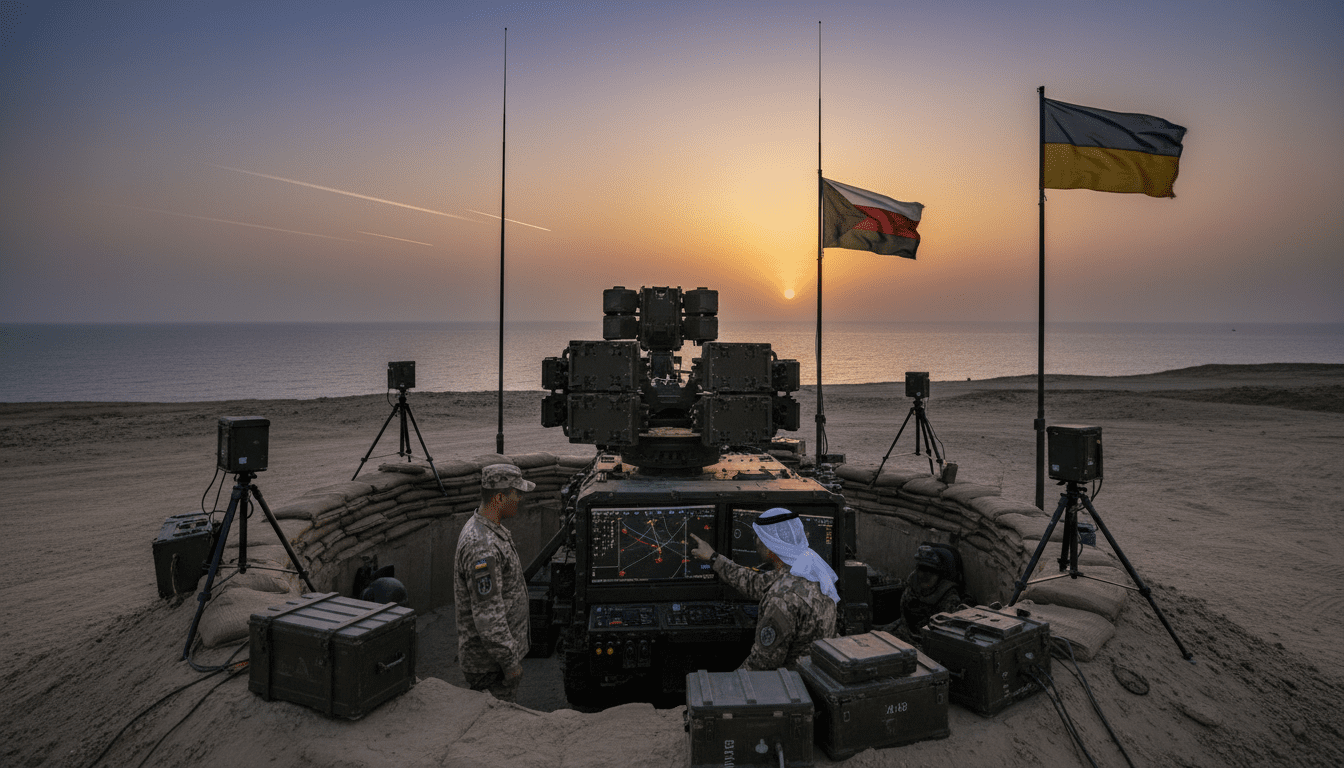
Ukrainian anti-drone systems deployed in Gulf to counter Iranian Shahed attacks
Ukraine’s anti-drone systems, including Sky Map and low-cost interceptor drones, are being used with US and Gulf partners to block Iranian Shahed attacks since Feb. 28, 2026.
Ukraine’s anti-drone systems have been rapidly adapted and exported to Gulf partners to blunt swarms of Iranian Shahed one-way attack drones that struck targets beginning on Feb. 28, 2026. The deployment brings together Ukrainian-built interceptor drones, acoustic and radar sensors, and the Sky Map command platform to provide a cheaper, scalable alternative to Western air-defence missiles. Gulf governments and the United States have moved quickly to adopt the systems after a string of strikes on energy and military infrastructure in the region.
Gulf states adopt Ukrainian systems after Shahed strikes
Gulf countries have sourced Ukrainian technology to respond to the specific threat posed by Shahed loitering munitions, which are low-cost, GPS-guided and launched in large numbers. Saudi Arabia, the United Arab Emirates and Qatar have taken delivery of training and systems that prioritize acoustic sensors, radar fusion and inexpensive interceptors over high-cost missile interceptors. Officials say the shift is driven by the economics of the fight: a single Shahed costs tens of thousands of dollars to produce while traditional interceptor missiles run into the millions.
Zelenskyy’s diplomatic push and defence agreements
In late March 2026, President Volodymyr Zelenskyy traveled to Saudi Arabia, the UAE and Qatar to offer counter-drone expertise and to seal long-term security arrangements. Each visit produced extended defence pacts intended to deepen cooperation on air-defence technologies and training over the coming decade. Kyiv has also acknowledged that Ukrainian crews took part in operations using domestically produced interceptors to defeat Shahed drones in several Gulf states, signaling a new export and operational role for Ukrainian defence firms.
Costs and tactical rationale behind interceptors
The arithmetic of interception has been a central rationale for the Ukrainian approach: Shahed-class drones are estimated to cost between $20,000 and $50,000 apiece, while Western surface-to-air interceptors such as Patriot-class missiles can cost around $4 million each. Ukrainian interceptor drones typically cost from roughly $1,000 to $3,000, offering a far more affordable option when confronting massed low-cost loitering munitions. Analysts caution that these systems are optimized for one-way drone barrages and are not designed to replace heavy air-defence systems against high-end threats such as ballistic missiles.
Fleet and capabilities of interceptor drones in use
A range of Ukrainian and allied interceptor models are now in the field, each built for speed, agility and short engagements rather than long endurance. Models such as the Sting and P1-Sun are compact, high-speed quadcopters equipped with thermal imaging and warheads for direct interception, while designs like ODIN Win_Hit and Octopus 100 emphasize bullet-shaped aerodynamics and sprint performance. More sophisticated systems, including AI-guided Merops and long-range VB140 Flamingo types, expand the toolkit but also cost more to develop and procure, creating a layered approach to drone defence.
Sky Map’s sensor network and command-and-control role
At the core of the Ukrainian package is Sky Map, a command-and-control platform developed by Sky Fortress that fuses acoustic sensors, radar inputs and machine learning to detect and classify incoming drones. Kyiv’s program reportedly deployed more than 10,000 acoustic sensors in Ukraine to capture engine signatures, and the same principle has been adapted for partner deployments to provide earlier warning and cue interceptors. The platform allows operators to visualize threats, guide interceptors using live feeds and mitigate GPS-jamming through AI-assisted inertial navigation on the interceptors themselves.
U.S. involvement and strategic implications
Washington has moved to integrate aspects of the Ukrainian systems into U.S. and allied bases in the region, including the reported installation of Sky Map at Prince Sultan Air Base with Ukrainian specialists training American personnel. In April 2026, the Pentagon announced a $350 million commitment to bolster counter-drone capabilities with additional cameras, sensors and interceptors to support partners facing drone attacks. The collaboration signals a pragmatic shift: instead of relying solely on expensive missile interceptors, U.S. and Gulf forces are deploying layered, lower-cost systems that can be scaled against massed loitering munitions.
The Ukrainian systems are not a panacea: their suite of sensors and interceptor drones is effective against swarms of low-altitude, propeller-driven loitering munitions but lacks the capability to reliably intercept ballistic missiles or high-speed cruise threats. Still, the combination of sensor fusion, affordable interceptors and international training offers a more sustainable model for defending critical infrastructure against one-way drone attacks. As deployments expand, military planners will test how these systems integrate with traditional air-defence networks and whether the cost advantages hold under sustained, large-scale attacks.
