
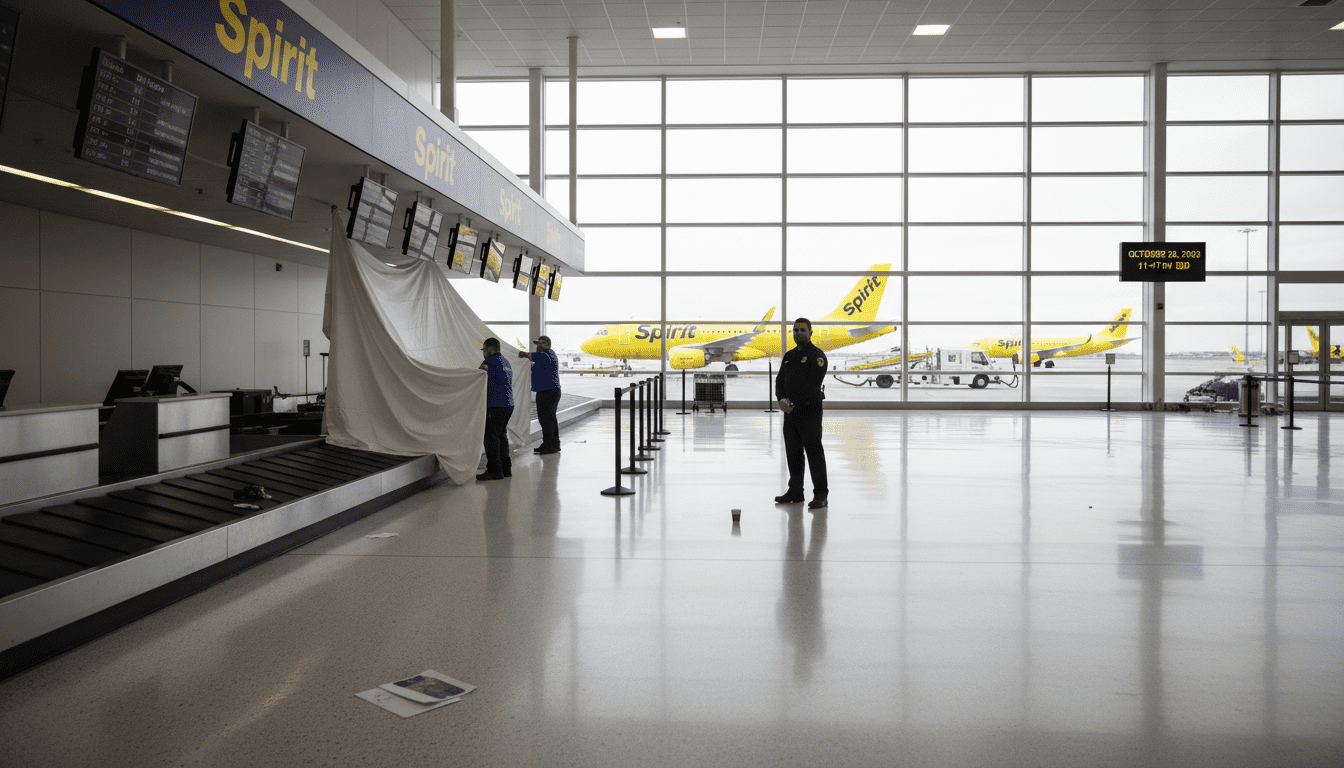
Spirit Airlines shutdown strands passengers and leaves 17,000 workers jobless after bailout talks fail
Spirit Airlines shutdown strands passengers and leaves 17,000 employees jobless after bailout talks fail and jet fuel costs surge amid Middle East conflict
Spirit Airlines has begun an immediate wind down of operations after talks to secure a US government financed rescue failed, cancelling all flights and leaving thousands of employees and passengers in limbo. The Spirit Airlines shutdown was announced by parent Spirit Aviation Holdings which said a sharp rise in jet fuel costs and other pressures made continued operations impossible without new financing. The announcement affects hundreds of daily flights and follows two bankruptcy filings by the carrier in the past two years.
Company announces immediate wind down of operations
Spirit Aviation Holdings said it had started an orderly wind down and instructed customers not to travel to airports because all flights were cancelled. The company cited a material and recent increase in oil prices and other financial pressures that fundamentally changed its outlook. Cirium data showed Spirit had over 4,100 domestic flights scheduled between May 1 and May 15 supplying more than 800,000 seats before the cancellations.
The parent company traced its origins to a trucking business and moved into aviation in the 1980s, adopting the Spirit brand in 1992. Over the past three decades the carrier built a business model around ultralow fares and ancillary revenues. That model became vulnerable to sudden and sustained cost shocks that eroded margins and liquidity.
Failed bailout and rescue talks with the administration
Efforts to secure a US backed financing package reportedly stalled despite high level outreach from the United States government. Sources close to discussions said the Trump administration explored a $500 million financing option but no final agreement was reached. Officials involved in the negotiations concluded the airline’s financial condition and market prospects made a deal untenable without broader interest from private buyers.
Transportation officials privately tried to find buyers and urged airlines to consider acquisitions but received no offers that could bridge the funding gap. A creditor close to the situation described the effort as extraordinary but ultimately unable to reverse what they called a terminal decline in the carrier’s viability. The collapse of talks left restructuring plans that had assumed lower fuel prices unworkable.
Fuel price surge from Middle East conflict worsened outlook
Industry analysts and United Nations advisers said a spike in aviation turbine fuel prices tied to the US Israel war on Iran pushed Spirit beyond the point of recovery. Spirit’s restructuring calculations had used projected jet fuel costs of roughly $2.20 a gallon for 2026, but market levels rose sharply to more than double those assumptions. The gap between planned costs and reality depleted the airline’s runway and undermined lender and investor confidence.
Global crude oil benchmarks climbed above $100 a barrel as market disruptions reverberated through refined fuel markets. For airlines operating on narrow margins the escalation in fuel costs translated directly into operating losses. Low cost carriers that depend on volume and tight cost control faced particular exposure when fuel became volatile.
Bankruptcy history and restructuring that fell short
Spirit had entered bankruptcy twice in recent years as it grappled with heavy debt and competitive pressure from larger carriers. The company filed for Chapter 11 in November 2024 and again in August 2025 while negotiating with lenders and creditors. A deal reached with lenders in early May was expected to allow an exit from the second bankruptcy by late spring, but the sudden fuel price shock and lack of new capital undermined that plan.
Executives and board members met to consider last minute rescue options but left without consensus on a path forward. The company’s restructuring assumed a degree of stability in fuel and demand that the current geopolitical environment did not provide. As a result, management concluded that an orderly wind down was the only viable alternative.
Human toll and disruption for employees and travellers
The shutdown leaves an estimated 17,000 staff without jobs and has stranded thousands of passengers at airports or on itineraries scheduled in the coming days. Rival airlines and regulators have scrambled to assist customers and to rebook affected travellers, but logistical and capacity constraints will limit immediate relief. Consumer advocates warned that refunds, baggage claims and employee severance will require coordinated action from the carrier’s estate and regulators.
Labour groups emphasized the urgency of protections for displaced workers who face wage losses and benefit gaps. Industry commentators noted that customer trust will be a critical measure of how effectively the sector handles the fallout and that timely communications can reduce further damage to passenger confidence.
Wider implications for the low cost carrier model
A combination of elevated fuel prices, high leverage, and intense fare competition has exposed vulnerabilities in the ultralow cost model. Experts say carriers that operate with minimal margins and limited liquidity are particularly susceptible to sustained commodity shocks. Several major carriers responded to the fuel shock by adjusting schedules and adding surcharges, and some have scaled back flights to protect cash flow.
Observers say the Spirit Airlines shutdown will prompt a reassessment of risk management across the industry and could lead to consolidation in the low fare segment. How regulators, lenders, and surviving carriers respond will shape whether budget travel rebounds or contracts in the near term.
The immediate priorities are managing passenger disruptions and addressing the financial and employment consequences for workers, while longer term questions center on the resilience of ultra low cost business models under sustained market volatility. The industry’s response in the coming weeks will determine whether the Spirit Airlines shutdown is an isolated collapse or a warning sign of deeper systemic stress.
