
OPEC+ raises June output by 188,000 barrels per day after UAE exit
OPEC+ raises June output by 188,000 barrels per day after the UAE exit; seven members boost supplies amid Strait of Hormuz disruptions and elevated crude prices.
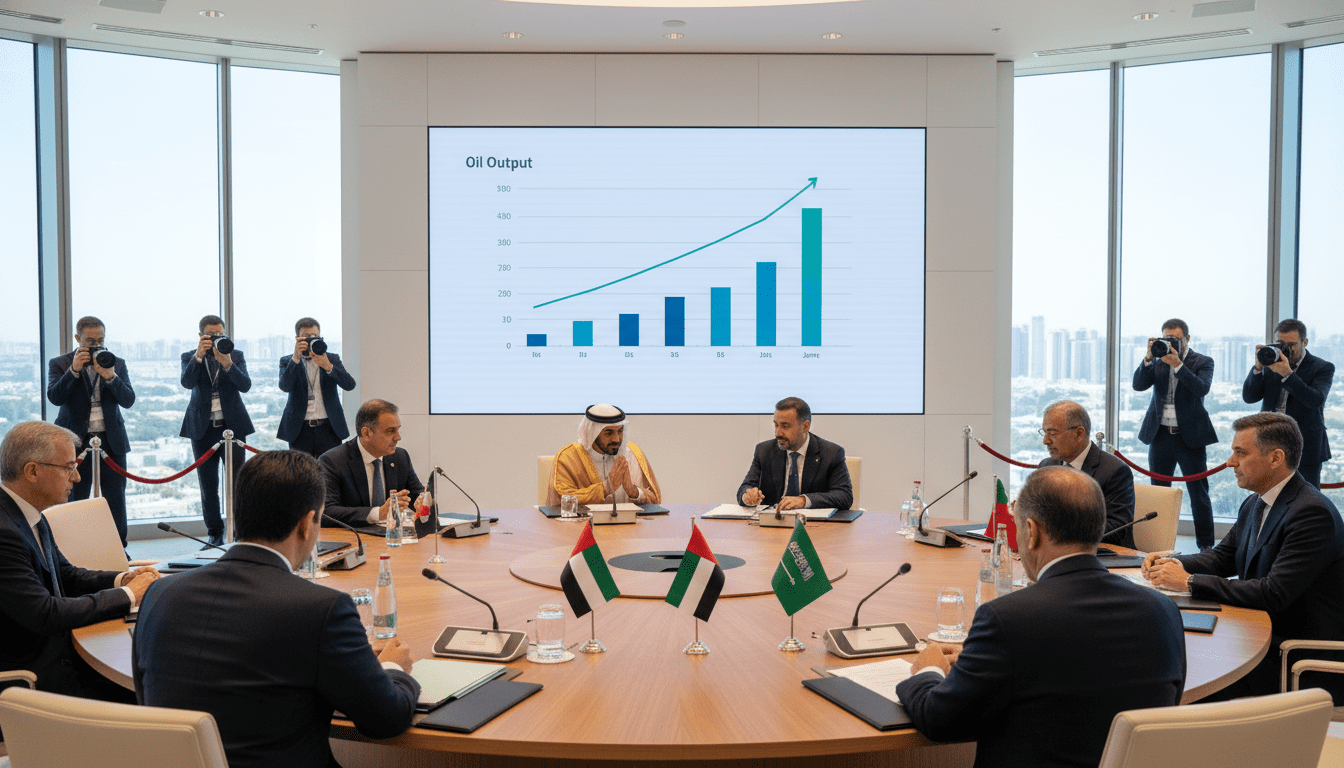
The OPEC+ alliance approved a June production increase of 188,000 barrels per day on May 3, 2026, weeks after the United Arab Emirates announced it would leave OPEC and the extended OPEC+ arrangement effective May 1, 2026. The decision, made by seven leading producers, marks the third consecutive monthly rise in the group’s production targets and signals an effort to stabilize global oil markets amid regional supply disruptions. Market participants and governments are now assessing whether the planned increases can be delivered given logistical constraints and continued disruptions in the Strait of Hormuz.
OPEC+ approves June production increase
The alliance said the June rise follows prior increases for April and May, each of which raised production targets by 206,000 barrels per day. The June adjustment adds 188,000 bpd from Saudi Arabia, Russia, Iraq, Kuwait, Kazakhstan, Algeria and Oman, reflecting a coordinated pledge to support market stability, the group said. The move was framed as precautionary and preparatory, intended to ensure capacity to raise supplies if the security situation in the region improves.
The statement from the remaining decision-making members did not address the UAE’s departure directly, but analysts interpret the step as an attempt to demonstrate continuity in the alliance’s management of global oil flows. Officials within the grouping emphasized that allocations and collective commitments would be reviewed at the next scheduled meeting on June 7, 2026.
UAE formalizes exit and outlines independent strategy
The United Arab Emirates, a member of OPEC since 1967, formally confirmed its exit from both OPEC and the OPEC+ framework, saying the move allows the country to pursue its national interest without quota constraints. Abu Dhabi’s state news agency cited a government statement that the UAE will no longer be restricted by shared production limits once market conditions normalize.
State energy company Adnoc announced a plan to invest roughly €46.45 billion over the next two years in new projects aimed at accelerating growth and securing market share. Analysts say the exit gives the UAE greater control over its output and pricing, positioning it to increase exports rapidly should the Strait of Hormuz reopen fully.
Strait of Hormuz blockade continues to shape supply dynamics
The feasibility of raising output is clouded by an ongoing blockade of the Strait of Hormuz, which has impeded exports from major Gulf producers and pushed benchmark crude prices above $125 per barrel. The waterway’s blockage has disrupted tanker transits, complicated logistics, and reduced the effective export capacity of several producers whose fields are concentrated in the Persian Gulf.
Market participants say the physical ability to move crude remains the decisive factor, noting that production capacity on paper does not translate immediately into deliverable barrels. Insurers, shipowners and charterers have tightened terms for voyages through the region, adding friction and cost to any effort to increase actual shipments.
Operational and political constraints on delivering higher quotas
Observers caution that several OPEC+ members face obstacles to meeting even their existing quotas. Russia, while benefiting from elevated prices, continues to struggle with operational and logistical challenges linked to sanctions and the consequences of its war with Ukraine. Other producers also contend with aging fields, maintenance backlogs and infrastructure bottlenecks that limit near-term ramp-up potential.
OPEC+ capacity constraints are compounded by the fact that the core monthly decisions in recent years effectively involved only a handful of states, including the UAE prior to its exit. The absence of Abu Dhabi’s previously allocated 18,000 bpd from the latest increase reduces the pool of immediately available barrels, complicating the alliance’s stated readiness to boost deliveries.
Core group of seven leads policy while wider membership remains intact
The production increase was explicitly supported by Saudi Arabia, Russia, Iraq, Kuwait, Kazakhstan, Algeria and Oman, a group that has taken on a central role in recent monthly adjustments. With the UAE’s departure, OPEC+ now counts 21 member countries including Iran, but the practical steering of monthly targets has come from the smaller core group of producers.
The alliance said it will reconvene on June 7, 2026, to reassess market conditions and any further adjustments. Analysts expect debate to focus on reconciling stated willingness to raise supply with the operational realities that continue to limit export volumes from the Gulf.
Market outlook and potential scenarios for supply and prices
Traders and analysts say the near-term outlook for oil prices depends on whether physical shipments can increase and whether the Strait of Hormuz is reopened for full commercial transit. If logistical constraints ease, the June increase could contribute to a moderation in prices, though the effect is likely to be gradual and uneven across regional export routes.
If disruptions persist, however, the announced quota increases may remain largely symbolic, providing limited downward pressure on crude markets. The UAE’s move toward independent production policy and major investment plans could intensify competition among Gulf producers, but the timing and scale of any additional barrels reaching global markets remain uncertain.
The coming weeks will test whether OPEC+ can translate pledged increases into deliverable crude amid security, technical and political hurdles, while the UAE seeks to leverage its exit to expand output and strengthen its market position.
