
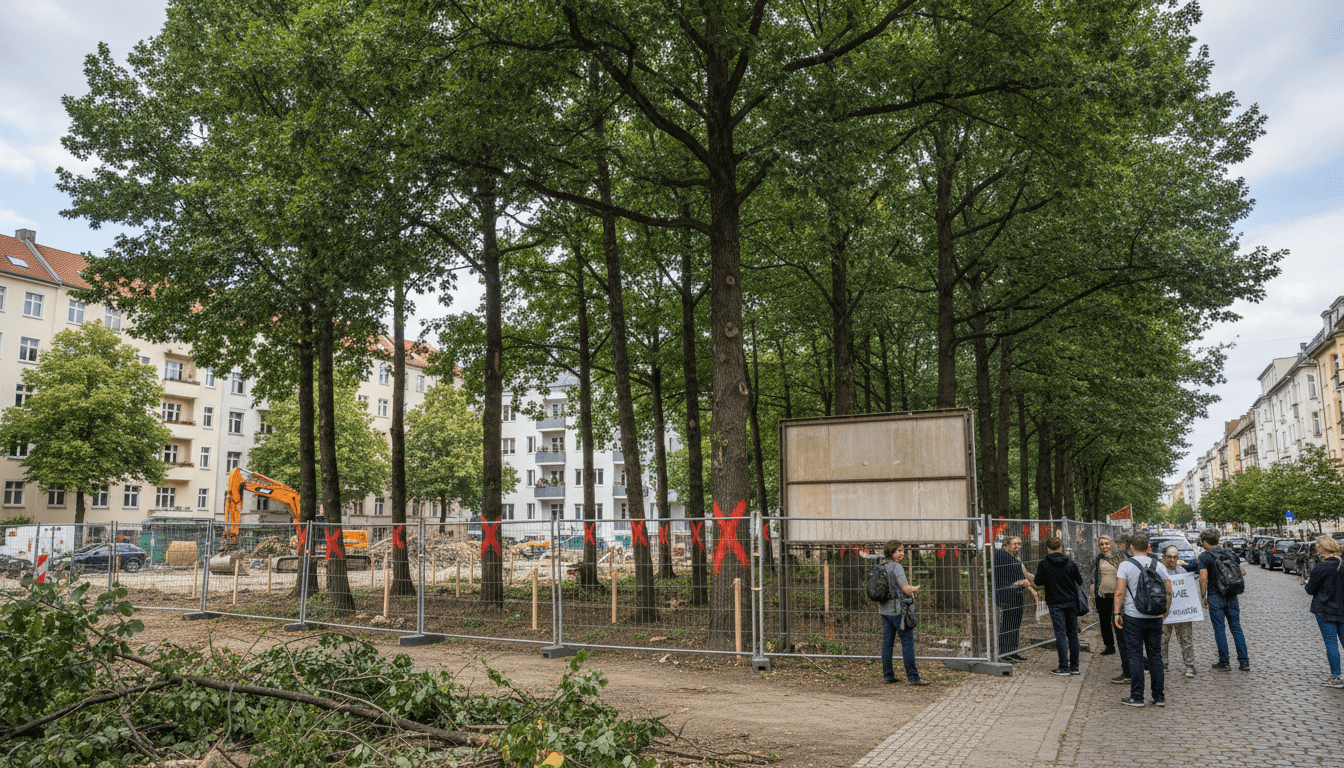
Ilse-Kiez redevelopment in Berlin-Karlshorst ignites local alarm over trees and new housing
Ilse-Kiez redevelopment in Berlin-Karlshorst is drawing sharp local concern after plans surfaced to add nine buildings and more than 200 flats, removing over 80 trees.
A notice about new construction in the Ilse-Kiez has prompted unrest among long-time residents after a municipal housing company revealed plans to introduce nine new residential buildings and a daycare facility into the postwar green settlement. The Ilse-Kiez redevelopment would place the new structures between existing slab blocks, and officials have confirmed an architect’s draft while noting the loss of more than 80 trees and much of the open lawns that define the neighborhood. Neighbors who have lived in the area for decades say they were not familiar with the planning term “Nachverdichtung” until the proposal arrived.
Residents discover the plan and demand answers
Bärbel Olsohn, a 74-year-old resident who has lived in the Ilse-Kiez since the 1980s, encountered the redevelopment notice in a local paper and immediately sought clarification from her landlord and the district authority. The responses she received — including confirmation of large-scale tree removal and insertion of new housing — shocked her and other neighbors who prize the settlement’s mature greenery. The initial lack of clear communication about the extent and timing of the works has amplified calls for transparency from the municipal housing company and the local council.
Planned construction: scale and immediate impacts
According to information obtained by residents, the draft plan proposes nine new buildings that would add more than 200 apartments to the area, along with a new kindergarten. The design places those new blocks in the open spaces between the existing ten large slab buildings, a step that would eliminate significant stretches of lawn and require felling over 80 trees. For neighbors, the calculations are not abstract: the projected densification would alter sunlight, play areas, and biodiversity in a quarter that has been defined by its postwar, low-rise character.
Municipal housing company and district role
The municipal housing company that manages properties in the Ilse-Kiez has produced an architectural concept and entered preliminary discussions with the district, confirming that options for infill development are being explored. Officials cite the city’s pressing need for additional housing supply as part of the rationale for pursuing intensification on existing residential sites. At the same time, district representatives acknowledge the environmental and social sensitivities tied to any decision that affects mature trees and communal green space.
Design challenges and urban integration
Architects face the technical difficulty of inserting new volumes into a tightly defined postwar layout while attempting to respect the scale of the existing slab blocks. The draft shows new freestanding buildings placed perpendicular to the long housing riegel, a configuration intended to maximize unit counts without expanding the site footprint. Critics say that such insertions risk transforming the settlement’s character and that alternative approaches — such as careful infill with smaller footprint buildings, rooftop additions, or brownfield development elsewhere — deserve full consideration before irreversible tree removal is authorized.
Community reaction and avenues for contesting plans
The disclosure of the Ilse-Kiez redevelopment plan has mobilized residents to seek fuller disclosure of planning documents, environmental assessments and tree inventories. Several neighbors have described a sense of betrayal after years of living with the settlement’s open green areas, and they are requesting public hearings and impact studies that include noise, light and ecological assessments. The municipal process allows for participation during statutory consultation phases, and advocacy by residents can shape design revisions, mitigation measures or alternatives that retain more of the existing urban canopy.
Wider implications for Berlin’s densification policy
The Ilse-Kiez debate highlights a recurring tension in Berlin’s housing strategy: how to reconcile an urgent demand for new apartments with the preservation of urban green spaces that support quality of life. Planning experts note that “Nachverdichtung” is often contentious where postwar settlements and mature trees coexist with potential buildable gaps. The outcome in Karlshorst could set a local precedent for how the city negotiates density on municipal sites and what standards are applied for tree protection, public consultation and compensatory greening.
The municipal housing company and district officials now face a schedule of assessments and public consultations that will determine whether the architect’s draft proceeds to formal approval or is substantially revised. Residents say they will continue seeking clarity on the number of trees slated for removal, the timing of works, and the measures proposed to replace lost green infrastructure. As Berlin pursues added housing, the Ilse-Kiez redevelopment dispute will test how planners, authorities and communities balance the competing demands of growth and the preservation of neighborhood character.
