
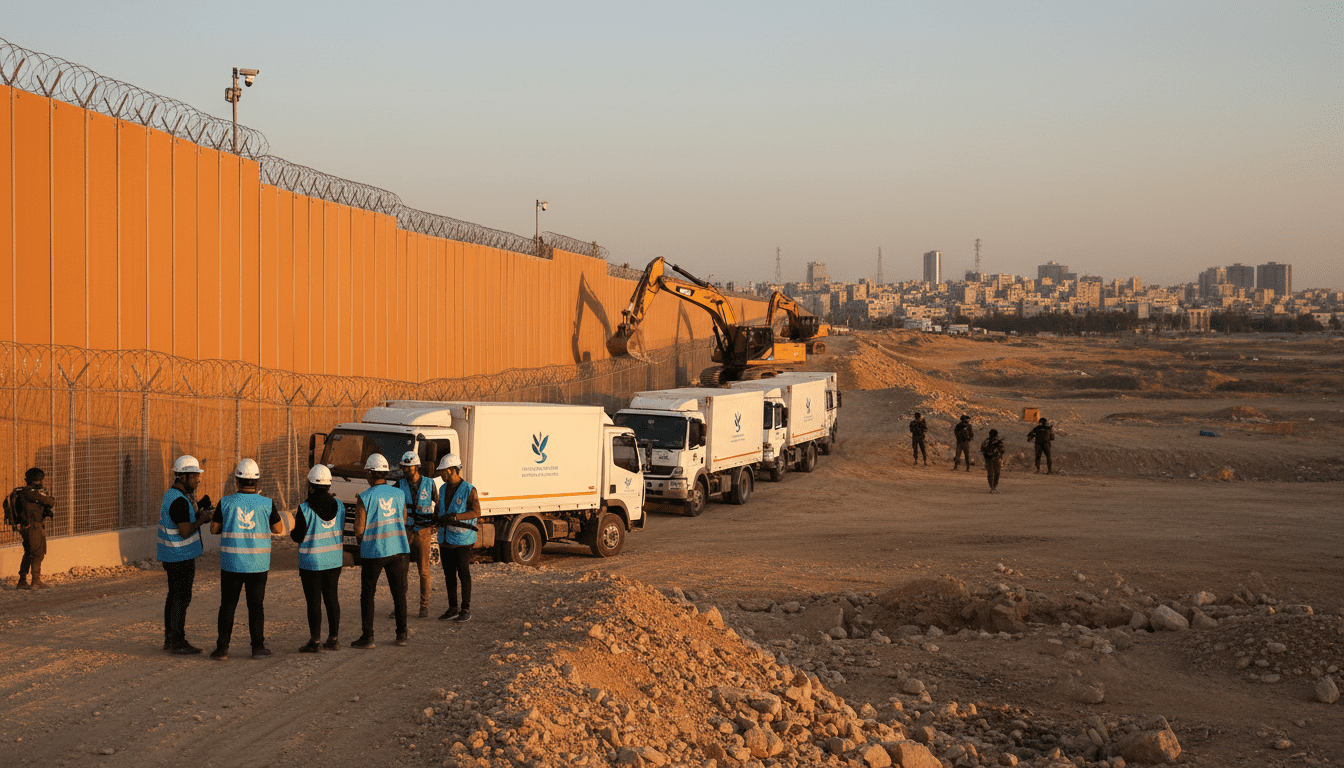
Israel’s expanding “orange line” tightens movement across Gaza, raising risks for civilians and aid workers
Israel’s expanding “orange line” is tightening movement across Gaza, endangering civilians and aid workers, and fragmenting the territory into isolated zones.
The Israeli military’s widening use of an informal “orange line” is sharply restricting movement across Gaza, putting civilians and humanitarian workers at heightened risk, officials and field witnesses said on May 2, 2026. The line — an invisible boundary enforced through checkpoints, firepower and targeted closures — has spread deeper into population centers in recent weeks, creating new barriers to escape, access and aid. Observers say the expansion is effectively slicing the Gaza Strip into isolated pockets where families, markets and health services are increasingly cut off from one another. Humanitarian groups warn the pattern is raising the chance of deadly incidents as people attempt to move between fragmented zones.
Orange line pushes deeper into urban Gaza
The orange line has migrated from peripheral approaches into the heart of Gaza’s urban fabric, altering where people can travel safely. Neighborhoods that were once connected are now separated by areas of intense military control and unpredictable restrictions. Residents describe routes that were open one day and sealed the next, forcing detours of hours or preventing movement entirely for days. The result is a patchwork of safe and unsafe zones that shifts with military orders and local conditions.
Civilians face escalating danger when crossing boundaries
Crossing the orange line has become increasingly perilous for ordinary Gazans seeking food, medicine or shelter. Witness accounts and local medical sources report incidents in which people struck the line while fleeing or trying to reach services, with lethal consequences in some cases. The line’s opacity — no fixed checkpoints in some places and sudden fire in others — makes it impossible for many families to plan safe routes. Vulnerable groups, including the elderly and children, are disproportionately affected because they cannot move quickly or keep up with abrupt changes.
Humanitarian operations disrupted and endangered
Aid convoys and field teams are encountering new limits as the line expands, hampering deliveries of food, fuel and medical supplies. Humanitarian coordinators say permissions that once enabled predictable access are now revoked or narrowed to specific, often impractical, corridors. Aid workers report being stopped, turned back or exposed to hostile incidents when attempting to cross into areas classified as beyond the orange line. These constraints reduce the volume of assistance reaching isolated clinics and civilian shelters, increasing the risk of shortages and untreated injuries.
Fragmentation is reshaping Gaza’s geography and services
The spreading orange line is not merely a movement control; it is physically reshaping how Gaza functions by isolating hospitals, markets and water points from their catchment populations. Local clinics that rely on staff commuting from nearby neighborhoods now operate with skeleton crews or close entirely when their catchment areas are cut off. Markets that once served multiple districts now cater to smaller, localized populations, driving up prices and reducing selection. Over time, this enforced segregation can create distinct zones with differing access to basics and public services.
Military rationale and enforcement tactics explained
Israeli authorities describe the orange line as a security measure intended to limit militant movement and target armed groups. Enforcement methods include vehicle and foot patrols, temporary and permanent checkpoints, aerial surveillance and targeted strikes near crossing points. Military statements emphasize the need to control specific corridors to prevent attacks and restrict the transfer of weapons; however, analysts note that the line’s opacity and rapid shifts complicate civilian compliance. The gap between stated security objectives and the operational methods on the ground is a central point of contention in assessments of proportionality and protection.
Legal and diplomatic concerns grow as restrictions spread
The expansion of an unofficial boundary raises legal questions about the protection of civilians under international humanitarian law and the obligations of occupying or controlling forces. Humanitarian organizations and some legal observers argue that movement restrictions must be proportionate and designed to minimize harm to the civilian population. Diplomatic actors have increasingly called for predictable, protected humanitarian access and clear, communicated routes for civilians to seek safety. Without such safeguards, rights groups warn, the orange line risks entrenching a new operational norm that endangers lives and complicates relief efforts.
The practical effect of the orange line is immediate: families that once relied on neighbors and nearby services are recalibrating survival strategies in real time, while aid agencies scramble to adapt logistics and safety protocols. As the boundary continues to shift, the primary question for humanitarian planners and policy makers will be whether protective measures can be established that allow lifesaving assistance and civilian movement without compromising security objectives.
