
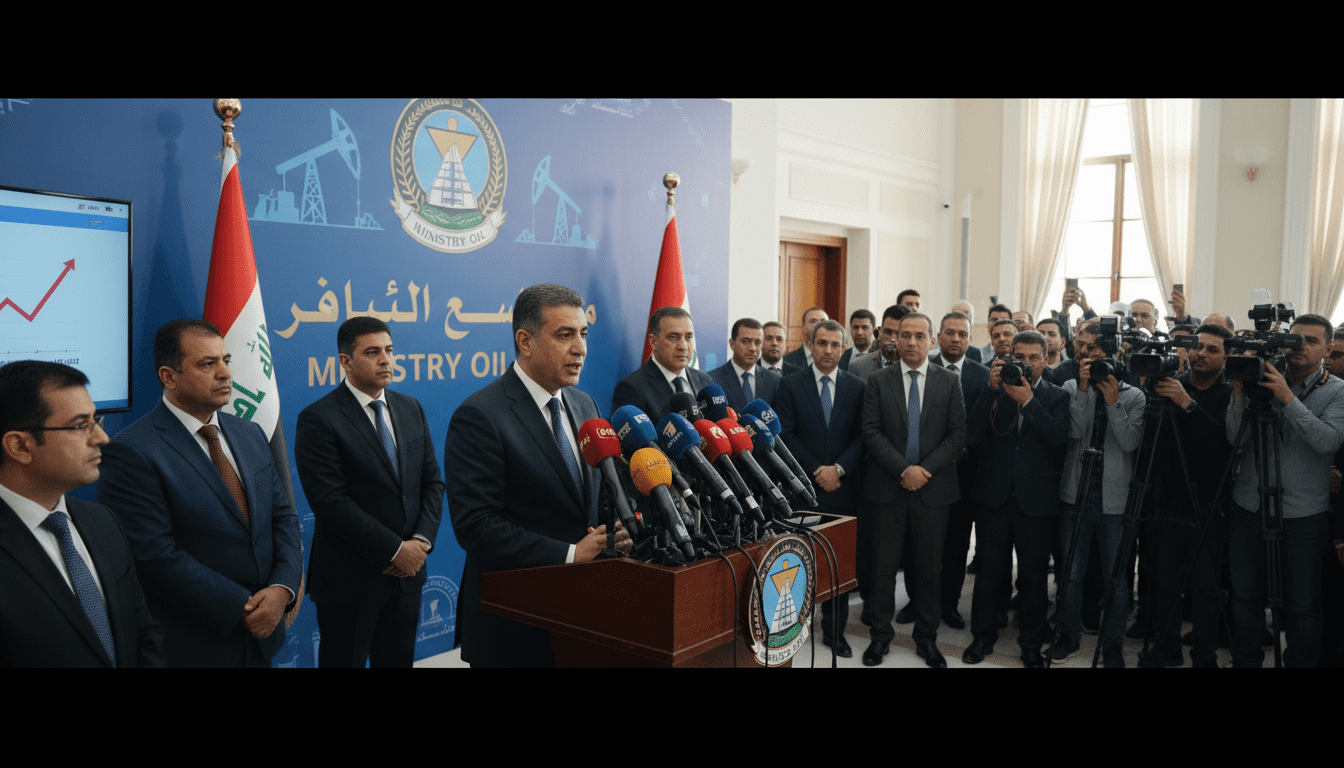
Iraq Oil Production Could Be Restored Within Seven Days Once Strait of Hormuz Crisis Eases
Iraq oil production could be restored within seven days after conditions in the Strait of Hormuz stabilise, Deputy Oil Minister Basim Mohammed said, with exports via Turkey’s Ceyhan terminal and tanker contingencies already in place.
Iraq’s deputy oil minister on Friday told reporters that the country can rapidly resume normal output and export flows once disruptions in the Strait of Hormuz subside. Iraq oil production currently stands at about 1.5 million barrels per day, he said, and exports have been redirected where possible while maritime routes remain constrained. The comments underscore Baghdad’s contingency planning as regional tensions continue to affect Gulf shipping.
Iraq signals restart window of seven days
Basim Mohammed stated that Iraq could return to pre-disruption levels within seven days after security conditions in the Strait of Hormuz improve. The seven-day timeline reflects internal assessments of ramp-up capacity at fields and the logistical readiness of pipelines and terminals. Officials framed the estimate as contingent on uninterrupted access through key shipping lanes and the removal of immediate security threats.
The deputy minister’s timetable aims to reassure markets and buyers that Iraq has both production headroom and operational flexibility. Government sources emphasised that the window assumes safe passage for tankers and restored confidence among export partners.
Current production and export figures
Iraq’s production was reported at roughly 1.5 million barrels per day at the time of the statement, down from higher pre-crisis levels that reflected broader regional output capacity. Domestic officials said those volumes reflect both field performance and deliberate adjustments tied to security considerations. The production figure provides a baseline for how quickly outputs could be scaled once disruptions end.
Exports through alternate routes have been modest compared with historic volumes, but they remain critical to keeping crude flowing to customers. Baghdad has been tracking daily lifts and adjusting allocations to match available export capacity and contractual obligations.
Ceyhan terminal handling 200,000 barrels daily
A significant share of Iraq’s current overseas shipments are being routed through the Ceyhan terminal in Turkey, with roughly 200,000 barrels exported daily via that facility. The Ceyhan route offers an overland alternative to shipments that would otherwise transit the Strait of Hormuz, and it has become a focal point for contingency exports. Infrastructure operators and Iraqi authorities have coordinated to maintain throughput while demand patterns shift.
Officials said Ceyhan’s role will expand or contract according to security developments and the operational status of other export channels. Continued use of the Turkish terminal reduces immediate pressure on Gulf terminals but does not fully substitute for the scale of Hormuz-dependent routes.
Tanker readiness and deployment plans
Mohammed said two tankers are already prepared to carry Iraqi crude under contingency arrangements, and two additional vessels are expected to be deployed depending on evolving security conditions. The staged tanker deployment is designed to provide immediate export capacity while limiting exposure to high-risk maritime zones. Sources indicated the vessels have been surveyed and positioned to move quickly once clearance is granted.
Iraq’s logistics plan includes pre-cleared shipping contracts and coordination with insurance providers to manage commercial risk. Officials noted that final deployment decisions will hinge on real-time assessments of route safety and port accessibility.
Security in the Strait of Hormuz remains key
The deputy minister linked the restoration timetable directly to security improvements in the Strait of Hormuz, which he said has been largely closed during the US-Israel war on Iran. The channel’s status determines both insurance costs and practical shipping options for Gulf producers. Any prolonged closure or sustained attacks on maritime traffic would keep supply routes constrained and complicate Iraq’s rapid restart plans.
Regional security dynamics are being monitored by multiple governments and industry players, with contingency arrangements reflecting a range of possible scenarios. For Iraq, the primary consideration remains ensuring personnel safety and uninterrupted operation of production and export infrastructure.
Market implications and buyer communications
Traders and buyers have been watching Baghdad’s statements for signals about forthcoming supply additions to the global crude market. A swift restart from Iraq could ease supply tightness in the short term if tankers can transit safely and terminals operate at scale. Market analysts said that even a partial return of Iraqi barrels via Ceyhan and other routes would be factored into pricing and contract negotiations.
Iraqi officials reported active communications with major purchasers to manage deliveries and adjust contractual timetables. Those engagements aim to limit financial disruptions for buyers while preserving Iraq’s commercial relationships during the contingency period.
Iraq oil production authorities portrayed the seven-day restoration estimate as achievable but conditional, stressing the central role of maritime security and logistics in resuming normal export levels. The government’s immediate focus remains on safeguarding shipments, mobilising available tankers, and using alternative routes such as Ceyhan to sustain exports until access through the Strait of Hormuz is reliably restored.
