
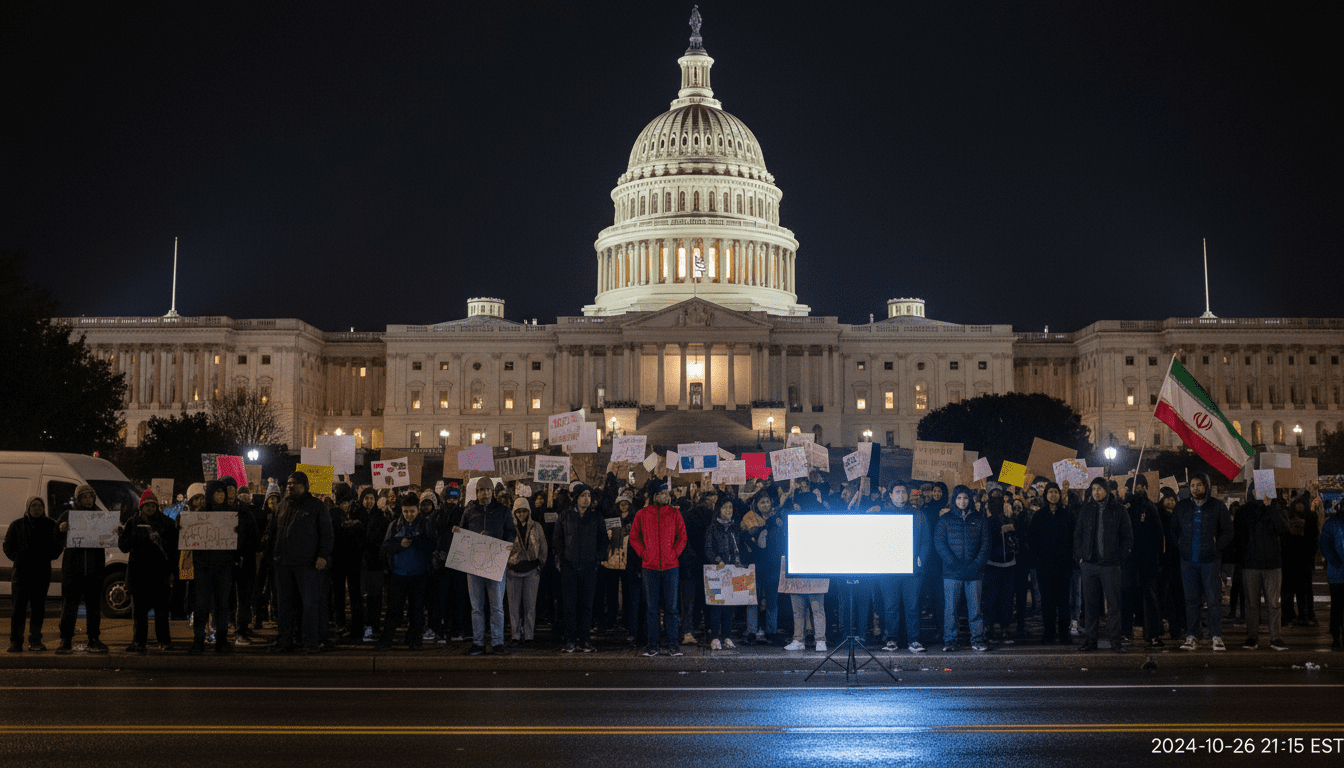
Majority of Americans Say War on Iran Was a Mistake, Poll Finds
Washington Post-ABC-Ipsos poll: 61% of Americans view the war on Iran as a mistake, citing rising energy costs and economic strain that erode support.
A Washington Post-ABC-Ipsos poll released on May 1, 2026, found that a clear majority of Americans view the war on Iran as a mistake, raising fresh questions about domestic political support and economic fallout. The survey reports that 61 percent of respondents judged the decision to use military force against Iran as wrong, while 36 percent said it was the correct course. Voters’ financial concerns, particularly higher energy prices, emerged as a central factor in their assessments of the conflict.
Poll Shows Opposition Outpaces Support
The poll’s headline figure—61 percent deeming the war on Iran a mistake—signals broad unease across the electorate about the conflict and its consequences. Only about a third of respondents defended the decision, indicating a significant gap between public sentiment and the administration’s choice to engage militarily. These numbers place public opinion on the current campaign against Iran in an unfavorable light compared with early phases of other modern conflicts.
Respondents were also asked to judge the operation’s effectiveness; 39 percent said U.S. military actions have been unsuccessful so far, 19 percent judged them successful, and 41 percent said it was too soon to tell. Those divided assessments reflect both uncertainty about long-term strategy and skepticism about immediate gains.
Household Budgets and Behavior Shift
Economic pressures tied to the war on Iran featured strongly in respondents’ answers, with many Americans reporting concrete changes to daily life. The poll found that 44 percent of respondents cut back on driving because of higher gas prices, while 42 percent reduced household spending on other necessities. Those impacts were more acute among lower-income households, showing how inflationary effects fall unevenly across the population.
For respondents earning less than $50,000 a year, 56 percent reported reducing driving and 59 percent said they had trimmed household expenses, underscoring the disproportionate burden on lower-income families. These behavioral changes illustrate the ripple effects of energy market volatility and the political risks for leaders seen as responsible for escalating tensions.
Political Consequences for the Administration
The poll arrives at a moment of slumping approval for President Donald Trump, with voters increasingly criticizing economic performance and the rising cost of living. Nearly half of those surveyed—46 percent—said the decision to attack Iran was inconsistent with Trump’s 2024 campaign promise to avoid unnecessary foreign wars. That perceived contradiction appears to have contributed to public discontent.
Partisan divisions remain stark: roughly 80 percent of Republican respondents supported the strike, while Democrats and independents were far more likely to view it as a mistake. Even within the GOP, opinions on whether the operations have succeeded were mixed, reflecting fractures in how base voters assess military outcomes.
Comparisons to Past U.S. Wars
Pollsters drew historical parallels in noting that public backing for the war on Iran is as weak as it was for the Iraq War during high-violence years in 2006 and mirrors low public confidence seen in the early 1970s for the Vietnam War. Those comparisons emphasize the political vulnerability that sustained or expanding conflicts can create for U.S. administrations. The historical analogies also suggest that prolonged regional violence tends to erode public patience over time.
Analysts caution, however, that the contexts differ: casualty figures for U.S. forces in the Iran campaign have been relatively low compared with earlier wars, even as civilian deaths and broader regional instability have mounted. Public sentiment can shift quickly if perceptions of costs and benefits change.
Regional Toll and Casualty Concerns
Although U.S. battlefield casualties have not reached levels seen in prior major wars, the conflict has produced thousands of deaths across the Middle East, according to reporting and assessments cited alongside the poll. That human cost, combined with disruptions to global energy supplies, has fed public anxiety about the war’s broader consequences. The escalation of violence in neighbouring countries has also complicated diplomatic options and humanitarian responses.
The poll finds Americans weighing those human and economic costs alongside strategic questions, creating a complex array of concerns that do not break down neatly along party lines. For many voters, immediate household pressures have translated into less tolerance for international entanglements perceived to worsen domestic conditions.
The Washington Post-ABC-Ipsos survey reflects a moment of notable public skepticism toward the war on Iran, with economic strain and uncertainty about military success driving much of the unease. As policymakers and party leaders respond to those concerns, the poll suggests that questions about costs, consistency with campaign promises, and the conflict’s human toll will continue to shape political debate in the months ahead.
