
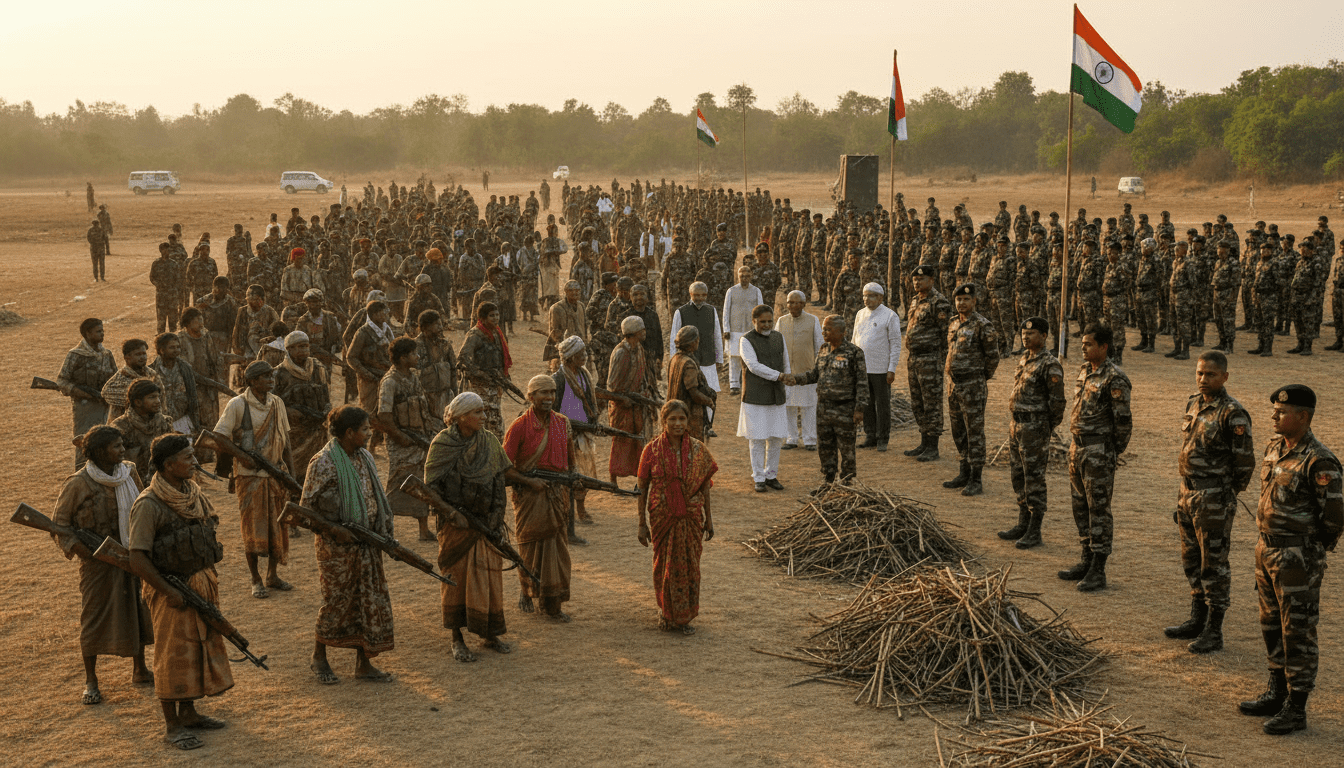
India’s Maoist insurgency appears to be collapsing as large numbers surrender and leaders are neutralized
India’s Maoist insurgency in India is showing signs of terminal decline as mass surrenders rise and senior cadres are killed or detained, former guerrillas and officials say. The developments follow an intensified security campaign since January 2024 and government pledges to eliminate the armed movement by the end of March 2026. Ex-fighters describe decades of jungle hardship and ideological conviction before concluding the armed route had no future.
Former guerrilla recounts life in the jungle
Jampanna, a 64-year-old who fought for decades under a nom de guerre, described prolonged marches, rainsleeping without shelter and frequent food shortages during his time in the forest. He said combat, exposure and encounters with wild animals were constant hazards and that many comrades died under such conditions. His testimony reflects the human cost endured by fighters who once believed guerrilla war could overturn entrenched social hierarchies.
Scale of the campaign and recent government figures
Authorities and monitoring groups note heavy casualties and large numbers of detentions since 2000, a toll that underscores the conflict’s length and intensity. Government statements attribute recent momentum to a stepped-up security offensive, modern surveillance tools, and incentives for insurgents to surrender. Officials say hundreds have been killed in operations since the 2024 escalation, while thousands have been arrested or laid down arms.
Historical roots in Naxalbari and the ‘Red Corridor’
The insurgency traces back to a 1967 peasant uprising in Naxalbari and later spread across a so-called Red Corridor from eastern to western India. Inspired by Maoist doctrine, the movement targeted landlords, state institutions and what it saw as systemic injustice in rural hinterlands. At its height, the rebellion prompted Indian leaders to describe it as one of the country’s most serious internal security challenges.
Support base among Dalit and Adivasi communities
Analysts and former fighters say the Maoists drew recruitment largely from Dalit and Adivasi populations who felt marginalized by development and state neglect. These communities inhabit mineral-rich regions where land rights, forest access and resource extraction stirred long-running grievances. Fighters and sympathizers argued their presence offered political voice and protection, even as the conflict exposed villagers to reprisal and coercion.
Allegations of violence and rights violations on both sides
Communities in insurgency zones endured violence that included attacks on schools, health workers and state institutions, according to multiple accounts. Human rights organizations and local sources have also accused security forces of extrajudicial killings and mistreatment during counterinsurgency operations. Former combatants acknowledge some violent acts by their ranks while disputing broader allegations of systematic torture.
Transition from armed struggle to civic channels
Many ex-insurgents now pursue political and social goals through civilian means, a shift illustrated by Jampanna’s public appearances and his own small business in Hyderabad. The state has offered financial rehabilitation packages to surrendering fighters, enabling some to start shops or services in cities and towns. Authorities highlight such transitions as evidence that a comprehensive approach — combining force, development and incentives — can shrink an armed movement’s operational capacity.
The government’s public countdown to the movement’s elimination culminated with a pledge that most top leaders had been killed or captured and that the remaining leadership had largely laid down arms. Local police reports in states across central and eastern India have displayed groups of former fighters handing over weapons and accepting rehabilitation offers, sometimes photographed receiving symbolic gestures during surrender ceremonies.
Remaining questions linger over whether the insurgency’s decline will translate into durable peace in affected districts. Structural issues that fueled the movement — land disputes, contested forest rights, limited public services and economic marginalization — persist in many areas. Observers warn that absent sustained political solutions and inclusive development, small pockets of militancy could re-emerge even if the organized armed campaign has been largely dismantled.
Former fighters and some locals express a mixture of relief and regret: relief at the end of years of violence, and regret for lives lost and ambitions unfulfilled. The official metrics of arrests and surrenders capture one dimension of the conflict’s wind-down, but long-term stability will depend on addressing the socio-economic grievances that once made the Maoist insurgency in India a potent force.
