
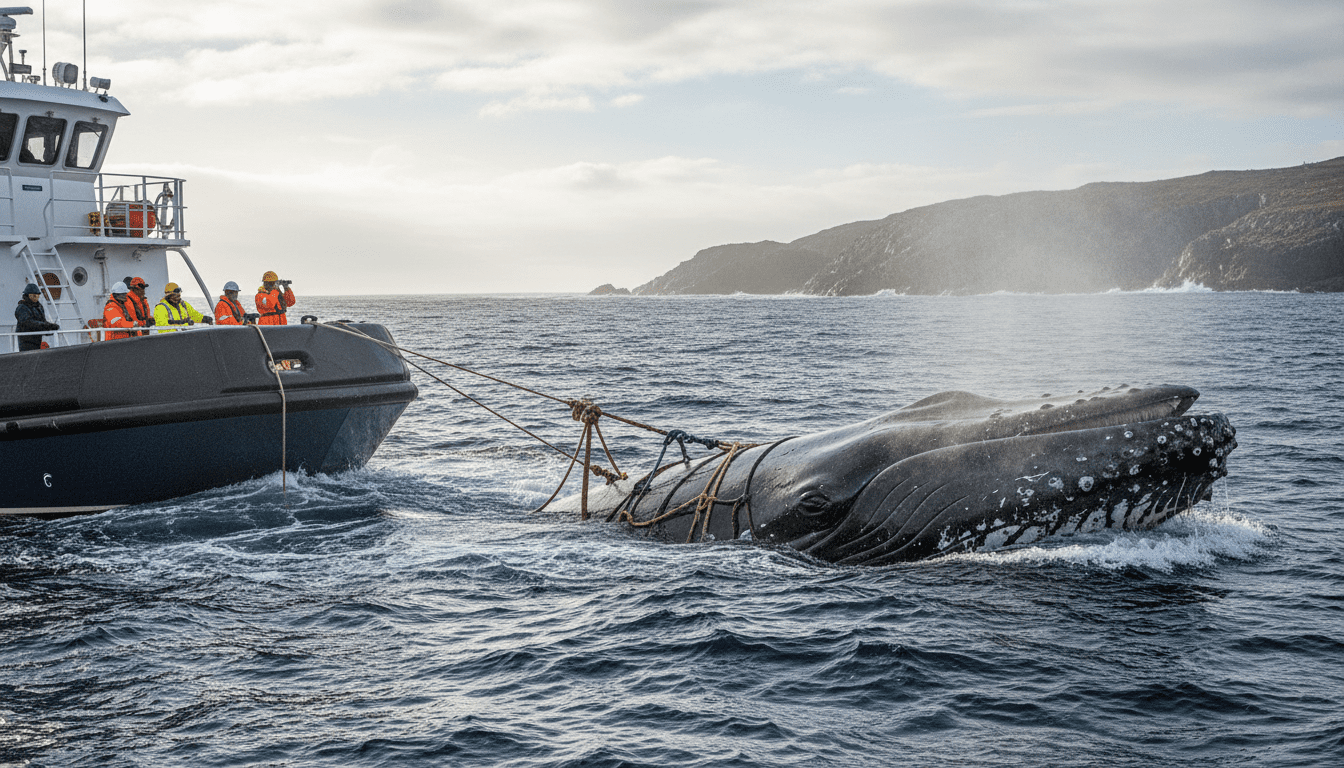
Humpback Whale Timmy Starts Singing as Rescue Tow Heads North
Timmy the humpback whale has begun singing while being towed north after a weeks-long rescue, drawing scientific interest and widespread public sympathy.
Timmy the humpback whale, the stranded juvenile whose plight has held public attention for four weeks, has started producing distinct song patterns as rescuers move him by barge toward deeper waters. The development was reported by rescue teams overseeing a carefully managed tow that aims to return the animal to open ocean habitat. Officials said the whale’s vocalizations began while the tow was underway, prompting renewed focus on both his condition and prospects for release.
Rescue Operation Moves North
Rescue crews shifted the operation this week, placing Timmy in a large transport cradle and towing him northward toward the nearest deep-water corridor. The move followed weeks of monitoring and medical assessments intended to stabilize the whale and prevent further stress or injury. Teams emphasized that the tow is conditional and will be adjusted according to Timmy’s responsiveness, health metrics, and sea conditions.
Timmy Begins Singing During Tow
Observers reported that Timmy has started producing patterned vocalizations consistent with humpback song while he remains in the transport platform. Humpback singing is typically associated with long-range communication and breeding behavior, but animals can vocalize in a variety of contexts related to stress, navigation, or social interaction. Rescuers and marine mammal specialists are recording the sounds to analyze their structure and possible significance to Timmy’s recovery.
Why Humpback Vocalizations Are Noted
Humpback whales are among the most vocally complex cetaceans, capable of producing a broad tonal range and sequences that humans have long described as songs. Scientists study these vocalizations to understand social structure, population connectivity, and even individual health, because changes in sound patterns can reflect physiological or behavioral shifts. In Timmy’s case, the onset of song while under tow offers a rare opportunity to document how a rescued juvenile’s acoustic behavior responds to rehabilitation and relocation.
Medical Monitoring and Behavioral Assessment
Veterinary teams conducting routine checks say they are combining physical exams with behavioral and acoustic monitoring to gauge Timmy’s condition. Blood samples, breathing patterns, and movement responses are being used alongside sound recordings to build a comprehensive picture of his health. Experts caution that vocal activity alone is not conclusive evidence of full recovery, but it provides an additional data point guiding decisions about timing and location for release.
Public Response and Media Attention
Timmy’s story has drawn sustained public interest, turning a technical rescue operation into a widely followed event and inspiring messages of support from communities along the coast. Media coverage has highlighted the whale’s singing as a symbolic moment, with commentators noting the emotive power of hearing a large marine mammal vocalize during a human-led rescue. Authorities have urged well-wishers to respect safety perimeters and to leave operational decisions to trained responders.
Next Steps and Release Considerations
Rescue managers say the immediate objective is to tow Timmy to a pre-identified stretch of deeper water where clinicians can assess his readiness for release under safer conditions. The team will continue acoustic monitoring and repeat health checks before attempting any full release, and they will adapt plans if Timmy shows signs of fatigue or deterioration. Contingency arrangements remain in place in case the whale requires further care or cannot resume normal swimming behavior upon relocation.
Broader Conservation and Research Outcomes
Beyond the immediate rescue, Timmy’s case is expected to inform future responses to large whale strandings and to contribute recordings for scientific archives. Researchers hope the data captured during the tow will help clarify how stress, captivity-like conditions and transport affect cetacean sound production and behavior. Conservation groups say that high-profile events like this can also raise public awareness about marine threats and the resources needed for effective response operations.
Timmy’s emergence as a singing participant in his own rescue has added an unexpected scientific and cultural dimension to an already complex operation, and rescuers say they will proceed cautiously as plans to return him to open water progress.
