
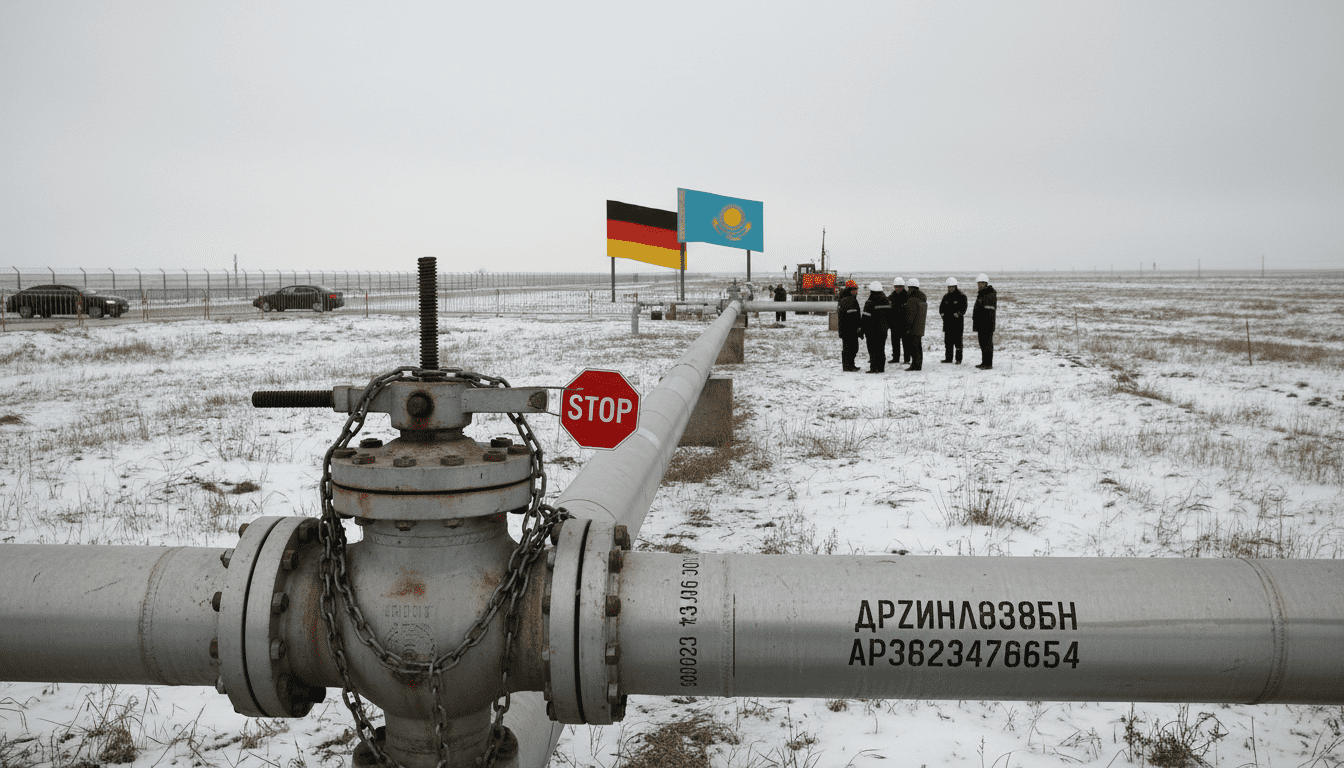
Russia Halts Kazakh Oil Transit via Druschba Pipeline to Germany Starting May 1, 2026
Russia will stop transporting Kazakh crude through the Druschba pipeline to Germany from May 1, 2026, citing technical issues that raise immediate supply and geopolitical concerns.
The Russian government announced on May 1, 2026 that it will no longer pass Kazakh oil through the Druschba pipeline to Germany, triggering urgent contingency planning in Berlin and Brandenburg. The Druschba pipeline, a key conduit for Caspian and Russian crude into Central Europe, is central to the disruption and to the PCK refinery supply in Schwedt.
Scope of the Suspension
The Russian announcement covers Kazakh-origin crude scheduled for transit through the Druschba pipeline into Germany and neighboring countries. Moscow framed the decision as a response to technical problems on the pipeline and did not provide a timetable for restoring the flows.
German and regional officials have questioned the technical explanation, noting that Russia retains operational control over transit sections that run across its territory. The stoppage affects deliveries already en route and planned shipments that relied on the Druschba corridor.
Why Russia Can Block Transit
The Druschba pipeline runs across Russian territory before branching toward Belarus and into Central Europe, which gives Moscow operational leverage over flows regardless of the oil’s country of origin. Control over pumping stations and pressure management allows the operator to halt or reduce transit on short notice.
Since the start of the war in Ukraine, the pipeline has had both political and strategic importance, with repeated incidents and maintenance events affecting volumes. Analysts say the combination of infrastructure control and geopolitical tension makes unilateral interruptions feasible even for non-Russian crude.
Immediate Consequences for the PCK Refinery in Schwedt
Operators and regional authorities say the PCK refinery in Schwedt, one of Germany’s largest, will initially manage through inventories and contractual adjustments. Brandenburg’s government expects the plant to run at roughly 80 percent capacity in May while alternative supplies are sourced.
PCK has historically processed significant volumes of Kazakh crude and the temporary loss narrows operational flexibility and increases logistical complexity. The refinery’s output remains crucial for Berlin and Brandenburg, supplying most regional road fuels and aviation needs at BER airport.
Kazakhstan’s Rerouting Plan
Kazakh authorities announced plans to redirect roughly 260,000 tonnes of crude that had been destined for Schwedt away from the Druschba route. Officials said shipments would be moved to export terminals in Russia, including Ust-Luga, and via the Caspian Pipeline Consortium to the Black Sea port of Novorossiysk for onward shipment by tanker.
Shipping by sea offers a workaround but also introduces new vulnerabilities, including longer transit times, higher costs, and exposure to maritime security risks. Both Ust-Luga and Novorossiysk have been targeted by drone and missile attacks in recent months, complicating the shift to seaborne logistics.
Logistics Options and Regional Coordination
German and Brandenburg authorities are pursuing multiple options to bridge the shortfall, including increased deliveries via the Polish port of Gdańsk and expanded use of oil stored in strategic reserves. Officials reported active talks with Polish counterparts to raise throughput from Baltic terminals toward refineries in eastern Germany.
The TotalEnergies refinery in Leuna, which sources crude via pipelines from Gdańsk and receives U.S. supplies, is less exposed to this specific disruption. Still, connecting additional maritime volumes into inland markets requires rail, barge, and pipeline capacity that will need fast coordination.
Price Outlook and Market Impact
Short-term, officials and market regulators expect little immediate price shock at pumps in Berlin and Brandenburg due to inventories and alternative supply channels. The Federal Network Agency has signaled that acute disruptions at retail stations are unlikely in the coming weeks.
Longer term, a sustained halt of Kazakh transit through Druschba would increase the risk of regional price rises and put pressure on refinery margins, particularly if maritime routes or alternative pipeline arrangements become capacity-constrained. Energy market watchers say prolonged uncertainty could push trading desks to reprice regional differentials and freight costs.
Russia’s cessation of Kazakh crude flows through Druschba on May 1, 2026 exposes the intricate mix of infrastructure control, geopolitical leverage and logistics vulnerability that underpins European oil supplies. Authorities in Berlin and Brandenburg are racing to secure substitutes and keep refineries operating while monitoring whether Moscow’s explanation is a technical necessity or part of a broader strategic posture.
