
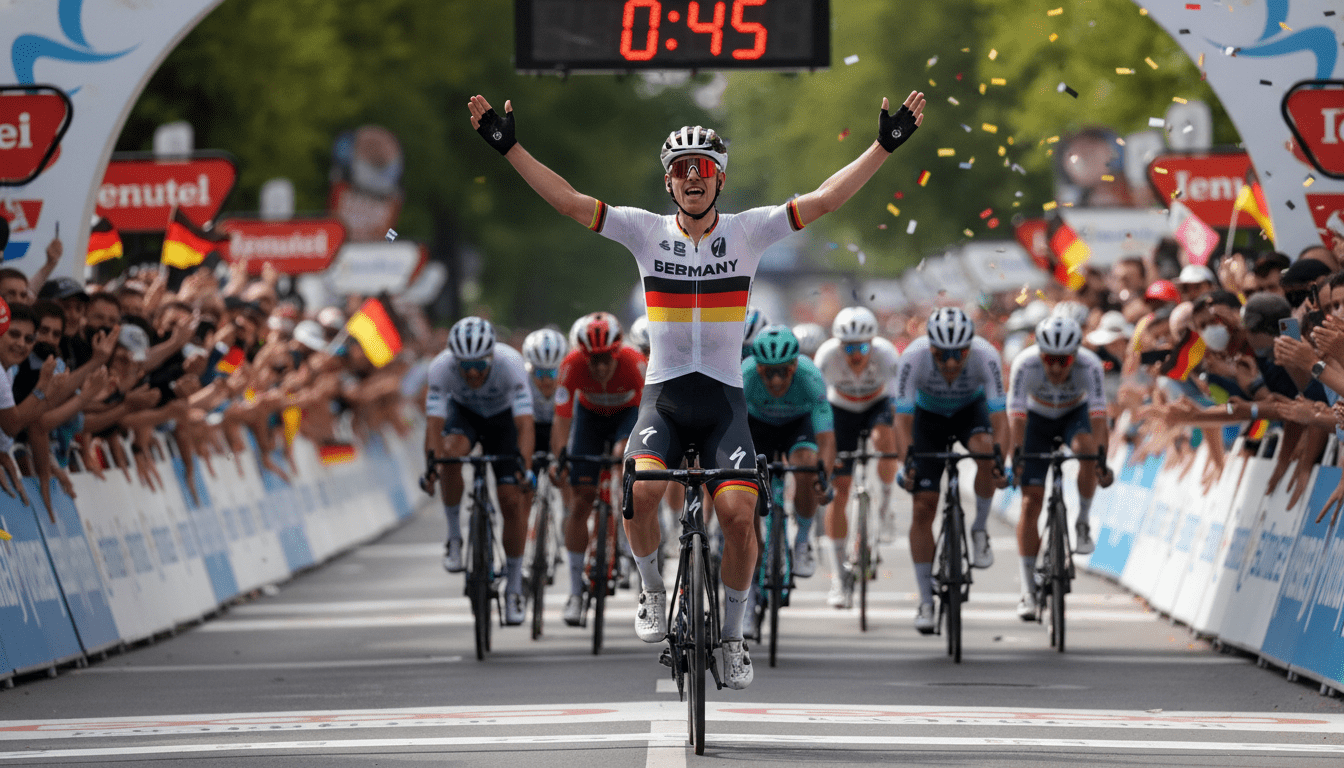
Zimmermann’s late surge secures victory at Eschborn-Frankfurt classic
Georg Zimmermann wins Eschborn-Frankfurt after a decisive late attack, taking the German champion’s jersey to the biggest victory of his career.
Georg Zimmermann produced a breathtaking late attack to win the 63rd Eschborn-Frankfurt, breaking clear from a select group and outsprinting rivals on the final run to the opera in Frankfurt. The 28-year-old, riding in the German national champion’s jersey, crossed the line to claim the most significant victory of his career in a race reshaped by a tougher Taunus route. The result capped a day of aggressive racing, tactical gambits and a narrow margin of survival for the breakaway that animated a challenging 211-kilometre course.
Zimmermann’s late surge wins Eschborn-Frankfurt
Zimmermann timed his long sprint perfectly, finding a narrow seam and powering past the leaders in the closing metres to take the win. He collapsed to the road in disbelief on the asphalt in front of the opera, a physical reaction to the scale of the achievement in his national colours. The victory cements his status among Germany’s most accomplished riders and marks a career-defining moment at a historic one-day event.
Breakaway group holds on as peloton reduces gap
A twelve-rider escape formed the race’s decisive nucleus after a sequence of attacks over the Taunus climbs, and that group managed to fend off a furious chase for the final kilometres. The peloton had reeled in much of the advantage at times, and with roughly a dozen kilometres left the catch looked imminent, but the front group held just enough to contest the finale between themselves. The last ascents, in particular the Mammolshainer Berg and the newly integrated Burgweg, proved the perfect springboard for a late selection that the chasers could not quite close.
Revised Taunus route raised the race’s difficulty
Organizers increased the difficulty this year by adding steeper sectors and a new Burgweg climb that together raised the total ascent to about 3,300 metres over 211 kilometres. Race director and sporting staff have steered the course toward a profile that favors robust classics riders rather than pure sprinters, seeking a more selective and watchable edition. The tougher profile invited tactics more associated with Ardennes-style racing, changing team lineups and forcing a different rhythm from the neutralised start to the frantic finish.
Pidcock and Tulett take the remaining podium spots
Britain’s Tom Pidcock finished second with Ben Tulett completing an all-British pair behind Zimmermann, underlining the international depth on display despite the route changes. Both riders showed endurance and tactical nous to be present in the decisive group, and their podium placings reflected strong teamwork and timing. Several prominent sprinters were present at the start but found opportunities limited on the hilly parcours, with a handful of fast men still finishing respectably inside the top twenty.
Mountain points and crowd fervour on the Mammolshainer Berg
The Mammolshainer Berg again proved a focal point for the race, drawing dense crowds who lined the climb several riders deep and created a festival atmosphere that has become synonymous with the classic. Jonas Rutsch capitalised on repeated attacks to secure the mountain classification, collecting points on the ascents to claim the title of King of the Mountains. Spectators’ enthusiasm amplified the drama at the top of the climbs and added pressure to teams trying to control a breaking race.
Mid-race attacks shaped the finale and endangered favourites
Aggressive moves throughout the day, including an extended attempt by Tim Wellens and late tempo surges on the Feldberg, repeatedly whittled down the field and exposed several notable riders to difficulty. Some pre-race favourites were dropped on the steeper sectors, while others burned energy in service of earlier break attempts, leaving them unable to contest the last sprint. The pattern of attacks and counterattacks illustrated how the reprofiled course forces teams into more dynamic decision-making and punishes passive tactics.
Organizers hope route changes will attract classic specialists
Race officials have signalled a desire to draw more riders who excel in hilly one-day races, believing the new route will position Eschborn-Frankfurt between the spring classics and late-season events. Sporting director comments during the day stressed a stepwise approach to making the race more selective while preserving its traditional character as a German spring highlight. Whether the tougher parcours will alter team rosters and tactical approaches in coming years will become clearer as the event’s reputation among classics specialists develops.
Zimmermann’s triumph at Eschborn-Frankfurt delivered a defining moment for the German champion and a vivid conclusion to a race that rewarded boldness and climbing strength. The result highlighted how course design, crowd intensity and mid-race aggression combined to produce a dramatic one-day classic, and it sets a new benchmark for riders and teams plotting strategies for next year’s edition.
