
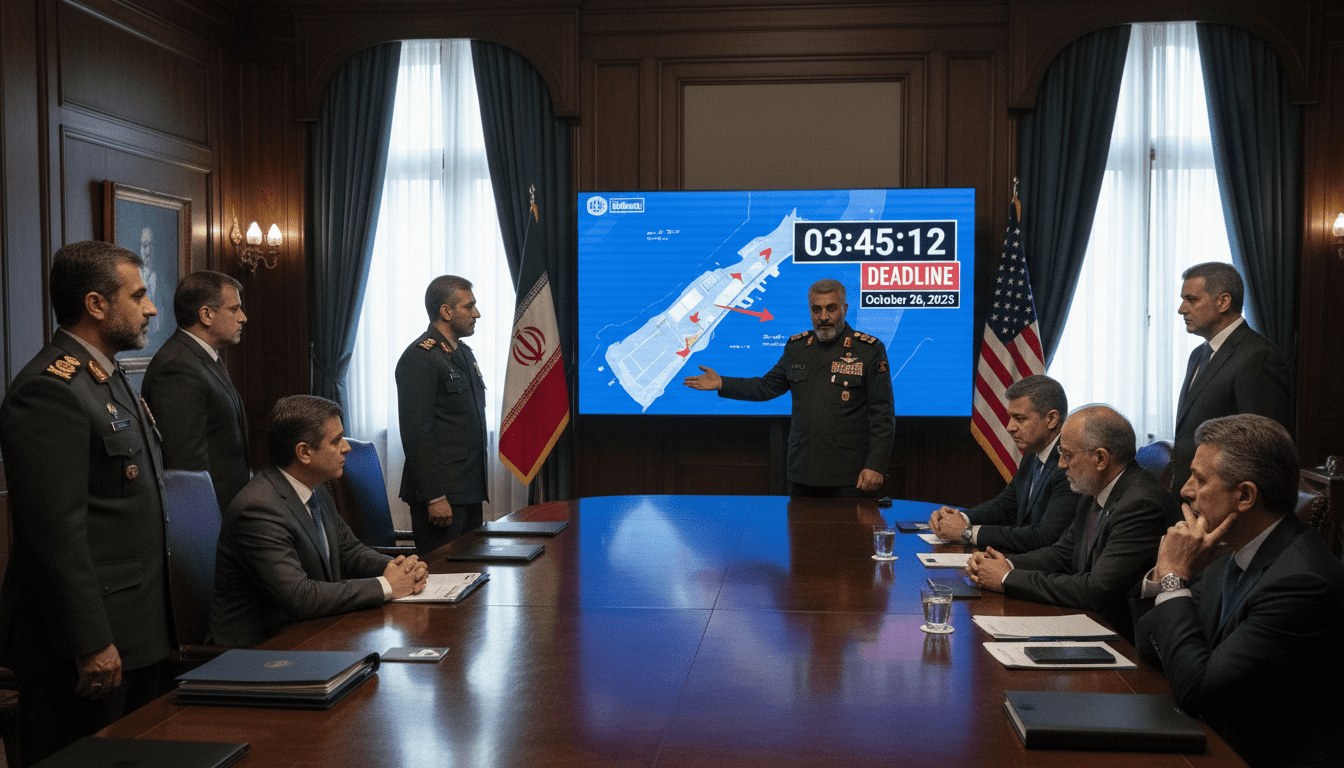
IRGC warns Washington as Tehran sets deadline for lifting naval blockade
IRGC warns Washington after Tehran’s intelligence arm demands US remove its blockade of Iranian ports, narrowing US options between diplomacy or military action.
The intelligence unit of Iran’s Islamic Revolutionary Guards Corps has warned that Washington’s room for maneuver is shrinking, saying the United States must choose between accepting a “bad deal” or attempting an “impossible military operation.” The unit said in a post on X that Tehran has set an unspecified deadline for the US military to lift a blockade on Iranian ports, and it pointed to a shift in tone from China, Russia and European capitals toward Washington. The statement underscores rising tensions over maritime access and diplomatic leverage in the region.
IRGC intelligence unit issues public ultimatum
In a public post on X, the IRGC’s intelligence arm framed the situation as an urgent strategic choice for the Biden administration and its allies. The unit explicitly warned that Washington’s options are being constrained and suggested that military action would be both risky and unlikely to succeed. The message appeared intended to increase pressure on the United States while signalling confidence in Iran’s regional position.
The post did not specify the exact deadline it said Tehran has set, nor did it outline the consequences Iran would impose if the demand is not met. Analysts note that omitting a precise date leaves a degree of ambiguity that can be used tactically to retain leverage and complicate adversaries’ planning.
Deadline demanded for lifting naval blockade on Iranian ports
The IRGC’s statement centres on a demand that the US military lift what Tehran described as a blockade on Iranian ports. Iran alleges that restrictions on freedom of navigation and sanctions enforcement have effectively curtailed its maritime commerce and energy exports. Lifting such measures would require coordination across military, diplomatic and economic channels, a complex undertaking for Washington and its partners.
Officials in Tehran frame the blockade as an existential pressure point that must be removed to resume normal trade flows. Whether the United States recognizes the measures as a blockade or views them as sanctions enforcement is a central point of contention in any possible negotiations.
Shift in international tone toward Washington highlighted
The IRGC intelligence unit pointed to what it said was a change in tone from China, Russia and several European countries regarding their posture toward Washington on Iran-related issues. Tehran’s reference suggests the Iranian leadership perceives greater diplomatic space and a potential reduction in unified international pressure on its policies. If true, that shift could complicate coordinated Western responses and widen options for Tehran.
Diplomats say shifts in rhetoric do not necessarily equate to concrete policy changes, but public statements can signal evolving calculations among major powers. Moscow and Beijing have in recent years advocated for de-escalation and greater engagement with Tehran on certain issues, which Tehran appears to be leveraging rhetorically.
US faces narrowed choices, IRGC warns of military risks
By presenting US options as confined to a “bad deal” or an “impossible military operation,” the IRGC sought to underscore the purported impracticality of force. Military analysts caution, however, that the feasibility of any operation depends on intelligence, logistics, regional dynamics and international backing. A confrontation at sea, particularly near busy shipping lanes and complex littoral waters, carries risks of escalation and civilian harm.
Washington’s decision-making will weigh the costs of military action against the diplomatic and economic consequences of acceding to Iranian demands. Any movement toward force would likely require consultations with NATO partners and regional allies, who may be wary of broader instability.
Possible diplomatic pathways and economic pressures
Observers say the pathway out of the current impasse is likely to run through a mix of diplomacy and economic incentives, though Iran’s conditions and the US domestic political landscape complicate prospects for a quick settlement. Confidence-building measures such as phased easing of sanctions in exchange for verifiable changes in behavior could be one approach, but both sides would need credible mechanisms for enforcement and verification.
Maritime assurances, third-party monitoring, and multilateral talks involving regional states and international organizations could also form part of a negotiated solution. However, the lack of a publicly stated deadline or specific demands beyond lifting the blockade leaves room for divergent interpretations and prolongs uncertainty.
The potential economic fallout is also significant. Continued restrictions on Iran’s maritime commerce could disrupt regional shipping patterns and raise insurance costs, affecting global energy markets and supply chains. Conversely, a negotiated easing could stabilise markets but might draw criticism from countries that favour a harder line on Tehran.
The IRGC’s public warning and Tehran’s asserted deadline increase pressure on Western capitals to clarify their posture and contingency plans. How Washington responds in the coming days will shape whether tensions subside or intensify.
The coming period will test diplomatic channels and military restraint as officials in Tehran and Washington weigh the strategic, economic and political costs of their next moves.
