
US troop withdrawal from Germany could displace 10,000–12,000, Ramstein mayor warns
Ramstein officials warn the announced US troop withdrawal from Germany could displace up to 12,000 people and cost the local economy billions, the mayor says.
Ramstein mayor signals deep local fallout
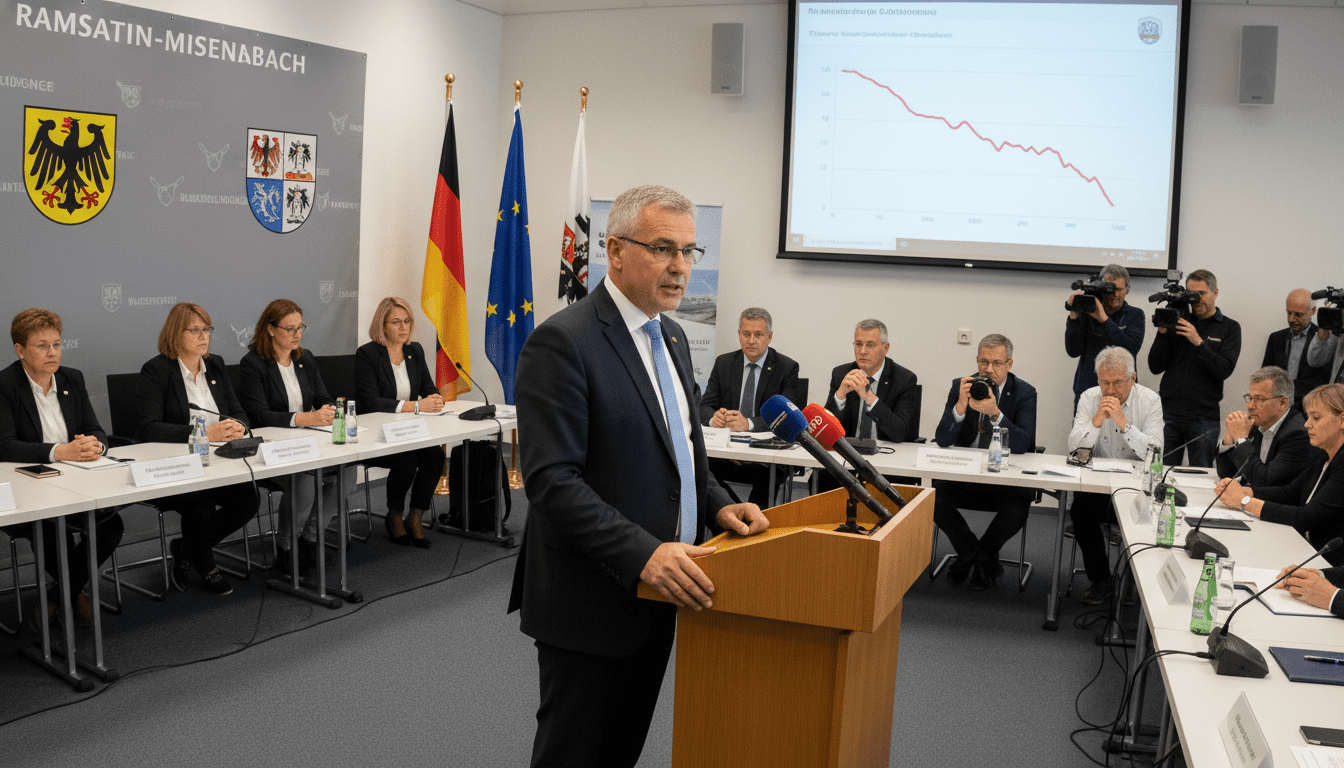
Ramstein-Miesenbach Mayor Ralf Hechler told dpa that the announced US troop withdrawal from Germany would be devastating for his community if families follow the service members. He estimated that, including family members, between 10,000 and 12,000 people could leave the area, a scale of departure he described as “fatal” for Ramstein’s economy and services.
Hechler said the town’s infrastructure, housing market and local businesses are calibrated to a steady American presence and warned that a rapid drop in population would cause long-term damage. He framed the potential movement as not only the loss of residents but the erosion of predictable demand for jobs, rents and municipal revenue.
Economic exposure tied to US presence
Municipal officials point to a direct economic relationship with the base that goes beyond civilian wages and consumer spending. Hechler cited an economic contribution of more than $2 billion per US fiscal year linked to the Ramstein presence, encompassing salaries, rent, and contracts for regional suppliers and service firms.
Local business leaders say many restaurants, shops and contractors have grown dependent on American customers and procurement from the base, creating a network of suppliers that could shrink quickly. A sudden reduction in demand would leave fixed costs intact and revenues declining, raising the risk of closures and layoffs across the region.
Historical cases in Pirmasens and Zweibrücken raise concerns
Hechler pointed to Pirmasens and Zweibrücken as examples of communities that had struggled to recover after significant US drawdowns. Those towns, once buoyed by military-related commerce, faced prolonged declines in population and investment when bases contracted or closed, he said.
Regional planners warn that once private-sector confidence and public services retract, reversing the trend can be difficult and expensive. Long-term recovery, they add, typically requires sustained public investment or new employers willing to replace lost demand—outcomes that are uncertain and often slow to materialize.
Pentagon announcement and political backdrop
On Friday, US Defense Secretary Pete Hegseth announced plans to remove at least 5,000 service members from Germany within six to twelve months, a decision U.S. officials said followed a comprehensive review of force posture in Europe. The Pentagon noted roughly 86,000 US personnel were stationed across Europe, with about 39,000 located in Germany, figures officials cited to explain the scope of the review.
The announcement came amid heightened political tensions between Washington and Berlin, including a public spat between US President Donald Trump and German Chancellor Friedrich Merz over policy toward Iran. White House comments suggested the withdrawal could expand beyond the initially cited numbers, introducing additional uncertainty for local communities.
Construction of Weilerbach hospital contrasts with withdrawal
Despite the announced reductions, Hechler said he did not currently see signs of an immediate, partial drawdown affecting Ramstein, pointing to active construction around the new US medical facility in Weilerbach. The project, budgeted at about $1.59 billion, is intended to build the largest US Army hospital outside the United States and replace the aging Landstuhl facility.
Municipal staff and contractors report a busy worksite and continuing procurement tied to the hospital program, which, in the near term, sustains jobs and local spending. Yet town leaders caution that construction activity may not offset longer-term deficits if troop numbers and accompanying families leave as projected.
Local authorities and next steps
Ramstein officials say they are mobilizing to assess fiscal exposure, model scenarios for population loss and consider mitigation measures such as diversifying the local economy and seeking alternative investors. Municipal leaders also plan to press federal and state authorities for support should reductions materialize at the scale cited by the mayor.
Regional chambers of commerce are preparing contingency plans for small businesses and landlords, while social service providers are reviewing capacity for potential shifts in demand. Local politicians emphasize the need for clear information from US and German authorities to allow orderly planning and avoid abrupt shocks to schools and public services.
The coming weeks will be decisive for communities that host American forces, as officials await further details from the Pentagon and senior US policymakers about timelines and the final composition of any withdrawals.
