
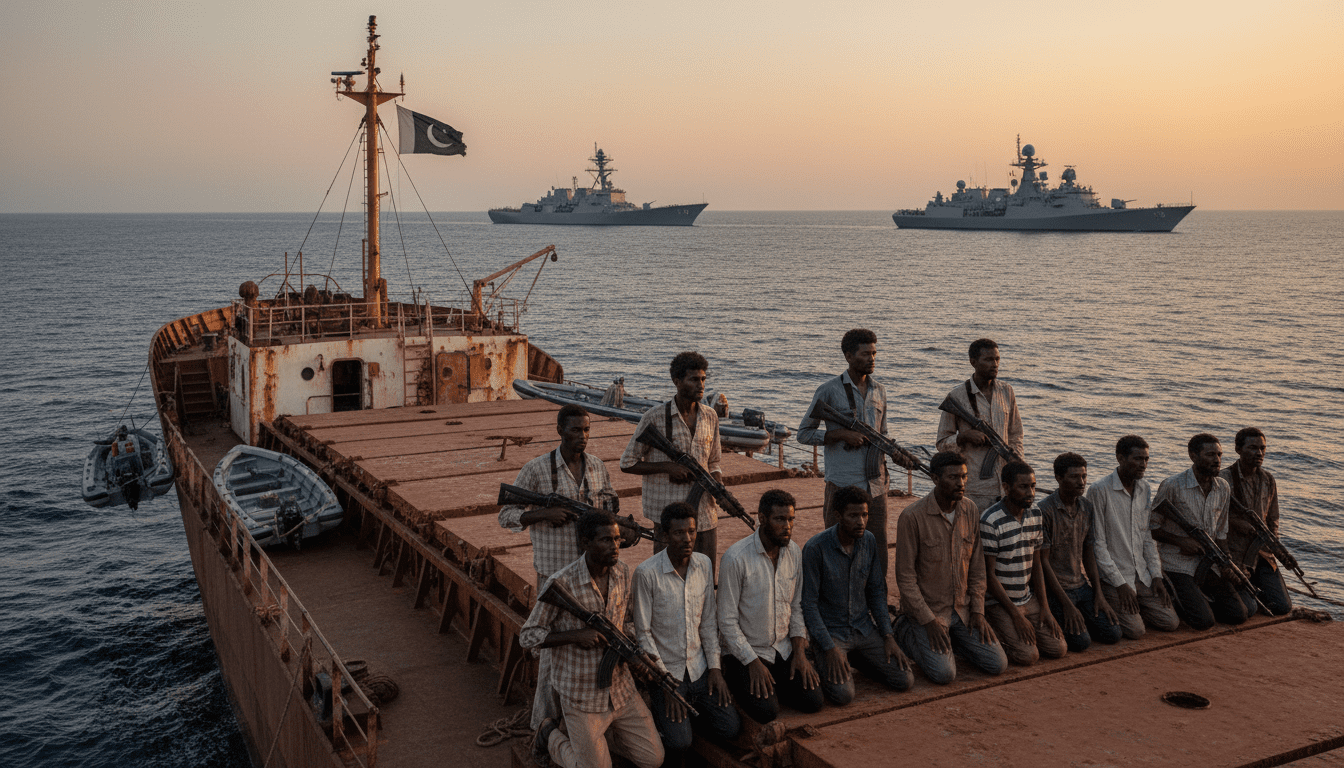
Somali Pirates Detain More Than a Dozen Sailors as Hijackings Surge After US‑Israeli War on Iran
More than a dozen sailors, mostly Pakistani, are being held by Somali pirates after a surge in hijackings and maritime harassment off Somalia following the US‑Israeli war on Iran.
The detainees, who are reported to be crew members on commercial vessels operating in waters off the Somali coast, remain under the control of armed groups that have stepped up attacks in recent weeks. Shipping industry sources and regional officials say the increase in incidents began after the outbreak of the US‑Israeli conflict with Iran, raising alarms across maritime trade corridors. Published on April 30, 2026, the developing situation has prompted urgent calls for coordinated action from governments and shipping companies.
Somali pirates detain crew from multiple commercial vessels
Reports indicate that more than a dozen seafarers were taken in separate incidents attributed to Somali pirate gangs operating from the country’s central and southern littoral. The majority of the detained sailors are from Pakistan, according to crew lists and initial notifications to consular officials. Exact numbers of vessels involved and the identities of the ships have not been publicly disclosed by authorities, leaving families and industry representatives seeking confirmation.
Consular sources and maritime monitors say several hijackings were executed using fast skiffs and small boarding parties, a tactic consistent with piracy patterns in the region but notable for its recent frequency. Officials caution that incomplete information and operational security measures mean public tallies are likely to be revised as more details emerge.
Spike in attacks linked to regional conflict and instability
Analysts and shipping operators point to a correlation between the outbreak of the US‑Israeli war on Iran and the uptick in maritime crime off Somalia. The conflict has strained regional security resources and diverted international attention, creating opportunities for criminal networks to expand their operations at sea. While a direct causal link is difficult to prove, trend data from maritime security firms show an unusual clustering of incidents since the onset of hostilities.
Security experts say the convergence of geopolitical distraction, local economic hardship, and long-standing governance gaps ashore has made Somali coastal waters more permissive for piracy. The situation demonstrates how broader conflicts can have spillover effects on maritime safety and commercial shipping far from the immediate theater of war.
Shipping industry and insurers respond to increased risk
Shipping companies operating in and near the Gulf of Aden and the wider western Indian Ocean have begun adjusting routes and implementing heightened security measures in response to the incidents. Vessel operators report increased demand for on‑board security teams, additional watch rotations, and revised voyage planning to reduce transit times in higher‑risk areas. These measures raise costs and complicate logistics for carriers and charterers.
Insurers have also signaled a reassessment of premiums and war‑risk ratings for voyages that approach Somalia. Higher cover costs and surcharges are likely to be passed down the supply chain, potentially affecting commodity prices and delivery schedules for cargoes that routinely transit the region.
International naval patrols and regional authorities under pressure
International naval forces and maritime security coalitions maintaining a presence in the region have been urged to intensify patrols and interdiction efforts, though resources remain stretched amid wider regional tensions. Somali authorities, whose control over large swathes of coastline is limited, have repeatedly called for external support to combat armed groups that profit from piracy and illegal trade. Coordination between navies, coastguards, and international shipping bodies is now being prioritized in crisis discussions.
Diplomatic channels are reported to be active as affected states seek to secure the release of their nationals and to pressure pirate networks through both legal and operational means. Observers say a lasting reduction in attacks will require not only maritime patrols but also efforts to restore governance and economic stability ashore.
Humanitarian concerns for hostages and their families
Families of the detained sailors are facing prolonged uncertainty as information about the hostages’ condition and location remains scarce. Consular officials have been notified in some cases and are working to obtain details and access, but progress is uneven and slow. Humanitarian organizations warn that hostages held at sea or in remote coastal areas face risks from poor living conditions and limited medical care.
The use of ransom demands and prolonged negotiation strategies by pirate groups can deepen the trauma for families and complicate resolution efforts. Advocates and legal experts stress the need for transparent communication from authorities to reduce speculation and provide basic support to affected households.
Wider trade implications and calls for coordinated action
Maritime analysts warn that continued harassment and hijackings off Somalia could have broader implications for global shipping lanes, particularly for energy and container flows that rely on transits through the Red Sea and Gulf of Aden. Even localized disruptions can ripple through supply chains, affecting delivery times and costs for businesses worldwide. Industry groups and some governments are urging a coordinated response that combines naval security, intelligence sharing, and diplomatic engagement to deter future attacks.
Authorities monitoring the situation say investigations are ongoing and that further updates will be provided as new information becomes available. Shipping firms and international partners are being pressed to maintain vigilance and to support measures that protect seafarers and preserve the safety of commercial maritime operations.
The situation remains fluid, and officials have cautioned that public details may change as rescue, negotiation, and investigative activities continue.
