
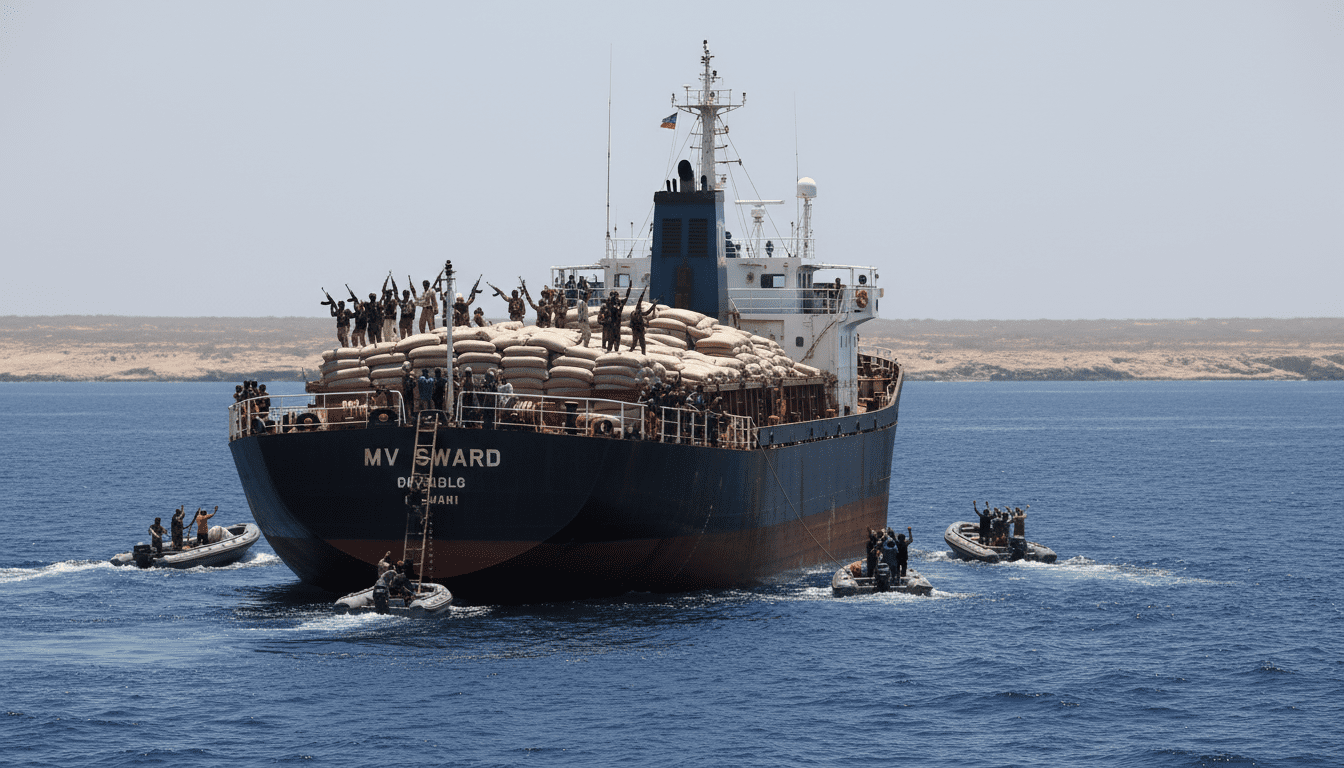
MV Sward Hijacking: Somali Pirates Seize Cement Freighter After Suez Transit
Somali pirates seized the MV Sward, a cement freighter, after it transited the Suez Canal on April 13; the vessel was bound for Mombasa, Kenya. The MV Sward hijacking has revived concerns over security in the Gulf of Aden and prompted an urgent response from shipowners and maritime authorities. Details on the crew’s condition and the ship’s exact location remained limited as operators and insurers coordinated with regional agencies.
Attack Occurred Shortly After Suez Transit
The freighter left the Suez Canal on April 13 en route to the Kenyan port of Mombasa when it was boarded by armed assailants. Shipping sources report the attackers identified themselves as Somali pirates and took control of the vessel at sea. Initial communications from the ship were interrupted, prompting an immediate alert to regional authorities and the vessel’s managers.
Vessel, Cargo and Crew Information
The MV Sward is documented as a commercial cement carrier serving international bulk routes. At the time of the incident the ship was carrying a consignment of cement destined for construction projects in East Africa. Operators confirmed the vessel was crewed by an international complement, and efforts to verify the health and whereabouts of seafarers were underway with the assistance of the vessel’s owner.
Responses From Authorities and Shipping Firms
Shipowners, insurers and maritime agencies moved quickly to assess the situation and coordinate a response. Regional naval forces and maritime security centers were notified, and industry bodies advised nearby vessels to steer clear of the area. Insurers are engaging with the shipowner to determine liability, salvage options and next steps for any potential ransom negotiations.
Security Trends in the Gulf of Aden
While piracy off Somalia’s coast had declined in recent years due to international patrols and armed protection measures, sporadic attacks have continued to pose risks to commercial traffic. Analysts say lapses in patrol coverage, economic instability ashore and opportunistic criminal groups can lead to renewed incidents. The seizure of the MV Sward underscores the persistent vulnerability of merchant vessels transiting the Horn of Africa.
Impact on Regional Trade and Shipping Routes
The hijacking is likely to reverberate across regional shipping schedules and freight costs if insurers respond by raising premiums or if operators reroute vessels. The Gulf of Aden and approaches to the Red Sea are critical arteries for global trade, and disruptions there can delay deliveries and increase fuel and transit costs. Shipping lines serving East Africa may temporarily adjust routing and adopt additional protective measures for vessels carrying bulk cargo.
Calls for Coordinated International Action
Maritime organizations and trade groups urged a coordinated, multi-layered response to prevent further incidents. Proposals include stepped-up naval patrols, enhanced intelligence sharing among coastal states, and expanded use of private maritime security teams aboard high-risk transits. Aid and development actors also pointed to the need for onshore economic measures to reduce the incentives that feed piracy.
The MV Sward hijacking has catalyzed emergency meetings among the vessel’s owners, insurers and regional maritime authorities to secure the crew and plan recovery options. Investigations will examine how the attackers approached the freighter, what gaps in surveillance or protection may have existed, and whether any warning signs were missed prior to the boarding.
Maritime analysts will be watching closely for the response timeline, including any attempts to retake the vessel, negotiated settlements, and actions that might restore safe navigation through the Horn of Africa. The incident is a reminder that even with years of reduced incidents, the threat of Somali piracy remains a real operational and human-security challenge for global shipping.
Efforts to confirm the crew’s condition and the vessel’s status continue, with families and stakeholders awaiting clear information from the shipowner and maritime authorities.
