
Germany coalition crisis deepens after Villa Borsig clash, analysts say
A sharp confrontation between the chancellor and vice-chancellor at Villa Borsig two weeks ago has crystallized what many officials now call a Germany coalition crisis, leaving the governing alliance unable to produce decisive policy and raising risks ahead of regional elections.
Villa Borsig clash exposes coalition fault lines
Two weeks ago a heated exchange in the government’s Villa Borsig meeting left coalition partners publicly shaken and privately resigned to deeper tensions. Sources inside the three-party alliance describe the incident as emblematic of diverging aims rather than a one-off disagreement. Party leaders have since presented compromises, but analysts say those deals paper over fundamental differences and do not resolve the underlying disputes that triggered the clash.
Compromises driven by survival, not strategy
Negotiations since the confrontation have produced measures designed primarily to preserve the coalition’s majority rather than to set a clear strategic course. Officials from the CDU, SPD and CSU have traded concessions to keep coalition business moving, but critics argue these concessions prioritize short-term equilibrium over substantive reform. As a consequence, observers say the coalition’s policy output increasingly reads as transactional — concessions to shore up coalition unity rather than coherent responses to voters’ priorities.
Health reform signals limited ambition
The health package recently tabled by the coalition is being portrayed internally as a way to prevent further rises in contribution rates, but it stops short of a systemic turnaround. Lawmakers and policy experts say the measures mitigate immediate fiscal pressure without delivering structural improvements to service quality or sustainability. This pattern — avoiding immediate crises while forgoing ambitious fixes — repeats across other dossiers and reinforces perceptions that the coalition is managing decline rather than governing proactively.
Budget choices underscore competing priorities
The federal budget has become a focal point for the coalition’s competing priorities, exposing how political bargaining shapes fiscal outcomes. The Union parties have sought measures to jump-start reforms, while Social Democrats have pushed to protect social spending for lower-income groups. The result is a budget that critics call emblematic of the coalition’s approach: a mix of symbolic reliefs and revenue shifts that leaves medium-term investment needs, including municipal infrastructure and energy-intensive industry relief, largely unaddressed.
Migration, energy and taxes reveal unsettled direction
Across migration, energy and taxation, the coalition has abandoned rigid positions without landing on persuasive long-term policies. Migration policy has moved away from an open-door posture but offers limited clarity on integration or enforcement mechanisms. Energy policy shows pragmatism over dogma without a credible plan for targets and transition financing. Tax measures, including adjustments to contribution ceilings and talks about levies on high earners, reflect attempts to protect vulnerable voters while maintaining revenue, yet they fall short of the deep reforms many businesses and municipalities say are necessary.
Saxony-Anhalt election raises political stakes
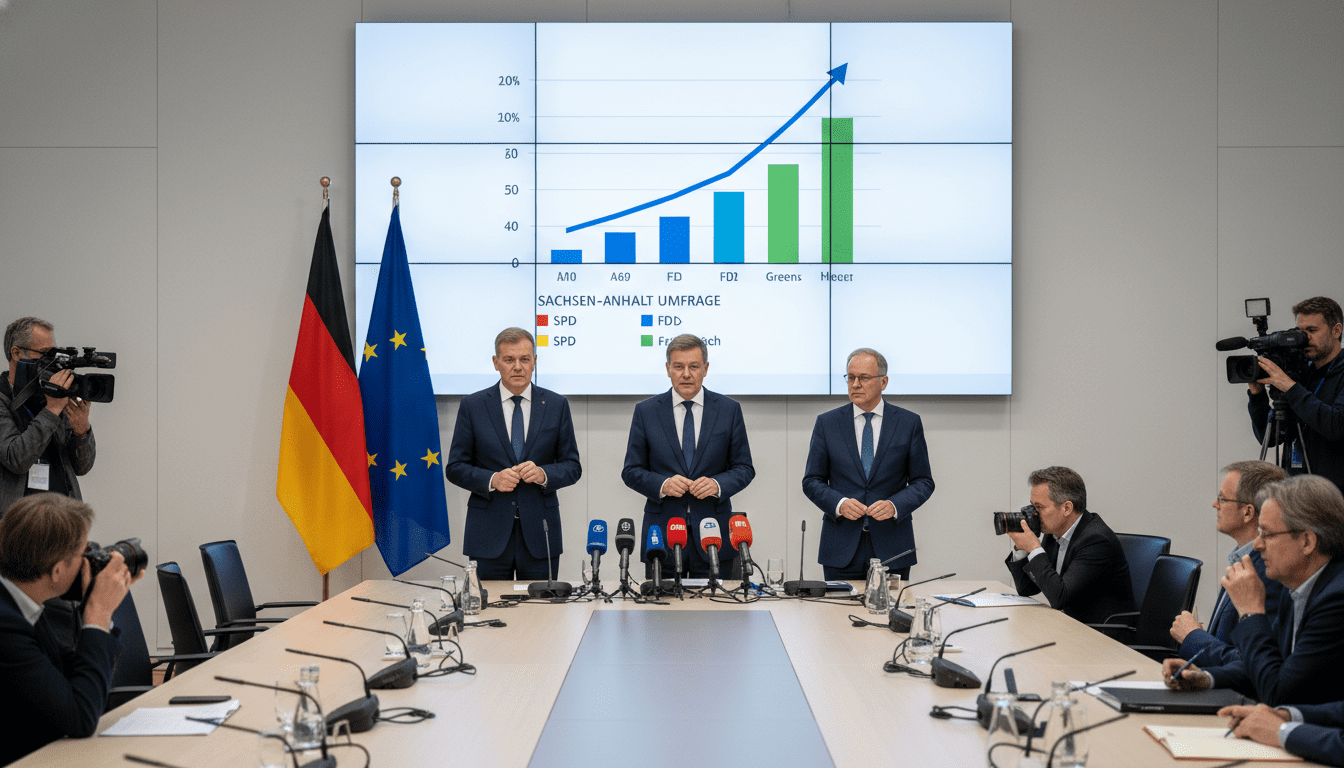
With the Saxony-Anhalt state election scheduled for September, the coalition’s internal strains take on electoral urgency. Both CDU and SPD are racing to claim credit for policy moves they hope will blunt losses to the right, but internal disagreements have amplified uncertainty rather than reassuring voters. Analysts warn that the AfD stands to gain if the governing parties appear paralysed or fixated on internal survival; the regional campaign will be treated by Berlin as a test of whether the coalition’s incremental measures can translate into voter confidence.
The coalition’s fragility has prompted renewed debate about alternatives — from minority government scenarios to early elections — but party strategists caution that none of those choices promise clearer outcomes. Polls and political operatives suggest that new balloting might reproduce current fragmentation and could even deepen instability at the federal level. For now, leaders appear to prefer keeping the coalition intact through the legislative term, even as confidence in its capacity to defeat the AfD or deliver major reforms erodes.
The governing alliance’s current trajectory, marked by internal confrontations and pragmatic but modest policy packages, raises questions about whether it can convert short-term survival into credible long-term governance. If the coalition cannot demonstrate an ability to respond coherently to fiscal, social and regional electoral pressures, commentators say the consequences could extend beyond a single legislative period. The coming months, and the outcome in Saxony-Anhalt in September, will be a critical barometer of whether the coalition can stabilize politics in Berlin or whether the Germany coalition crisis will deepen further.
