
Germany GDP Q1 2026: Economy Grows 0.3% Despite Iran War Shock
Germany GDP Q1 2026 edges up 0.3% as private and public consumption and exports offset higher energy costs and slipping business confidence.
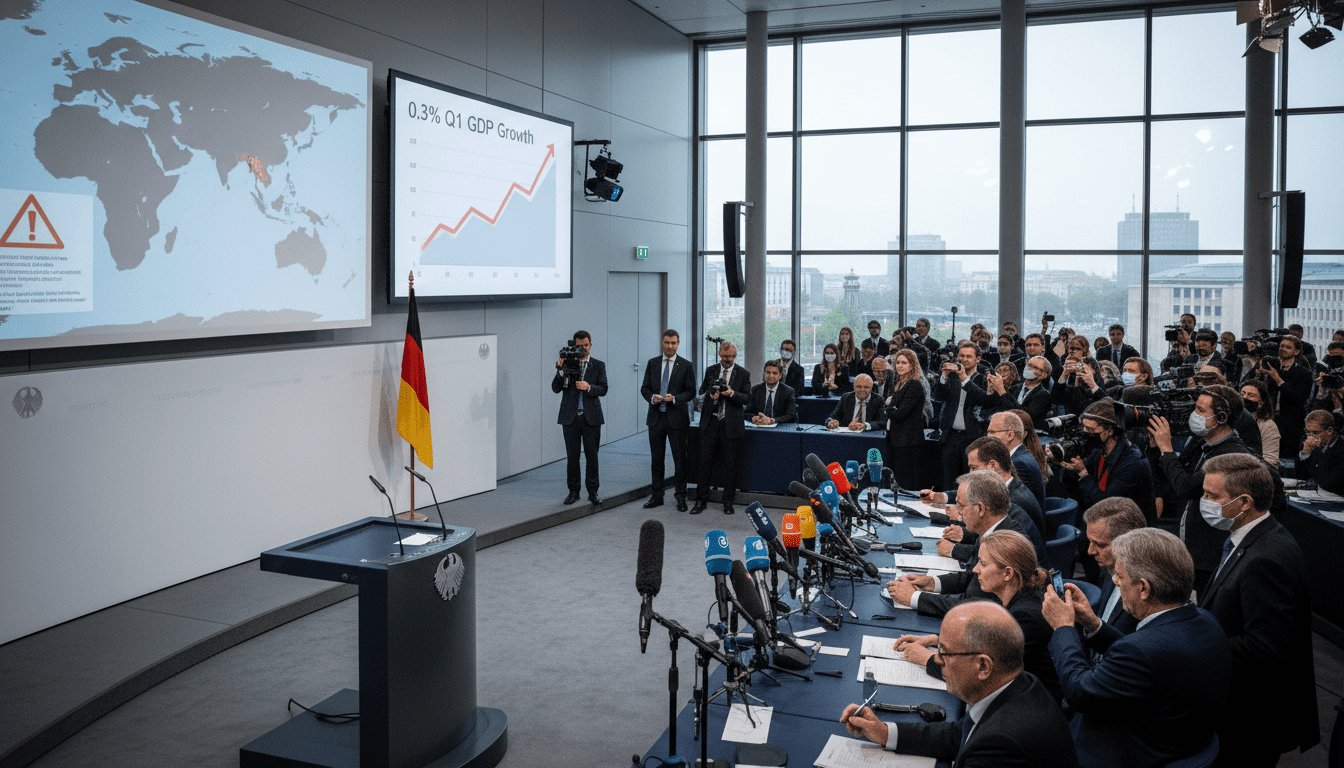
Germany’s economy expanded by 0.3 percent in the first quarter of 2026, the Federal Statistical Office reported, surprising analysts who expected a weaker start to the year. The headline reading—Germany GDP Q1 2026—reflects growth driven mainly by household spending and government consumption, while exports also made a positive contribution. This outcome comes despite substantial energy-market disruptions following the effective closure of the Strait of Hormuz at the end of February, which has driven up oil and gas prices across Europe.
Private and Public Consumption Supported Growth
The Federal Statistical Office’s preliminary estimate showed that both private consumption and state spending were the main engines behind the quarter’s expansion. Households increased their outlays even as prices rose, and government consumption rose as public services and investment maintained demand. Together these components helped offset weaker areas of the economy and converted modest activity into positive quarterly GDP.
Consumer spending patterns were uneven, however, with some sectors showing resilience while others contracted due to higher living costs. Analysts note that government fiscal measures and continued wage growth in some industries likely cushioned household demand. The mixed portrait suggests the growth was broad enough to register at the macro level but fragile beneath the surface.
Exports Contributed Amid Supply-Chain Strains
Exports registered a rise in the first quarter, according to the statisticians, adding to the positive headline result for Germany GDP Q1 2026. German manufacturers benefitted from sustained foreign demand for certain industrial goods, even as global trade faced disruptions stemming from tighter energy supplies. The net export contribution helped counterbalance weaker investment and cooling industrial indicators in some sectors.
Supply-chain bottlenecks and higher freight and energy costs remain a constraint, and exporters have reported rising input prices. Still, the export uptick demonstrates that demand from key trading partners remained sufficient to support cross-border shipments during the quarter.
Energy Shock Pushes Inflation and Alters Spending
The effective shutdown of the Strait of Hormuz since late February has reverberated through energy markets, driving crude oil and natural gas prices higher and increasing inflationary pressures in Germany. Headline inflation rose to 2.7 percent immediately after the disruption and climbed further to 2.9 percent in April, intensifying cost-of-living concerns for households. Real sales at petrol stations, including convenience stores, fell sharply in March, down 8.6 percent year-on-year after adjusting for prices.
Higher energy costs have weighed on both firms and consumers, eroding margins and squeezing discretionary spending. Economic surveys show that businesses and households have grown markedly less confident about the outlook and expect prices to continue rising in coming months, a dynamic that could dampen demand if sustained.
Labour Market Shows Early Signs of Softening
Labour-market indicators point to a cooling of employment momentum even as overall jobs remain at a high level. In March 2026 some 45.52 million people with residence in Germany were recorded as employed, but seasonally adjusted figures fell by 25,000 from February. Over the past twelve months, the average decline in employment amounted to 16,000, indicating a modest weakening in labour-market dynamics.
The decline suggests employers are beginning to adjust to slower demand in parts of the economy and to rising costs. While unemployment rates have not spiked, policymakers and firms will be watching hiring intentions and hours worked closely as leading indicators of whether the slight softening will become more pronounced.
Policy Outlook and Government Growth Forecast
After two recessionary years prior to 2025, Germany’s GDP rose 0.3 percent for the full previous year, and the federal government currently expects growth of around 0.5 percent for 2026. The better-than-feared start to the year provides some support for that outlook, but rising inflation and falling confidence complicate the picture. Monetary and fiscal policymakers face a delicate balancing act between containing inflationary pressures and supporting demand.
Economic forecasters caution that energy-price volatility and external developments could alter the trajectory rapidly, implying downside risks to the government’s modest growth forecast. Continued monitoring of consumption, investment, and export momentum will determine whether the positive first quarter translates into steady expansion through the rest of the year.
Regional Comparisons in the Eurozone
Germany’s modest expansion contrasts with stagnation in France at the start of the year, where economic output held flat after a marked slowdown in the latter half of 2025. Spain also saw growth decelerate, with quarterly expansion slowing from 0.8 to 0.6 percent. These divergent outcomes underline uneven momentum across the eurozone and highlight how national demand dynamics and export structures influence resilience to global shocks.
For Germany, the mix of consumption-led growth and export resilience delivered a positive headline for Q1, but the combined effects of higher energy costs and falling confidence align Germany’s near-term challenges with those of several eurozone peers.
The initial numbers suggest the German economy entered 2026 in slightly better shape than many observers had feared, yet underlying fragility remains as inflation climbs and business and consumer sentiment weakens. Continued volatility in energy markets and a cautious outlook among households and firms mean policymakers will need to remain vigilant to preserve the recovery.
