
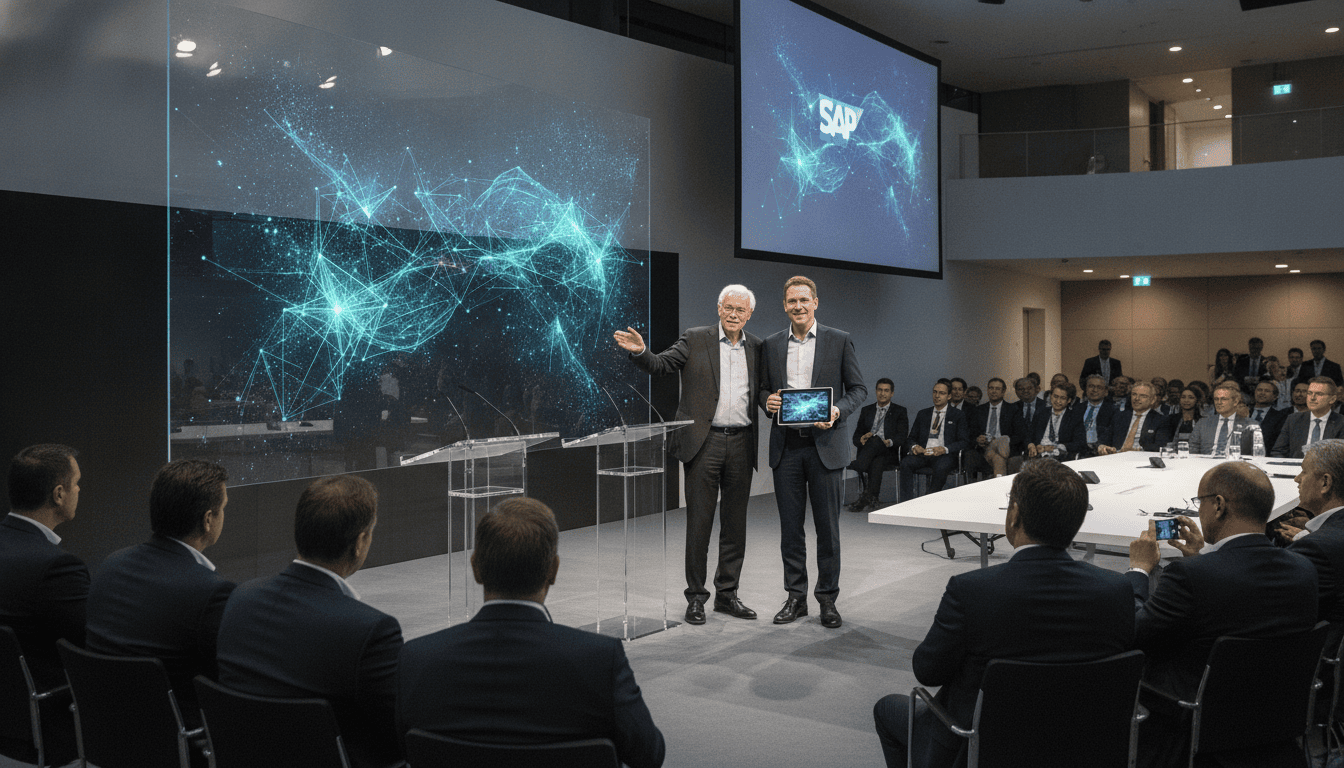
ChatGPT Pressure Tests Enterprise Software Market as SAP’s Klein Rejects Order Losses
ChatGPT and other generative AI tools are reshaping expectations for enterprise software, but SAP’s Klein says the company is gaining, not losing, business amid investor worries.
The ascent of ChatGPT and similar generative AI models has intensified scrutiny of traditional enterprise software providers and the future of bespoke business systems. Investors fear that firms might use large-language models and other AI tools to build low-cost, tailored solutions for accounting, inventory and logistics that undercut incumbent vendors. SAP’s CEO Klein pushed back on that narrative, saying the company is winning new orders because of AI rather than losing them.
Investors Flag Cost-Effective AI Alternatives
Investors have raised concerns that ChatGPT-style models could enable companies to develop internal software for core functions at a fraction of current costs.
The concern centers on accounting and warehouse-management systems where customizable scripts, automation and AI-driven workflows could replace expensive packaged solutions.
Market analysts warn this dynamic could compress pricing and margins across the enterprise software sector if clients increasingly rely on AI to build internal tools.
SAP’s Response and Klein’s Rebuttal
SAP’s Klein has repeatedly rejected the idea that generative AI is cannibalizing the firm’s sales pipeline.
Klein told audiences that “we are not losing orders because of AI. We are winning orders because of AI,” framing AI as a demand driver rather than a substitute.
The company has emphasized integrating AI into its cloud offerings and promoting AI-augmented modules to corporate customers.
How AI Is Changing Buyer Expectations
Enterprise buyers now expect faster configuration, lower implementation costs and more flexible customization, driven by accessible AI tooling.
Procurement teams are asking whether they need full-suite vendors or can combine smaller, AI-enabled components to meet business needs.
This shift is prompting software firms to rethink pricing, delivery and the modularity of their products.
Technical Limits and Integration Challenges
Despite investor worries, building reliable, compliant enterprise systems with off-the-shelf AI remains technically and operationally challenging.
Core business functions like financial reporting, regulatory compliance and inventory reconciliation demand accuracy, auditability and integration with legacy systems.
Those requirements often favor established vendors that offer tested integrations, enterprise support and governance frameworks.
Market Reaction and Short-Term Risks
Public markets have shown sensitivity to the AI narrative, with investors re-evaluating valuations of legacy software vendors.
Analysts note increased volatility in companies perceived as vulnerable to low-cost AI alternatives, even where customer contracts and long sales cycles provide near-term protection.
Vendors face the twin tasks of reassuring shareholders and demonstrating clear AI-driven value propositions to customers.
Vendors Adjust Strategy to Embrace AI
Many enterprise software firms are shifting from defensive postures to active AI adoption, embedding generative capabilities into core products.
Companies are rolling out AI assistants, automated code generators for customization, and process-optimization tools to make software easier to deploy and less costly to maintain.
This pivot aims to convert potential disruption into a competitive advantage by offering AI-enabled reliability and compliance that pure DIY solutions struggle to match.
The debate over whether ChatGPT and similar models will displace traditional enterprise software is likely to persist as both vendors and corporate IT teams experiment with new architectures.
In the near term, incumbents with broad product suites and compliance expertise can leverage AI to deepen customer relationships, while agile startups and internal development teams explore niche, cost-effective automation.
How the market balances the appeal of rapid, low-cost AI development against the need for enterprise-grade reliability will determine winners in the evolving enterprise software landscape.
