
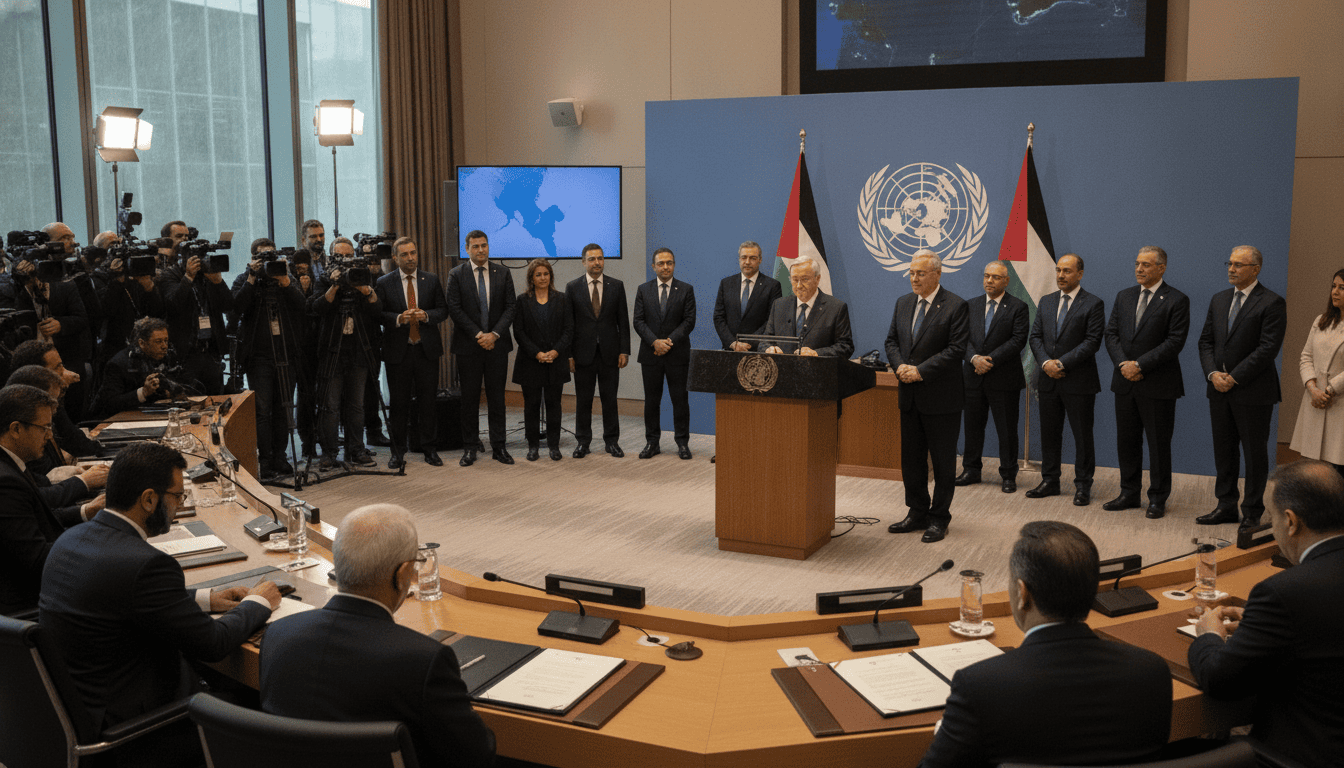
Hamas dissolution: UN “takes note” as Gaza governing body dissolved
UN “takes note” of Hamas dissolution of Gaza’s governing body, welcoming steps that could aid ceasefire implementation and support unified Palestinian governance under the PA.
Immediate UN reaction
The United Nations said it has “taken note” of the Hamas dissolution of the governing body that administered Gaza for nearly two decades, framing the move as a possible contribution to ceasefire implementation. UN spokesman Stéphane Dujarric emphasized that any step which helps deliver on the terms of the ceasefire agreement is welcome. He reiterated the UN’s continued support for efforts aimed at unified Palestinian governance under the Palestinian Authority.
Ceasefire implementation and Security Council references
Dujarric’s remarks linked the announcement directly to obligations referenced in relevant Security Council resolutions and the ceasefire framework. The UN language stressed practical outcomes, including the implementation mechanisms and timelines embedded in prior diplomatic agreements. Observers noted that the UN’s response focused less on political judgment and more on advances that would tangibly improve security and humanitarian access.
The statement also implied a need for verification and coordination between international actors and Palestinian institutions to ensure the ceasefire’s conditions are met. That task typically involves monitoring arrangements, humanitarian corridors and arrangements for prisoner exchange or detainee accounting where stipulated. How those mechanisms will be activated and who will lead them on the ground remains central to the next phase of implementation.
Potential shift in Palestinian governance
The dissolution of the Gaza governing body raises immediate questions about administrative control and service delivery across the territory. The UN’s endorsement of steps toward unified governance signals support for the Palestinian Authority taking a more visible administrative role, but the transition will be complex. Integration of civil services, security structures and financial systems will require detailed arrangements and time to avoid disrupting essential services.
Legal and institutional hurdles will also emerge as officials assess mandates, personnel and the status of documents issued under the previous governing body. Reconstruction, public-sector payrolls and coordination of aid flows are among the immediate practical matters that will test the ability of any new administrative configuration to function. International donors and agencies are likely to demand clear guarantees about accountability and access before significantly scaling up assistance.
Security and disarmament challenges
A central question for stabilizing Gaza is how armed groups and security forces will be handled during any transition. The UN’s emphasis on ceasefire implementation implicitly acknowledges that demilitarisation or effective control of armed actors is a precondition for longer-term stability. Translating political agreements into on-the-ground security arrangements will necessitate negotiations over force composition, oversight and the role of international monitors.
Security sector reform in a post-dissolution scenario will also be politically sensitive, given decades of divided authority and competing loyalties. Any attempt to reorganize or integrate security forces will face resistance from constituencies that fear loss of influence or retribution. International actors seeking durable peace will need to factor these dynamics into disarmament, demobilization and reintegration planning.
International community and regional implications
The UN statement is likely to shape diplomatic responses from regional capitals and global powers watching the ceasefire’s consolidation. Many states have previously urged the restoration of unified Palestinian governance as a path to stable peace and improved delivery of humanitarian aid. Yet the pace and nature of any international engagement will depend on concrete steps taken to ensure security, human rights protections and transparent governance.
Regional actors whose security and political calculations are tied to Gaza will have a stake in how authority is reconfigured. Coordination among neighboring states, the Palestinian Authority and international organisations will be necessary to manage border arrangements, aid pipelines and reconstruction projects. Diplomatic activity in coming days is expected to focus on sequencing these elements to avoid a security vacuum.
Practical next steps and diplomatic oversight
Moving from announcement to implementation will require a mix of diplomatic, technical and operational work led by the Palestinian Authority, with UN support and likely involvement from other international partners. Key priorities include establishing managerial arrangements for public services, agreeing protocols for security oversight, and putting monitoring mechanisms in place to verify compliance with ceasefire terms. Donor confidence and the speed of humanitarian assistance will hinge on clarity about those arrangements.
The UN’s comment suggests an intent to remain engaged, facilitating dialogue and providing technical assistance where requested. How quickly and effectively that engagement translates into visible improvements for civilians in Gaza will be the immediate measure of success. International actors will also press for transparent reporting on progress to avoid misunderstandings that could undermine fragile gains.
The dissolution of Gaza’s long-standing governing body marks a significant moment that could alter the immediate political and humanitarian landscape if followed by concrete, verifiable steps toward unified administration and durable security arrangements.
