
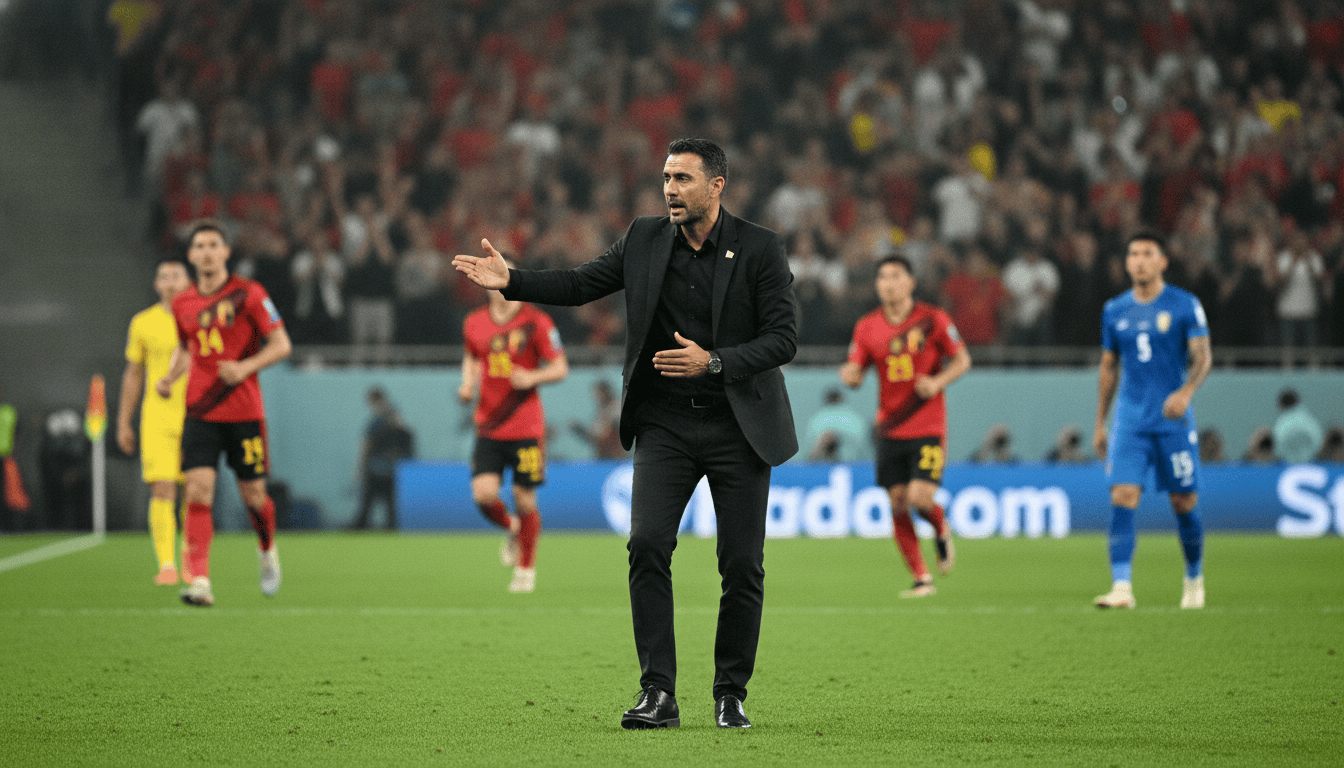
Rudi Garcia’s Belgium Gamble: Coach Under Pressure After Mixed World Cup Display
Rudi Garcia leads Belgium into a pivotal World Cup moment, but his tactics and team form have sparked debate as the Red Devils prepare to face the United States.
Rudi Garcia arrived as Belgium’s national coach with a reputation forged in France and Italy, and his stewardship of the Red Devils has quickly become the tournament’s talking point. The team advanced from a group many considered manageable, yet performances have drawn criticism and left supporters searching for answers. With an elimination match against the host nation looming, Garcia’s tactical choices and personnel decisions are now under intense scrutiny.
Career credentials that shaped the appointment
Rudi Garcia’s CV provided the Belgian FA with a compelling profile when he applied for the national job. He won the Ligue 1 title and the French Cup with Lille in 2010–11, famously finishing ahead of a strong Paris Saint-Germain side. Subsequent spells at Roma, Marseille and Lyon produced domestic and European highlights, including a run to the Europa League final and a memorable Champions League victory over Manchester City.
His club career also included a short tenure at Napoli and a stint in Saudi Arabia with Al-Nassr, where he worked alongside high-profile players. Those experiences, and his fluency in managing squads across cultures, were cited when he re-emerged as a candidate for the Belgium post.
Tactical profile and domestic criticism
Garcia’s teams have often been defined by defensive structure and disciplined organization, a formula that brought success at times but also drew criticism. In France, pundits and sections of the media questioned a pragmatic approach they deemed overly cautious, and reports of a stern dressing-room style fed narratives about strained relations with the press.
That reputation followed him into international management, where expectations for an expansive, attack-minded Belgium side have clashed with a coach who prioritizes balance and control. Observers say this stylistic mismatch has made tactical choices more conspicuous under the World Cup spotlight.
Group-stage struggles and expectations
Belgium’s progression through a group containing Egypt, Iran and New Zealand looked straightforward on paper yet proved uneven in practice. The team’s inability to consistently dominate possession and break down compact opponents raised alarms among fans accustomed to Belgium’s recent pedigree. Despite advancing, the performances suggested underlying issues in attack and cohesion that Garcia must remedy ahead of tougher opposition.
Supporters and analysts noted that while results yielded the necessary outcomes, the manner of play did not align with pre-tournament expectations. That gap between result and performance is now central to debate about Garcia’s suitability for a long-term rebuild.
Decisive in-game adjustments in the knockout phase
Garcia’s willingness to make bold substitutions became a defining moment in the knockout stage. Confronted with a two-goal deficit in a critical match, he resisted the predictable choice of simply flooding the attack and instead removed a marquee player under an hour to alter the team’s dynamics. The move paid off as Belgium mounted a comeback, and proponents argue it demonstrated managerial courage and tactical acumen.
Critics, however, contend the substitution exposed earlier misjudgments in preparation and selection. The episode crystallized the broader discussion: is Garcia adapting effectively under pressure, or are his interventions reactive responses to deeper problems within the squad?
Relations with players and club-era baggage
Garcia’s past at club level — marked by periods of strong results and abrupt departures — informs how his current relationship with Belgium’s stars is perceived. Players who thrived under him praise his clarity and structure, while detractors recall tense exchanges and uncompromising demands. Those mixed impressions have created a fragile equilibrium within the national setup, where veteran personalities and younger talents must reconcile differing expectations.
The coach’s recent spell at Napoli, which ended after a brief period, was cited during the hiring process and by critics as evidence of volatility. Supporters counter that short tenures do not capture the totality of a manager’s competence, pointing instead to his proven ability to steer teams through knockout competitions.
Road ahead: United States test and broader ambitions
Belgium now faces the host nation in a match that will define how Garcia’s tournament is remembered. A win would validate recent adjustments and keep the team’s ambitions alive; another uninspiring performance would intensify calls for tactical and personnel changes. Garcia himself has framed the situation as an opportunity to tighten a squad’s resolve and produce the decisive solutions a knockout run demands.
Beyond the immediate matchup, Garcia has signaled an appetite for making Belgium competitive at the highest level, even voicing hopes of a deep run that could pair them with his native France at a later stage. Whether that ambition is achievable will depend on his capacity to sharpen offensive output while maintaining the defensive solidity that has been his hallmark.
Belgium’s campaign under Rudi Garcia now rests on a narrow margin between perceived pragmatism and the flair supporters expect, and the coming fixtures will determine whether his gamble pays off or accelerates another period of introspection for the Red Devils.
