
Piusbrüder and Marcel Lefebvre Forge a Lasting Rift with the Vatican
A concise history of the Piusbrüder and Marcel Lefebvre, tracing the 1970 founding in Fribourg, opposition to Vatican II reforms, the 1988 episcopal ordinations, and later reconciliation efforts.
Founding and name
On 1 November 1970 Marcel Lefebvre established the Priesterbruderschaft St. Pius X commonly known in German as the Piusbrüder in Fribourg Switzerland with the support of the local bishop. The community took its name from Pope Pius X who led the Holy See from 1903 to 1914 and whose antimodernist stance shaped the group s identity.
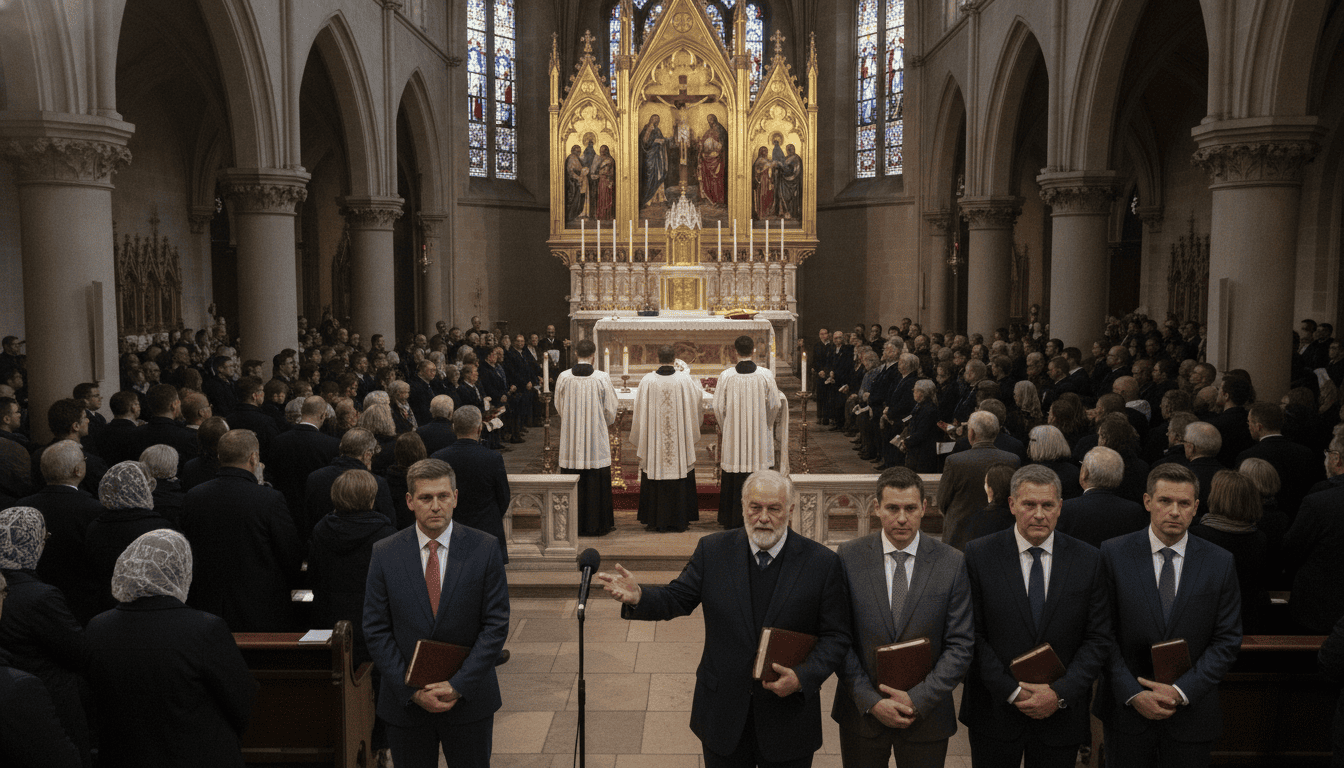
The brotherhood presented itself as a guardian of an older form of Catholic practice and theology while rejecting many of the changes associated with the Second Vatican Council. From its inception the Piusbrüder positioned the traditional Latin Mass at the center of its spiritual and institutional life.
Roots of opposition
Marcel Lefebvre was born in 1905 near Lille and was shaped by a French ultraconservative Catholic milieu that associated modernity with the Revolutionary era and secular measures such as the 1905 law separating church and state. He served decades as a missionary and as Archbishop of Dakar before rising to leadership in religious orders and taking a prominent role at Vatican II.
Lefebvre initially participated in council deliberations but increasingly rejected key outcomes he viewed as concessions to modern political and social ideas. He and his followers regarded changes on religious freedom ecumenical relations and the understanding of ecclesial authority as a rupture rather than development.
Theological flashpoints
The disagreements coalesced around three contested themes that remain central to the dispute between the Piusbrüder and the Holy See. The council s recognition of religious liberty altered the church s relationship to state power and conscience rights which Lefebvre saw as an unacceptable relativization of Catholic truth.
Ecumenical language that described other Christian communities and religious traditions as possessing elements of truth likewise troubled Lefebvre and his circle. Finally the council s emphasis on the collegiality of bishops alongside the papal office introduced a shift in governance that he interpreted as weakening the traditional primacy of the pope.
Liturgical resistance and escalation
A highly visible sign of resistance was the refusal to adopt the postconciliar liturgical reform and the continued exclusive celebration of the older Latin rite characterized by the priest facing the altar. Lefebvre regarded the older rite as inseparable from the continuity of doctrine and worship he sought to preserve.
Tensions intensified in the 1970s and 1980s as the Vatican moved to assert discipline and oversight of seminaries and ordinations. After a series of clashes Lefebvre proceeded without papal authorization in 1988 to confer episcopal ordinations on four priests an act that canon law treats as grave and that led the Vatican to confirm the automatic penalties then in force.
Attempts at reconciliation and new crises
Successive popes pursued different approaches toward the Piusbrüder and toward reintegration into full communion with Rome. Pope Benedict XVI took notable steps to ease restrictions on the older liturgy and in 2009 the Holy See lifted the penalties that had affected the bishops ordained in 1988 after they accepted in principle the pope s authority.
That rehabilitation triggered a public outcry when one of the figures involved made statements denying the Holocaust a controversy that precipitated a deep crisis and led to his expulsion from the brotherhood. Pope Francis later extended pastoral permissions for confessions and limited marriage faculties to priests of the Piusbrüder subject to local episcopal approval while maintaining firm critique of certain positions held by the group.
Membership profile and political ties
The Piusbrüder remain strongest in France where roughly a third of their clergy originate with significant contingents in the United States Germany and Switzerland. Their appeal is concentrated among Catholics who prioritize preconciliar liturgy and teachings and who remain skeptical of modernizing reforms.
In France and elsewhere observers have documented connections between segments of the brotherhood and elements of the political right though the group s internal composition is varied and its supporters span a range of social and cultural backgrounds. Efforts to find a canonical structure that would reconcile institutional independence with recognition within the church have been discussed but repeatedly stalled.
The dispute that began with Marcel Lefebvre s objections to the reforms of the Second Vatican Council endures as a debate about the nature of tradition authority and continuity in the Catholic Church. The Piusbrüder continue to claim fidelity to a long standing interpretation of Catholic doctrine while the Vatican insists on a living tradition that must be held in communion with the successor of Peter.
