
Remigration Petition Spurs Tens of Thousands to Rally in Rome as Rival Demonstrations Divide City
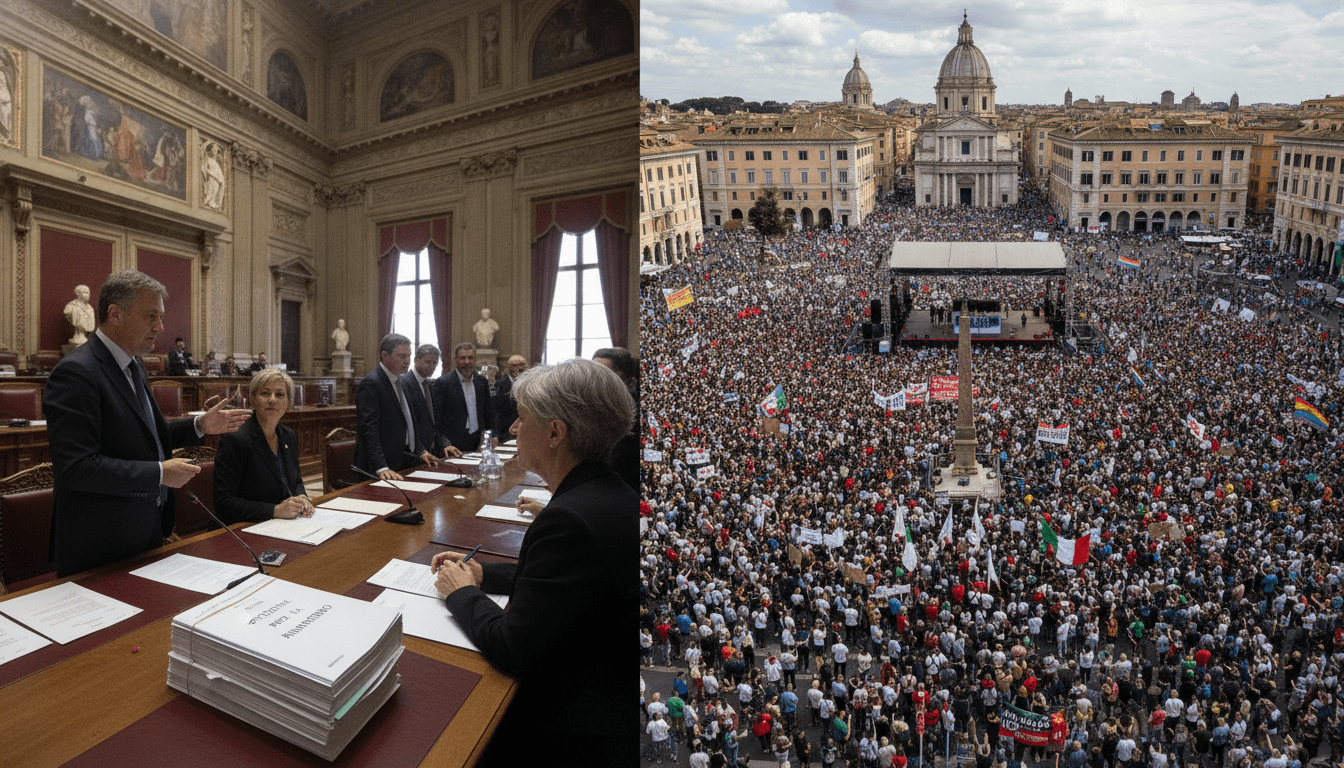
On June 13, 2026, tens of thousands of people took to the streets of Rome after a far-right “remigration” petition gathered the signatures required to trigger parliamentary debate. The remigration initiative, which calls for hardline measures including coerced returns of foreigners, mobilized both anti-migration and pro-migration demonstrators across separate parts of the capital. Authorities deployed large numbers of police to keep the rival crowds apart and to prevent clashes as political tensions escalated.
Mass demonstrations split Rome’s streets
Many thousands assembled in the Prati neighbourhood for an anti-migration march, while a much larger pro-migration rally filled a different central area, according to police estimates. Organizers on each side reported high turnout, and public transport hubs were affected as security cordons were established. The scale of the gatherings marked a sharp intensification of public debate over migration policy in Italy.
Police deployment and crowd control measures
Law enforcement placed barrier lines and officers between the rival events to avoid direct confrontations, with riot units and mounted police stationed at key intersections. Officials emphasized containment and monitoring rather than arrest-heavy tactics, though they warned against any illegal demonstrations or hate crimes. The deployment reflected authorities’ concern about the potential for violence given the strong rhetoric at both rallies.
Petition titled “Remigration and Reconquest” advances
The petition, styled as “Remigration and Reconquest,” reached the 50,000-signature threshold needed to compel parliamentary discussion, moving a previously marginal demand into the legislative arena. Backers say the document seeks to institute sweeping returns and stricter measures for non-citizens, framing the proposals as a response to perceived challenges of integration. Opponents argue the text is deliberately exclusionary and risks normalizing policies that target people on the basis of origin.
Far-right rhetoric and public reactions
Speakers at the anti-migration march included activists from militant nationalist groups who voiced hardline demands and criticized what they described as official softness on immigration. Observers reported that parts of the crowd adopted symbols and chants tied to Italy’s fascist past, prompting condemnation from civil society groups. Across the city, marchers in favor of expanded protections and non-discrimination carried banners denouncing deportations and urging respect for human rights.
Political split within the governing coalition
The remigration drive has put Prime Minister Giorgia Meloni’s right-wing coalition in an awkward position, exposing divisions between allies. The League, a coalition partner, signaled support for opening debate on the petition, while Brothers of Italy and centrist partners have approached the initiative with greater caution. Meloni faces a political balancing act: she must manage pressure from nationalist elements while maintaining broader coalition stability and international commitments.
Constitutional challenges and legal objections
Legal experts and opposition figures say the measures proposed by remigration advocates could run afoul of constitutional protections and international anti-discrimination obligations. Critics point out that proposals framed around ethnic or cultural origin could affect naturalized citizens and descendants, raising equal-protection concerns. Several jurists and human-rights organizations have warned that legislation of this kind, if enacted, might be subject to constitutional challenge in Italian courts and scrutiny by European bodies.
Government’s parallel strategy on legal migration
At the same time the remigration debate has intensified, the Meloni government has pursued a separate, more pragmatic approach to labour migration. Ministers recently approved a multiyear plan designed to admit substantial numbers of non-EU workers to fill shortages in agriculture, care work, and other key sectors. That policy underscores a dual-track reality in Italy: political currents pushing for restrictive measures exist alongside administrative efforts to regulate and expand legal migration flows for economic needs.
The petition’s validation obliges parliamentary committees to schedule hearings and set the issue on the legislative agenda, moving the remigration concept from street politics into formal debate. Lawmakers, legal analysts, and civic groups now face a series of procedural and substantive questions about whether any statutory response can be reconciled with constitutional guarantees and Italy’s international commitments. The coming weeks are expected to bring parliamentary hearings, legal challenges, and further public demonstrations as the country confronts a contentious crossroads on migration policy.
