
FIFA investor plan to sell World Cup stakes in new FIFA Forward Enterprise sparks global debate
FIFA investor plan to sell World Cup stakes in a new FIFA Forward Enterprise has provoked sharp criticism from confederations and European officials over governance and sporting integrity.
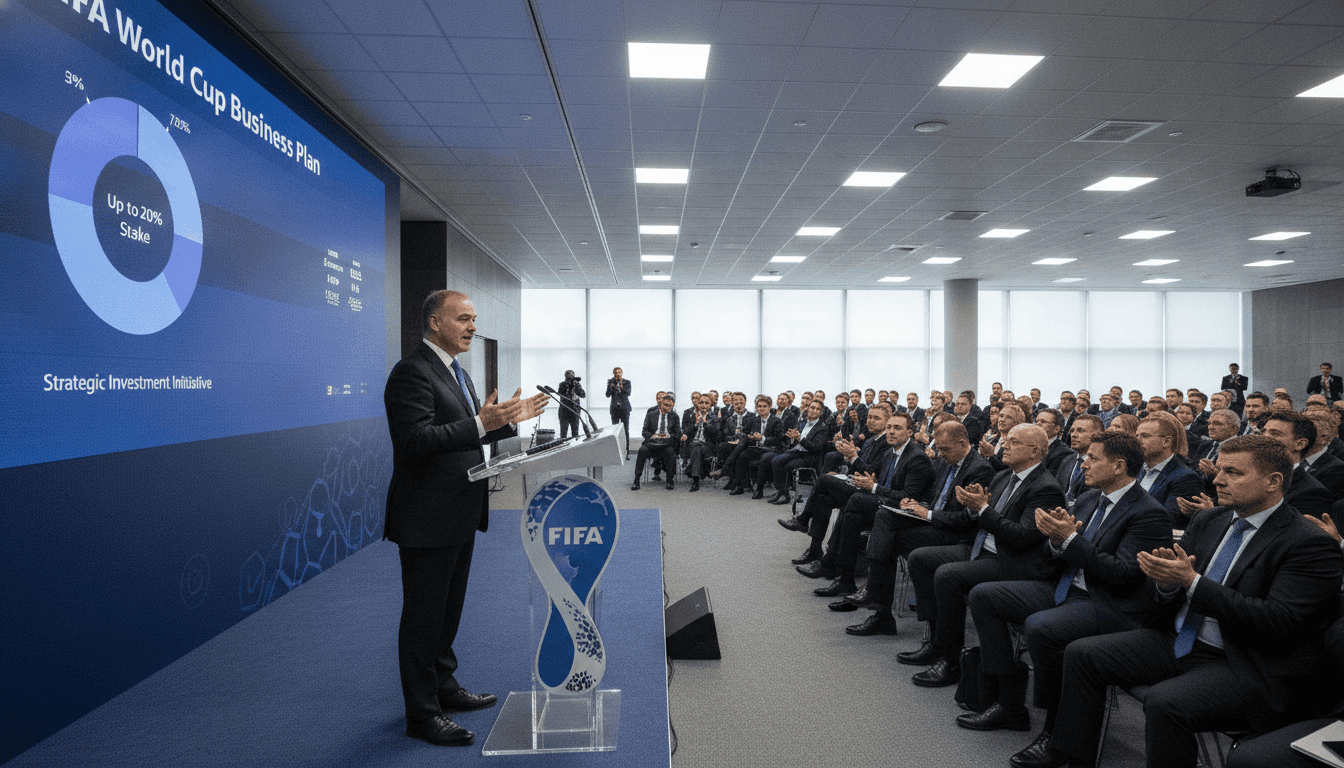
FIFA’s announcement that it will create a commercial subsidiary called FIFA Forward Enterprise (FFE) and seek minority investments has shaken the global game and set off a heated dispute between the governing body and several continental federations. The proposal would group broadcast, sponsorship and tournament rights under FFE and, according to FIFA statements, offer carefully selected investors minority stakes without operational control. Reports say the entity could be valued at roughly $20 billion, with up to 20 percent of shares marketed to private capital and initial fundraising targets reaching as high as $4.2 billion.
FIFA unveils structure of the proposed FIFA Forward Enterprise
FIFA describes the FFE as a vehicle to consolidate the commercial exploitation of its full tournament portfolio across men’s, women’s and youth competitions. The plan signals a shift from FIFA’s traditional funding model by monetizing future broadcast and sponsorship streams through equity instruments rather than annual commercial deals.
FIFA has said investors would receive economic participation but not control over sporting decisions, regulatory frameworks or the international match calendar. The federation frames the move as a way to increase distributions to member associations and professionalize global football commercial operations.
Details of the proposed sale and financial mechanics
In public statements FIFA cited a $20 billion valuation for the new entity and indicated that proceeds could reach $4.2 billion in the initial fundraising round. Media reports and internal briefings have suggested that as much as 20 percent of FFE could be placed with private investors, though precise terms remain under negotiation.
Officials say some of the cash would be channeled into an expanded FIFA Fast Forward Programme to boost payments to member associations, and that smaller federations stand to receive substantially higher four‑year allocations. FIFA maintains it will retain sole governance over sports and regulatory matters despite the commercial partnership.
Investor ties and governance questions raised
The consortium reported to lead the financing is said to be headed by Thrive Capital, an investment firm associated with Joshua Kushner, which has drawn attention because of family ties to prominent U.S. political figures. Critics say those connections reinforce concerns about transparency and potential conflicts of interest when private capital intersects with a global sports regulator.
Gianni Infantino has framed the proposal as a means of “democratizing” football finance and increasing support for smaller federations. Detractors counter that the involvement of politically connected investors raises governance questions and could concentrate influence among a narrow set of commercial backers.
Beneficiaries: small federations and FIFA leadership
FIFA projects that distributions to its 211 member associations could rise markedly under the FFE funding model, with four‑year payments increasing from current levels to figures reported at $20 million and potentially up to $24 million by 2035. An optional one‑off payment of $20 million has also been cited as a proposed incentive for some members.
Those increased transfers would materially benefit smaller national federations that rely heavily on FIFA funding for development and operations. At the same time, observers note the package strengthens the position of FIFA leadership, where existing political capital could be amplified by new commercial resources and potential corporate roles tied to FFE.
Continental federations voice forceful objections
UEFA issued an unusually blunt rebuke, warning that the “soul and leadership of football” should not be treated as tradable assets and criticizing the lack of transparency around which parties would profit. Senior European figures, including DFB vice‑president Hans‑Joachim Watzke, described the proposal as crossing a clear line and urged unity among European associations in response.
CONCACAF also raised formal concerns about procedural shortcomings, saying the federation was “deeply worried” by an absence of proper process and emphasizing the shared duty of federations and confederations to act in the sport’s best interest. The controversy has intensified a rift between FIFA and several continental bodies that had been widening in recent years.
Sporting implications and calendar risks under scrutiny
Opponents fear that economic pressures introduced by private investors could accelerate proposals to expand and commercialize FIFA tournaments further, including more frequent World Cups or enlarging the tournament field beyond its current formats. Analysts point to ongoing discussions inside FIFA about future formats and the past proposals to expand the Club World Cup and other competitions.
FIFA insists it will preserve decision‑making control over competitions and the international calendar, but critics argue that economic underwriting by private investors inevitably creates leverage over commercial choices and host selection. The debate frames a broader tension between maximizing revenue and safeguarding competitive integrity and global representation.
The next formal step for the plan is a vote by FIFA’s governing bodies and a majority of member associations, with the organization indicating that changes require approval by its council and general assembly. Timing for decisive deliberations has not been fixed, though FIFA’s next congress is scheduled for March 2027 in Morocco, and stakeholders on all sides warn the outcome could reshape the financial architecture of world football for decades.
