
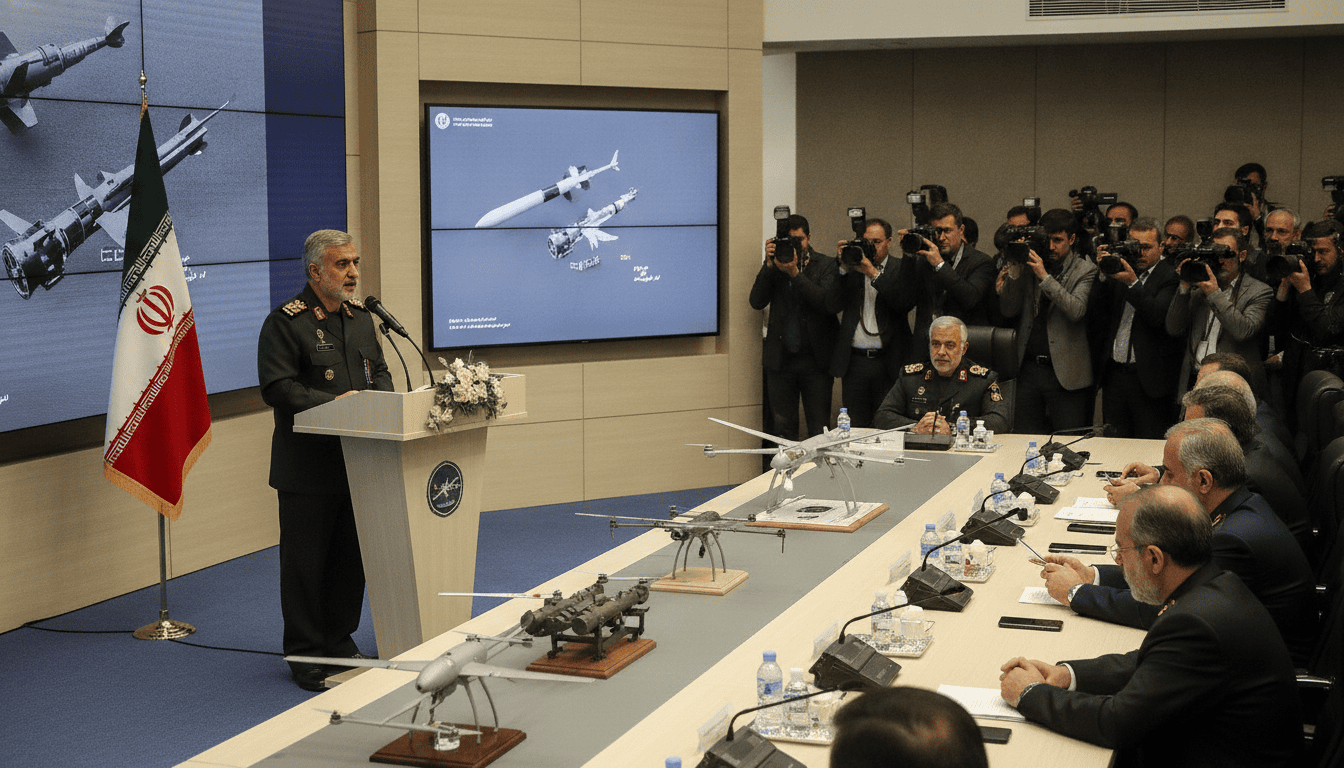
Iran defence manufacturing ‘more active than before,’ acting minister says
Acting Iranian defence minister says Iran defence manufacturing lines are “more active than before”, disputing U.S. claims attacks degraded Tehran’s military.
Iran’s acting defence minister, Brigadier General Seyed Majid Ibn al-Reza, said on Tuesday that Iran defence manufacturing lines are operating with increased activity and more advanced technologies, directly rejecting assertions from U.S. officials that recent strikes had weakened Tehran’s military capabilities. The comments, carried by the state-affiliated Mehr news agency, framed the statements as evidence of resilience and continued domestic progress in weapons and defence systems production.
Acting Defence Minister’s Statement
Brigadier General Ibn al-Reza told domestic media that production efforts have accelerated and that Iranian experts are redoubling efforts to advance the country’s defence industry. He characterized the current period as one of technological progress and stronger resolve among engineers and scientists tasked with equipping Iran’s armed forces.
The minister’s remarks were presented as a direct rebuttal to public claims made by former U.S. political leaders alleging that U.S. strikes had materially degraded Iran’s defensive infrastructure. By emphasizing increased output, the statement seeks to project an image of strategic continuity and self-reliance regardless of external pressure.
Rebuttal to U.S. Claims
Iran’s rebuttal addresses assertions by U.S. figures that targeted operations had eroded Tehran’s military readiness and production. Officials in Tehran argued that such characterizations undermine efforts to portray Iran as diplomatically isolated or militarily weakened.
State media coverage framed the rebuttal not only as a denial of damage but as a political message intended for both domestic and international audiences. The narrative underscores a broader Iranian strategy of demonstrating capacity-building in the face of sanctions and diplomatic confrontation.
Production Lines and Technology Upgrades
Ibn al-Reza claimed that manufacturing lines are “more active than before” and that technological developments have accelerated across several defence sectors. While specific systems or production figures were not released, the minister pointed to an uptick in research and development and expanded industrial activity.
Iran’s defence industry has historically emphasized domestic design and production to mitigate sanctions-driven shortages. Officials frequently highlight indigenous achievements in missiles, drones and missile defence as proof of self-sufficiency and to bolster national morale.
Recent Attacks and Military Impact
U.S. officials and some outside analysts have previously said that targeted attacks and sanctions have disrupted certain Iranian capabilities, citing damage to facilities and supply chains. Tehran contests those assessments, arguing that temporary setbacks have been followed by rapid recovery efforts.
Independent verification of the scale and permanence of any damage is difficult because much of Iran’s defence sector operates under secrecy and limited external access. The divergent public narratives reflect the contest between strategic signaling and intelligence-based assessments by outside governments.
Regional Security and Strategic Significance
Claims of increased production carry implications for regional security in the Middle East, where Iran’s military posture is a focal point for neighboring states and Western powers. If manufacturing and technology advances are sustained, they could influence balance-of-power calculations and military planning in surrounding countries.
Tehran’s emphasis on domestic production also serves strategic aims beyond hardware: it projects deterrence, supports allied proxies, and seeks to deter further strikes by signaling rapid regeneration capacity. Policymakers in the region will weigh such public statements against their own intelligence and on-the-ground indicators.
Expert Assessments and Next Steps
Analysts caution that public statements from defence ministries are often calibrated for political effect and should be evaluated alongside satellite imagery, export tracking, and other open-source intelligence. Verification of claims about production rates and technology upgrades typically requires corroborating evidence from independent observers.
Going forward, observers will watch for concrete signs of expanded output, such as increased procurement announcements, parades or displays of new systems, and changes in export activity. Diplomatic responses from the United States and regional governments may also signal how seriously they take Tehran’s renewed production claims.
The acting minister’s comments underline Tehran’s intention to portray itself as technologically resilient and politically determined, while outside governments and analysts continue to assess the real-world impact of recent attacks and sanctions on Iran’s military-industrial capacity.
