
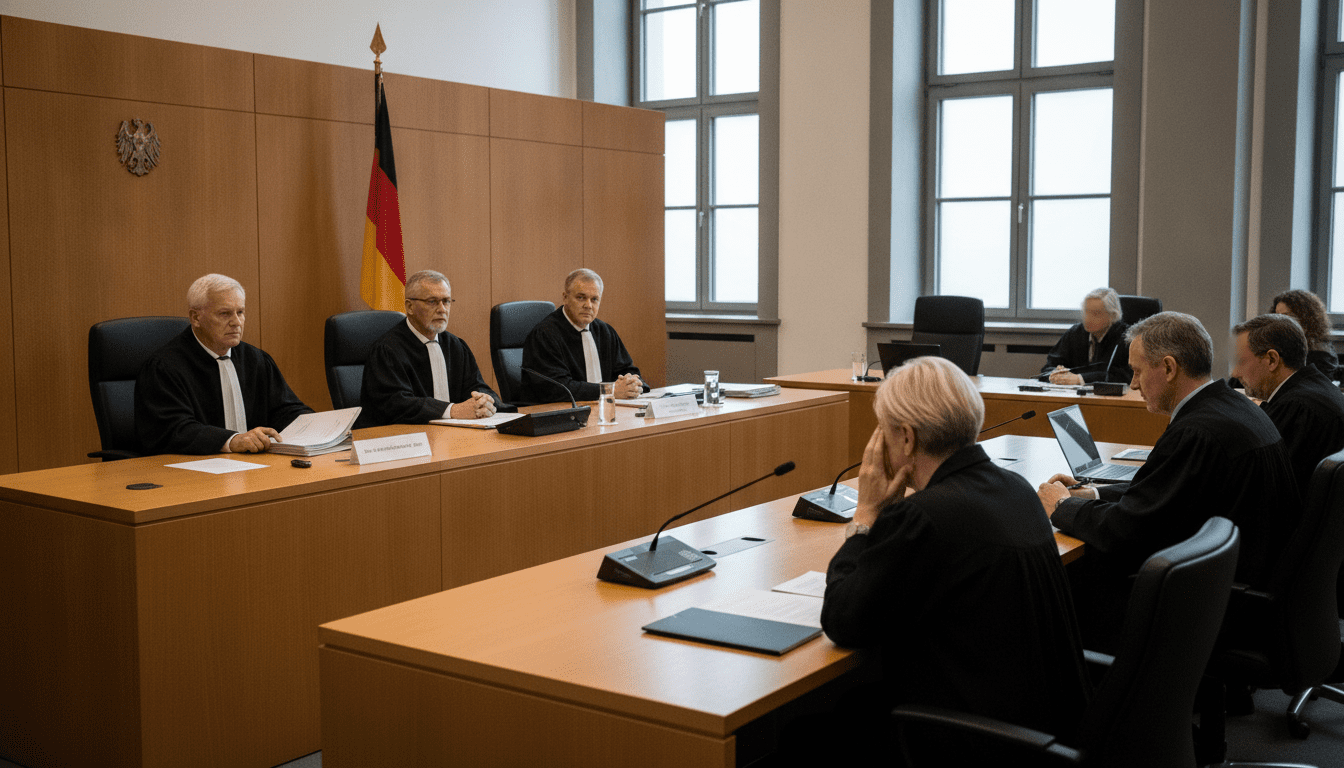
Court rules proposed rent increase unlawful after inspection finds no grounds for 20% hike
Tenant in Saarbrücken blocked a rent increase after court found claimed upgrades unsupported by evidence; decision underscores strict Mietspiegel scrutiny.
Court Rules Rent Increase Unlawful After Local Inspection
A proposed rent increase was declared unlawful by the Amtsgericht Saarbrücken after a judge concluded the landlord had not substantiated claims that would justify nearly a 20% rise. The tenant, who occupies a 75-square-meter flat, challenged the demand and the court examined whether the requested adjustment complied with the local Mietspiegel and the rules governing comparative rents. The ruling found the lawful rent ceiling was below what the tenant already paid, ending the landlord’s claim for additional charges.
On-Site Inspection Found Flooring Did Not Match Claim
Judges conducted an on-site inspection to assess the apartment’s condition and to verify the landlord’s assertions about its qualities. The landlord had cited high-end features such as parquet flooring, but the court observed only laminate, a standard finish that does not merit an upward adjustment under the Mietspiegel. That factual finding removed one of the principal grounds for the proposed rent increase and weighed heavily in the final calculation.
Fitted Kitchen and Balcony Credits Accepted; Washing Facility Discount Applied
While the court rejected a flooring premium, it did accept allowances for an installed kitchen and a balcony as legitimate factors increasing the apartment’s comparative value. At the same time, the court applied a deduction because there was no washing machine connection in the flat, requiring the tenant to use the basement laundry area. These adjustments were quantified against the Mietspiegel benchmarks to determine what the legally permissible rent would be.
Court Rejected Location and Quietness Arguments as Redundant
The landlord had also argued for an uplift based on a quiet location and a green outlook from the apartment, but the court rejected these claims as duplicative of factors already reflected in the Mietspiegel. Judges emphasized that features incorporated into the local comparative-rent table cannot be layered again as separate justifications for higher rent. The decision highlights how courts will parse overlapping claims when landlords rely on multiple, partially redundant factors to support increases.
Legal Rationale and Burden of Proof Under the Mietspiegel
The ruling restated the established legal principle that landlords seeking to raise rent must substantiate every element of their claim with clear evidence tied to the Mietspiegel. The court’s inquiry demonstrated that factual verification — including site visits where appropriate — plays a central role in assessing comparative rent demands. In this case, the court referenced its judgment of 10 June 2025 (case no. 120 C 378/24), noting the permissible rent calculated from the Mietspiegel fell below the tenant’s existing payment, leaving no room for the landlord’s proposed hike.
What the Decision Means for Landlords and Tenants
Landlords are reminded by this ruling that general assertions about an apartment’s superior quality are insufficient without verifiable proof and careful alignment with Mietspiegel categories. Tenants, conversely, can take comfort that courts will scrutinize and quantify claimed upgrades and shortfalls rather than accept blanket increases. Practically, both parties benefit from precise documentation: inventories, photographs, and technical details can make the difference when courts compare a specific flat to local rent tables.
The Saarbrücken judgment also signals that courts will not accept cumulative arguments that recycle the same attribute under different labels; elements included in the Mietspiegel cannot be used twice to amplify a rent claim. This preserves the integrity of comparative rent systems and limits arbitrary or poorly substantiated increases.
Legal practitioners point out that the decision underscores procedural and evidentiary discipline in rent disputes. Veronika Thormann, a lawyer at the Bethge firm in Hannover, said the case illustrates how strictly judges apply Mietspiegel criteria and how small factual differences — such as the presence of laminate instead of parquet or the lack of a washing machine outlet — can materially change the outcome. Landlords considering rent adjustments should document each claimed enhancement and map it clearly to Mietspiegel categories before issuing notices.
The outcome in Saarbrücken is a reminder that rent increase claims under the Mietspiegel framework are subject to methodical judicial review, and that tenants already paying at or above the calculated permissible level have strong defenses against further upward adjustments.
