
BMW job cuts: CEO Milan Nedeljković unveils plan to cut about 8,000 positions globally
BMW job cuts: New CEO Milan Nedeljković announces a voluntary personnel-structure program to remove roughly 8,000 roles worldwide, with more than half expected in Germany and measures starting in October.
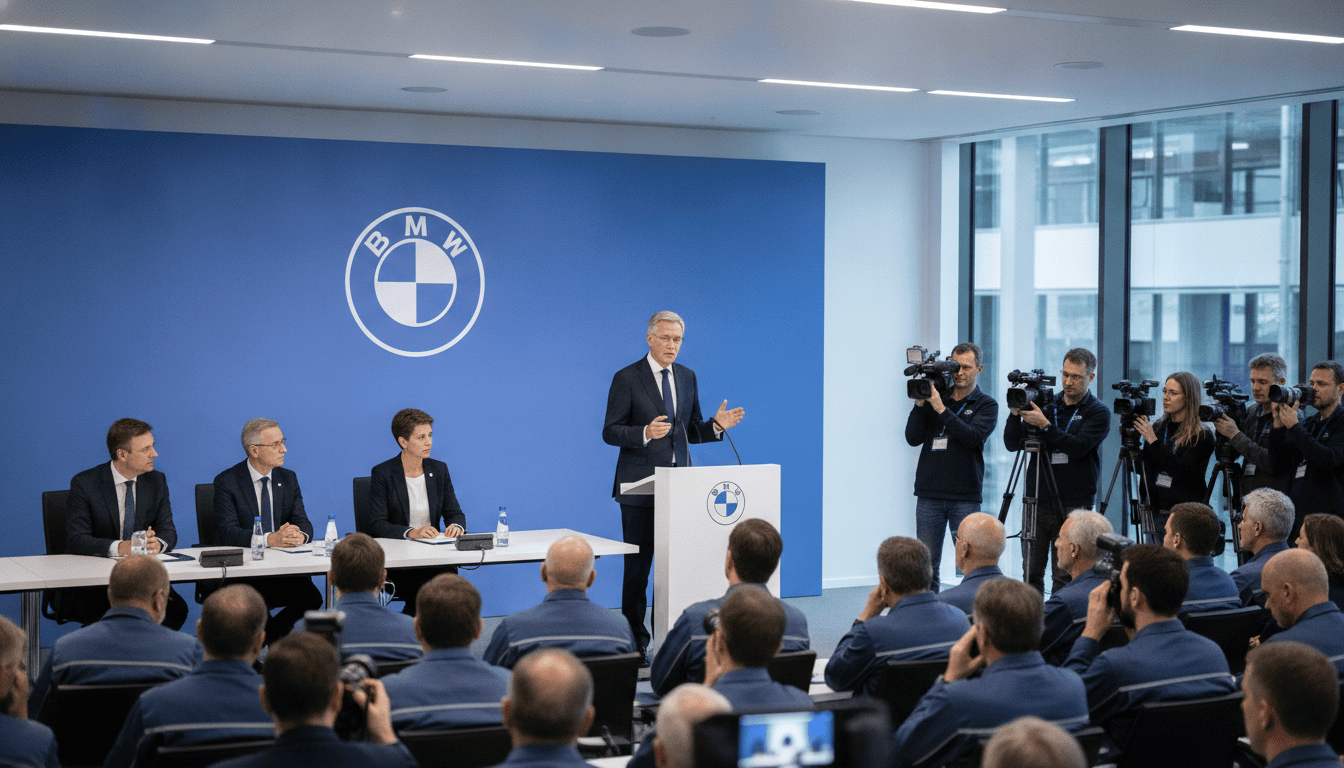
Nedeljković addresses staff on restructuring
Newly appointed CEO Milan Nedeljković told employees on Wednesday that BMW will implement a personnel-structure program aimed at reducing headcount, confirming earlier company signals about cost measures. The announcement came in a town-hall style address in which Nedeljković reiterated that the plan was agreed with the works council and would be carried out through voluntary measures where possible.
He avoided giving precise, line-by-line figures in his speech but confirmed that the company expects the reduction to be material and structured, emphasizing the need to improve efficiency and speed across the organisation. Management portrayed the move as a targeted adjustment rather than a response to failure, framing it around long-term competitiveness in a shifting automotive market.
Scale and timeline of the BMW job cuts
Company sources say the programme targets roughly 8,000 positions worldwide, which corresponds to about five percent of BMW’s workforce of more than 150,000 employees. BMW plans to complete the reductions by the end of 2027, allowing a multi-year window to implement measures and minimize forced departures.
The programme’s scope and the projected figure place the planned cuts near the upper end of numbers previously discussed in media speculation, according to insiders. Management intends to monitor progress against financial targets and adjust timing if market or operational conditions change.
Geographic focus and functions affected
More than half of the expected reductions are set to fall in Germany, where BMW employs approximately 90,000 people, signalling a concentrated impact on its domestic workforce. The company said the job cuts will primarily affect indirect areas such as administration, development and sales, while production operations are to remain largely untouched.
Abroad, BMW plans to rely on measures such as partial retirement schemes, natural attrition and other non-disruptive adjustments to reduce staff levels. The geographic emphasis reflects the relative size of BMW’s German operations and the flexibility the group believes it can achieve through localized voluntary programmes.
Voluntary measures, safeguards and works council agreement
BMW and the works council reached the personnel-structure agreement on the basis of voluntariness; the company has committed to avoiding compulsory dismissals where possible. In Germany, an early-severance or compensation programme is slated to begin in October, designed to encourage voluntary exits and redeployment where feasible.
The existing company-wide employment protection agreement remains in place and continues to tie job security to the group’s pre-tax profitability. That safeguard means the provisions remain active as long as BMW reports a positive pre-tax result, a condition management says is expected to hold this year despite profit pressure.
Management reorganisation and internal consolidation
The restructuring includes plans to slim down management layers and consolidate roughly 70 organisational areas into fewer, more centralised units. BMW intends to combine departments and streamline decision-making to boost operational efficiency and shorten project timelines across brands.
Executives below board level have been warned to prepare for significant changes to reporting lines and responsibilities, with the company citing the need for “speed and efficiency” under Nedeljković’s leadership. The streamlining is presented as complementary to the headcount adjustments, aiming to reduce duplication and lower structural costs.
Financial pressures prompting the programme
BMW cut its full-year guidance in mid-June, citing higher energy costs and weaker demand driven by inflationary and economic concerns, which prompted a warning that pre-tax profits would fall “significantly” year-on-year. Management now expects an EBIT margin in a lower single-digit band, down from the prior guidance of four to six percent under the previous CEO, Oliver Zipse.
Investors have reacted unevenly: the stock has shown short-term recovery following the announcement but remains significantly lower since the start of the year. Company officials argue the measures are necessary to protect competitiveness and margins as the market shifts and operating costs remain elevated.
Production outlook and brand deliveries
BMW expects a slight decline in deliveries for its BMW, Mini and Rolls‑Royce brands this year, abandoning earlier hopes to match 2025 volumes. Management attributes the projected decline to subdued customer demand amid macroeconomic pressures, and to the one-off burdens already noted in prior communications.
Despite the planned headcount reductions, BMW emphasises that production activity will largely be preserved to safeguard manufacturing capacity and supply commitments. Executives say protecting core production roles helps sustain long-term product development and preserves the group’s industrial footprint.
The company frames the personnel-structure programme as a measured response to a changing market landscape, relying on voluntary exits, internal consolidation and a phased timetable to reach its objectives without resorting to mass layoffs.
