
West Bank violence escalates after July 24 Tal settler attack
West Bank violence rose after the July 24 Tal attack that left civilians dead and spurred Israeli raids, settler arson, road closures and growing aid shortages.
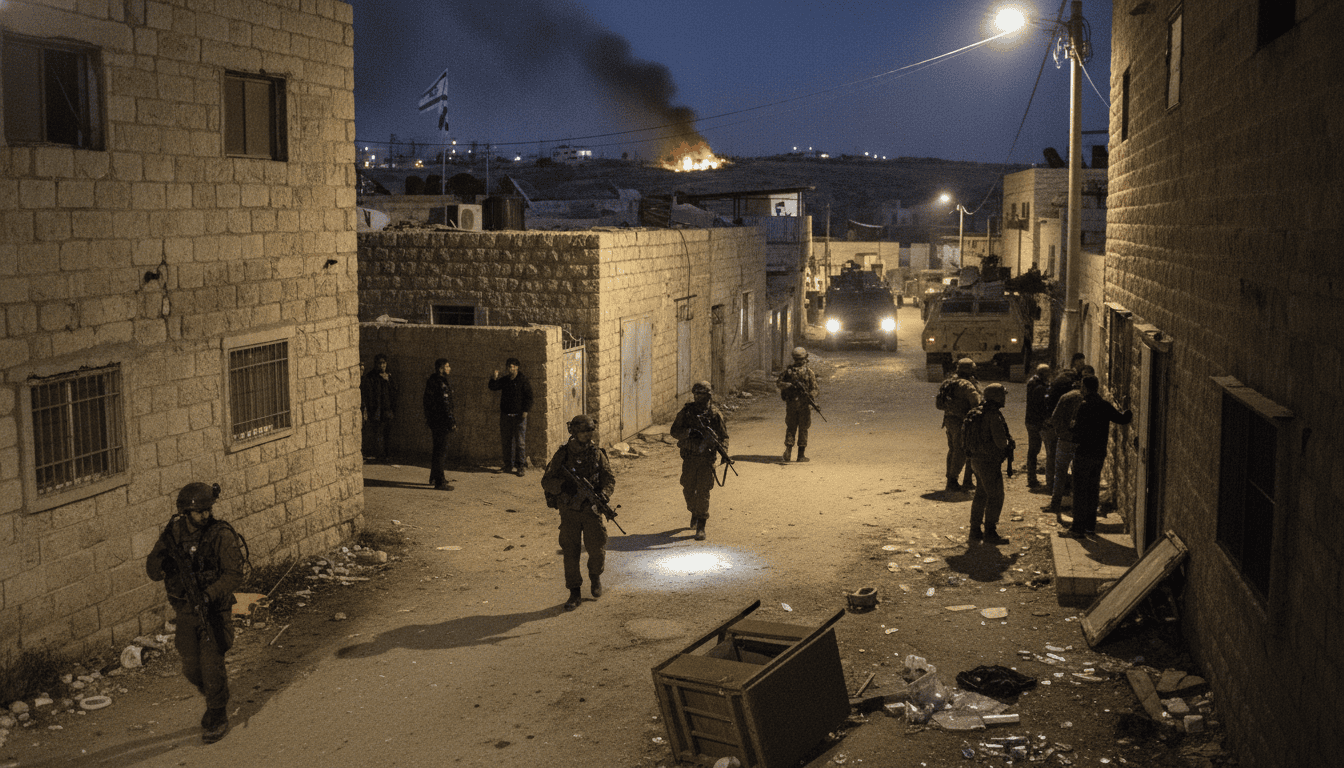
The morning of July 24 saw more than 20 settlers from the Havat Gilad outpost enter the eastern edge of Tal, southwest of Nablus, triggering a lethal confrontation that left multiple Palestinians dead and prompted an extensive Israeli military response. Videos circulating after the incident appear to show a Palestinian man seizing a firearm from a settler and shooting him, then being shot by soldiers as violence spread. Four members of the Ramadan family were killed in the ensuing clashes, alongside casualties among settlers and an Israeli soldier, and the episode set off days of retaliatory raids, demolitions and settler attacks across the occupied West Bank.
Deadly clash in Tal and immediate fallout
Hours after the killings in Tal, Prime Minister Benjamin Netanyahu ordered what he described as a wide-scale military operation on July 24, directing forces to demolish the alleged attacker’s home and revoke work permits in villages he labeled as security hotspots. Senior ministers signaled a hard-line response, and by the weekend Israeli public radio reported that dozens of army battalions had been mobilized across the West Bank.
Israeli forces returned repeatedly to Tal in the nights that followed, conducting arrests and house searches. Local accounts and regional agencies reported roughly 30 to 50 detentions in Tal alone and search operations affecting some 70 homes, as operations extended to Jenin, Tubas, Ramallah, Hebron, Bethlehem, Tulkarem and East Jerusalem.
Settler expansion and new outposts near Nablus
In the days after July 24, Israeli public sources and activists reported the sudden appearance of several new settler outposts near Tal and adjacent villages including Awarta, Qusra and Jabal Ubayd. Activists tracking settlement activity counted dozens of new illegal outposts in the first half of 2026, most small agricultural sites concentrated in Hebron, Ramallah and Nablus governorates.
Officials tied the expansion to accelerated “regularisation” efforts announced by senior ministers, a policy critics say eases the legal path for outposts that are unlawful even under Israeli statutes. Land seizure orders and directives to uproot olive trees were also issued in Jenin and Tubas governorates during the same period, adding to mounting tensions over land and access.
Waves of arson, road closures and attacks on property
Settler violence spread across the northern West Bank over the weekend and into the following days, with security sources and local mayors reporting dozens of separate attacks. In Sarra, southwest of Nablus, residents said homes and vehicles were burned and villagers beaten during an assault in which Israeli forces later deployed alongside settlers. In Farata, fires destroyed a woodworking shop, homes and farmland, and several Palestinians were wounded by gunfire and stones.
Several mosques were set ablaze in so-called “price tag” attacks that local officials and religious authorities described as retaliatory. In Qusra and a village near Tulkarem, mosques under construction and religious buildings were defaced with Hebrew graffiti and racist slogans. In Urif, relatives said an infant survived an arson attack only after family members pulled her from a burning home as more than 150 settlers attacked the property.
Road closures and checkpoints were tightened across the northern West Bank, with entrances to Sinjil sealed, gates erected at Nabi Saleh and rolling roadblocks near Nablus and Ramallah, according to local health and civic officials. Ambulance directors warned that tightened restrictions were delaying transfers to hospitals, including for dialysis patients, creating what one official described as a de facto siege on parts of the territory.
Rising casualty figures and humanitarian strain in Gaza
The violence in the West Bank occurred against a backdrop of continued lethal activity in Gaza following the October 2025 ceasefire. Gaza’s health authorities reported that the death toll in the Strip since the ceasefire passed 1,200 by July 27, with civilian fatalities and strikes in Jabalia, Zeitoun, Maghazi and Khan Younis among the week’s reported incidents.
Local media and health sources said drone strikes and missile strikes hit residential areas and medical facilities, and that senior security figures were among those killed. Satellite imagery and independent analyses indicated Israeli forces continued to advance the so-called “Yellow Line” that delineates areas under direct Israeli control in Gaza, including the construction of barriers and new concrete positions that have forced further displacement.
Humanitarian agencies cautioned that aid flows were under increasing pressure. The World Food Programme warned of deeper cuts without urgent funding, and UN agencies said roughly 67 percent of Gaza’s population—about 1.4 million people—still faced crisis-level food insecurity. Maternal health indicators also worsened, with reports of a sharp rise in miscarriages and obstetric complications in the first half of 2026.
International deployments and aid access challenges
Amid calls to stabilise the situation, the Israeli cabinet approved the entry of an International Stabilization Force to Gaza, to operate in coordination with the Israeli military, according to Israeli officials. The force is expected to number roughly 200 personnel from countries described as friendly partners, though no timeline for deployment has been set.
Meanwhile, closures such as the May suspension of the Zikim crossing have reduced weekly aid truck deliveries into northern Gaza by about a third, raising concerns among relief agencies about supplies of food, fuel and medical items. UN and humanitarian officials have urged expedited access and additional funding to prevent a deeper collapse of assistance operations.
The sequence of events since July 24 underscores an intensifying cycle of violence in both the West Bank and Gaza, with civilian communities bearing the brunt of expanding military operations, settler attacks and shrinking humanitarian space. These developments have prompted alarm among local officials and aid organisations, which warn that continued escalation will further erode access, protection and basic services for hundreds of thousands of Palestinians.
